
Today, I played around with the chess.com analysis board and decided to have a look at the masters database that can be found on the opening’s tab (see below). Specifically, I wondered any well-known masters have played the Vienna Gambit Accepted – one of my favourite lines in chess. I expected that this would likely be uncommon or even rare as the Vienna Gambit Accepted is known to be bad for Black – practically a mistake. It is very likely that at an advanced level, the player with the Black pieces would decline the Vienna Gambit by steering it into the Vienna Game: Main Line, which tricky but known to be advantageous for Black.

Interestingly, there were 36 games on the chess.com masters database and within the list, there was this absolutely gem of a game between Wilhelm Steinitz and Emlen Hare Miller from 1883.
A quick bit of history; Steinitz is someone who all chess lovers should know a little about! Wilhelm Steinitz was an Austrian-American chess master, and the first World Chess Champion from 1886-1894. At the time of this game in 1883, he would have been 47-years-old, and three years before he would become the World Chess Champion. He had taken a break from professional chess for almost a decade and had only in the recent returned to serious competition.
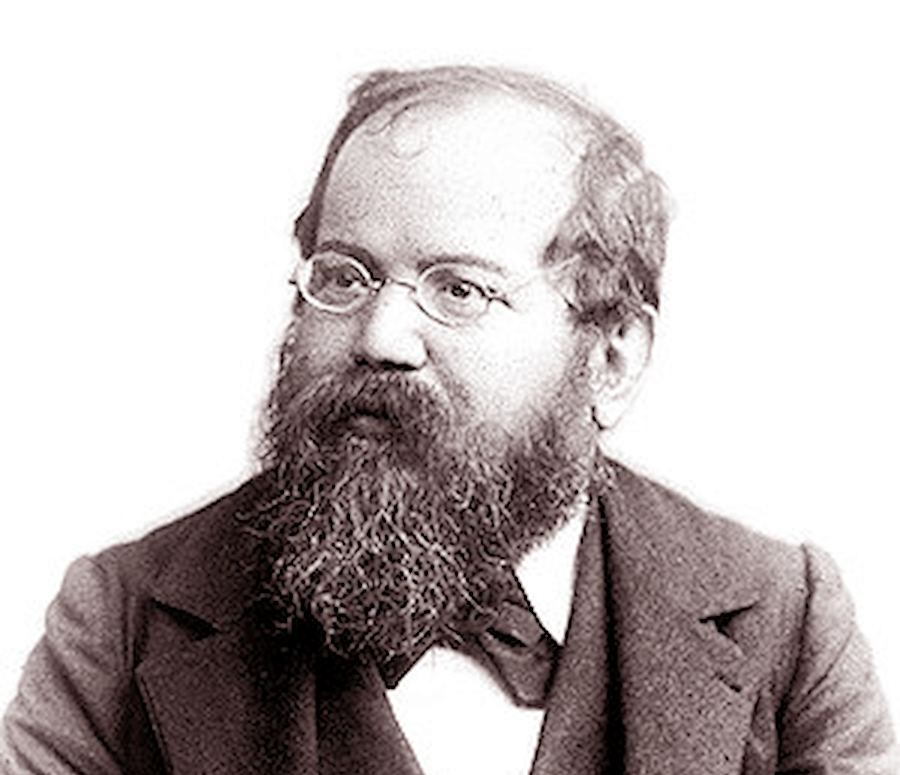
Steinitz moved to Vienna as a young man in the late-1850s to study mathematics at Vienna Polytechnic, where his chess also rapidly improved, becoming one of the strongest players in Vienna and Austria. He turned professional in the early 1860s. Steinitz was known for his aggressive “romantic” style of attacking chess, but in 1873, he unveiled and advocated for the new “positional” style, which he proposed was superior. This was difficult to argue against with his world leading performance.
However, after 1873 practically retired from competitive chess, focussed largely on his work as a chess journalist. Steinitz made a strong return to competition in the Vienna 1882 chess tournament and proved his detractors from the past decade wrong by taking equal first place.
From December 1882 to May 1883, Steinitz visited the United States, and during that visit, played many exhibitions and casual games, including this one against the 24-year-old Emlen Hare Miller from the Philadelphia Chess Club. Miller would later make as a career as a lawyer and represent the University of Pennsylvania team to play against the University of Oxford and Cambridge in the early 1900s.
It is very interesting to me that although Steinitz had been advocating for the positional style for a decade when this game was played, he chose to play a particularly daring and aggressive line in the Vienna Gambit, which Miller accepted (1. e4 e5 2. Nc3 Nf6 3. f4 exf4).
The interesting thing is that the Vienna Gambit wouldn’t have been known by the name “Vienna Gambit” at the time. With much of the theory on what would be known as the Vienna Game/Gambit being developed in the mid-1800s by people like Carl Hamppe in Vienna, it is almost certain that Steinitz would have had a familiarity with it. He plays what is now known to be the immediate powerful move e-pawn advance in the Vienna Gambit Accepted (4. e5). Indeed, he is the ONLY pre-20th century master in the database who played White with in the Vienna Gambit Accepted who played this move. There is a game from Charles Henry Stanley (first chess champion of the USA), Joseph Blackburne (British chess master, one of the strongest chess players of his era, a contemporary of Steinitz, and had the amazing nickname, The Black Death”), and one also a game from Gioachino Greco (who preceded them all in developing romantic style in the 1600s). Stanley, Blackburne, and Greco don’t capture the advantage with (4. e5) in their games and it is curious to me how different the world is now with computer-assisted analysis!
Back to the game, Steinitz and Miller thus move down what is the “normal” line in the Vienna Gambit Accepted. Miller correctly un-develops his knight (4… Ng8) against White’s attacking e-pawn and Steinitz now flexes his aggressive style and superior knowledge of the Viennese “Hamppe’s Game”. The normal next move is (5. Nf3), developing the other knight and defending against Black’s Qh4+. However, Steinitz baits Miller to bring out their queen and instead plays (5. d4), technically a mistake but it is super tactical and tricky to play!
Black of course plays (5… Qh4+), clearly the best move. Steinitz is well prepared and bongclouds his king (6. Ke2), the best move. And suddenly, Black’s queen seems out of place! I can imagine the thoughts going through Miller’s mind. It seems obvious that Black is better, but what is the next move?
The correct move is (6… d6), which opens Black’s light square diagonal for their bishop, and immediately threatening to skewer White’s king against his queen. This is not necessarily impossible to find, but it also isn’t especially obvious, especially if one’s focus is on “where to move the queen”. Interestingly, Stockfish identifies that d6 is Black’s ONLY move such that their advantage is maintained! The second-best move, extraordinarily enough, is for Black to un-develop their queen to d8, which returns the evaluation to [0.00]. I would argue that this is a difficult notion to contemplate – to develop and un-develop two pieces in 6 moves!
Miller, possibly influenced by his experience with the King’s Gambit, plays (6… g5). This is a reasonable looking move, but we now know objectively with modern tools that is a mistake. Steinitz is not only psychological and tactically ahead, but objectively so in evaluation [-0.5 → +1.4]. Steinitz couldn’t have been able to imagine the existence of chess computers in 1883, but I suspect he knew what he was doing and knew that he was winning by drawing Miller into a trap!
White now chases Black’s queen with development and gaining tempo; (7. Nf3) and then the fantastic (8. g4)! Steinitz gambits another pawn, and Miller, avoids the error by capturing the g-pawn and pulls their queen back to a safer square (8… Qg6).
However, Steinitz like a puppet master, draws Miller’s queen back! He throws yet another pawn forward, Black captures, White captures back with their rook, and then withdraws their rook when threatened by a bishop, hanging the g-pawn again (9. h4 gxh4 10. Rxh4 Be7 11. Rh2). Miller is unable to resist the lure and snaps up the g-pawn with their queen (11. Qxg4), and Stockfish grins at Black’s mistake [+3.7]!
Steinitz’s tactical idea? The pawn sacrifices allow him to win development and tempo – (12. Bh3) – he develops yet another piece with an attack on Black’s offside queen. Miller, possibly suffering from a “sunk cost bias” attempts to keep their queen in the thick of the action with (12. Qg3), defending their f-pawn, rather than evacuating their queen.
However, with (13. Qh1), White seems to have lost the defence of their c-pawn and so Black withdraws their queen (13… Qg6), threatening to capture the hanging pawn, which would come with check! Steinitz is unafraid and does not defend the c-pawn. Perhaps the lesson to be learnt here is to be very wary of Steinitz offering free material!
Move 17, Steinitz moves their rook to the g-file and attacks Miller’s queen on g6. With seemingly no good options, Miller captures the c-pawn with check (17. Rg1 Qxc2+). Steinitz now plays the ice cold (18. Ke1), and suddenly the trap is revealed, and all hope is lost! The queen is ensnared in an amazing net of White’s coordinated pieces. Miller resigns, GG!
The big takeaway from this game is that even Steinitz, who literally created the modern approach to chess by developing and advocating the positional style, still played these romantic and unsound lines for fun.
Game: https://www.chess.com/analysis/library/5dBMd65G9U
[Event "Casual game"]

[Site "Philadelphia, PA USA"]

[Date "1883"]

[White "Wilhelm Steinitz"]

[Black "Emlen Hare Miller"]

[Result "1-0"]

[ECO "C28"]

[PlyCount "35"]

[WhiteElo "2650"]

[WhiteUrl "https://images.chesscomfiles.com/uploads/master_player/1cfb311c-bd84-11e8-b3e5-19f28d9a0935.1e9316f1.jpeg"]

[WhiteCountry "2"]

[BlackCountry "2"]


{Wilhelm Steinitz, Austrian-American professional chess master was 47-years-old

at the time of this game, and in three years would be the first World Chess

Champion (1886-1894). In his earlier years, he was known for his attacking style

of chess, though from the 1870s, advocated for the then new positional style.


Emlen Hare Miller, was only 24-years-old at the time of this game, and was

probably a member of the Philadelphia Chess Club. He would have recently

graduated from university brief information on the internet states that would

become a teacher, journalist, and later a lawyer. Somewhat later in the very

early 1900s, he would visit England as a team from the University of

Pennsylvania to play against Oxford and Cambridge.


This game would have taken place during Steinitz's visit to the United States

from December 1882 to May 1883. Steinitz would leave England and settle in the

US in New York City later that year.} 1. e4 e5 2. Nc3 {The mighty Vienna Game $1

Though in the 1880s, it most likely wouldn't have been known as the \"Vienna

Game\" per se. However, Steinitz spent extensive time in Austria, and Vienna

specifically as a younger man from his 20s. He would have certainly been aware

of the developments of \"Hamppe's Game\", i.e., what are now known as the Vienna

Game and Vienna Gambit lines.} 2... Nf6 3. f4 exf4 $6 {[%c_effect

f4;square;f4;type;Inaccuracy;persistent;true][%c_arrow

d7d5;keyPressed;none;from;d7;opacity;0.8;to;d5;persistent;false][%c_highlight

d5;keyPressed;none;opacity;0.8;square;d5;persistent;false] Vienna Gambit

Accepted - inaccurate for Black and plays into the aggressive romantic style

Steinitz was known for $1 [+0.7]} 4. e5 $1 {[%c_effect

e5;square;e5;type;GreatFind;persistent;true]} 4... Ng8 5. d4 $5 {[%c_effect

d4;square;d4;type;Interesting;persistent;true][%c_arrow

g1f3;keyPressed;none;from;g1;opacity;0.8;to;f3;persistent;false][%c_highlight

f3;keyPressed;none;opacity;0.8;square;f3;persistent;false] Nf3 is the standard

move, defending against Qh4+. However, Steinitz is clearly baiting Miller to

make the move [-0.5] $1 😆} 5... Qh4+ $1 {[%c_effect

h4;square;h4;type;GreatFind;persistent;true]} 6. Ke2 {The \"bongcloud\" is the

best response. g3 is losing. Surprisingly, the next move for Black is not easy

to find $1} 6... g5 $2 {[%c_effect

g5;square;g5;type;Mistake;persistent;true][%c_arrow

d7d6;keyPressed;none;from;d7;opacity;0.8;to;d6;persistent;false][%c_highlight

d6;keyPressed;none;opacity;0.8;square;d6;persistent;false] The ONLY move that

maintains Black's advantage is d6 [-0.5], opening the light square diagonal and

immediately threatening to skewer White's king to the queen. Curiously, the

second-best move is to retreat the queen to d8 which returns the evaluation to

equality [-0.5 $37 0.00]. The intuition of playing g5 to defend the f-pawn from

the King's Gambit Accepted is a mistake [-0.5 $37 1.4].} 7. Nf3 $1 {[%c_effect

f3;square;f3;type;GreatFind;persistent;true]} 7... Qh5 8. g4 $1 {[%c_effect

g4;square;g4;type;GreatFind;persistent;true] Amazing attacking move, and Black's

queen is now relentlessly chased} 8... Qg6 {The best move. If Black captured the

g-pawn, Black would likely lose one and possibly both of their f- and g-pawns.}

(8... Qxg4 {[%c_arrow

h1g1;keyPressed;none;from;h1;opacity;0.8;to;g1;persistent;false,g1g5;keyPressed;none;from;g1;opacity;0.8;to;g5;persistent;false][%c_highlight

g4;keyPressed;none;opacity;0.8;square;g4;persistent;false,g5;keyPressed;none;opacity;0.8;square;g5;persistent;false]

If Black got greedy, bad things happen...}) (8... fxg3 {[%c_arrow

c1g5;keyPressed;none;from;c1;opacity;0.8;to;g5;persistent;false][%c_highlight

g5;keyPressed;none;opacity;0.8;square;g5;persistent;false] If Black got greedy,

bad things happen...}) 9. h4 gxh4 10. Rxh4 $6 {[%c_effect

h4;square;h4;type;Inaccuracy;persistent;true][%c_arrow

e2f2;keyPressed;none;from;e2;opacity;0.8;to;f2;persistent;false][%c_highlight

f2;keyPressed;none;opacity;0.8;square;f2;persistent;false] This is a very direct

approach by Steinitz who was clearly unafraid $1 Stockfish considers this move

somewhat inaccurate [+2.6 $37 0.6], preferring Kf2, opening the light square

diagonal for the bishop, which would allow Bd3 and an attack on Black's queen.}

10... Be7 $2 {[%c_effect e7;square;e7;type;Mistake;persistent;true][%c_arrow

d7d6;keyPressed;none;from;d7;opacity;0.8;to;d6;persistent;false][%c_highlight

d6;keyPressed;none;opacity;0.8;square;d6;persistent;false] A mistake - d6 to

open the diagonal for Black's light square bishop is critical [+2.3]} 11. Rh2 $5

{[%c_effect h2;square;h2;type;Interesting;persistent;true][%c_arrow

g4g5;keyPressed;none;from;g4;opacity;0.8;to;g5;persistent;false][%c_highlight

g5;keyPressed;none;opacity;0.8;square;g5;persistent;false] Stockfish calls this

a mistake [+2.3 $37 -0.2] but I think Steinitz saw a trap. This was a lure for

Black to bring their queen back with the seemingly hanging g-pawn $1 😈} 11...

Qxg4 {[%c_arrow

d7d6;keyPressed;none;from;d7;opacity;0.8;to;d6;persistent;false][%c_highlight

d6;keyPressed;none;opacity;0.8;square;d6;persistent;false] ... and it worked $1

Black continues to miss d6 and Black's queen has been lured back in, a serious

mistake $1 [+3.7]} 12. Bh3 Qg3 $6 {[%c_effect

g3;square;g3;type;Inaccuracy;persistent;true][%c_arrow

g3g6;keyPressed;none;from;g3;opacity;0.8;to;g6;persistent;false][%c_highlight

g6;keyPressed;none;opacity;0.8;square;g6;persistent;false] Inaccurate according

to the engine, but probably a mistake tactically [+4.7]. Black needed to get

their queen out of there $1} 13. Qh1 Qg6 {Black finally evacuates their queen, and

eyeballs the c-pawn on c2...} 14. Bxf4 {... but Steinitz is unafraid and perhaps

a lesson to be learnt is to be very wary of Steinitz offering free material $1

IT'S A TRAP $1} 14... c5 15. d5 c4 16. d6 Bf8 17. Rg1 Qxc2+ 18. Ke1 {[%c_effect

e1;square;e1;type;Winner] And Black's queen is trapped, and Miller resigns

defeated  $1 GG $1} (18. Ke1 {[%c_arrow

a2b3;keyPressed;none;from;a2;opacity;0.8;to;b3;persistent;false,f4c1;keyPressed;none;from;f4;opacity;0.8;to;c1;persistent;false,h2b2;keyPressed;none;from;h2;opacity;0.8;to;b2;persistent;false,h1h2;keyPressed;none;from;h1;opacity;0.8;to;h2;persistent;false,b2c3;keyPressed;none;from;b2;opacity;0.8;to;c3;persistent;false,c3b1;keyPressed;none;from;c3;opacity;0.8;to;b1;persistent;false,e1d1;keyPressed;none;from;e1;opacity;0.8;to;d1;persistent;false,c3e4;keyPressed;none;from;c3;opacity;0.8;to;e4;persistent;false,h3f5;keyPressed;none;from;h3;opacity;0.8;to;f5;persistent;false,g1g6;keyPressed;none;from;g1;opacity;0.8;to;g6;persistent;false][%c_highlight

b3;keyPressed;none;opacity;0.8;square;b3;persistent;false,c1;keyPressed;none;opacity;0.8;square;c1;persistent;false,b2;keyPressed;none;opacity;0.8;square;b2;persistent;false,f2;keyPressed;none;opacity;0.8;square;f2;persistent;false,g2;keyPressed;none;opacity;0.8;square;g2;persistent;false,h2;keyPressed;none;opacity;0.8;square;h2;persistent;false,c3;keyPressed;none;opacity;0.8;square;c3;persistent;false,b1;keyPressed;none;opacity;0.8;square;b1;persistent;false,d1;keyPressed;none;opacity;0.8;square;d1;persistent;false,c2;keyPressed;none;opacity;0.8;square;c2;persistent;false,d2;keyPressed;none;opacity;0.8;square;d2;persistent;false,e2;keyPressed;none;opacity;0.8;square;e2;persistent;false,e4;keyPressed;none;opacity;0.8;square;e4;persistent;false,f5;keyPressed;none;opacity;0.8;square;f5;persistent;false,g6;keyPressed;none;opacity;0.8;square;g6;persistent;false]

The eagle-eyed might have seen that d3 is not yet covered by the net...} 18...

Qd3 {[%c_arrow

h2c2;keyPressed;none;from;h2;opacity;0.8;to;c2;persistent;false,f3d4;keyPressed;none;from;f3;opacity;0.8;to;d4;persistent;false,e1d1;keyPressed;none;from;e1;opacity;0.8;to;d1;persistent;false,e1f1;keyPressed;none;from;e1;opacity;0.8;to;f1;persistent;false,f4d2;keyPressed;none;from;f4;opacity;0.8;to;d2;persistent;false,h1f3;keyPressed;none;from;h1;opacity;0.8;to;f3;persistent;false,c3e4;keyPressed;none;from;c3;opacity;0.8;to;e4;persistent;false,h3f5;keyPressed;none;from;h3;opacity;0.8;to;f5;persistent;false,g1g6;keyPressed;none;from;g1;opacity;0.8;to;g6;persistent;false,b2c3;keyPressed;none;from;b2;opacity;0.8;to;c3;persistent;false,c3b1;keyPressed;none;from;c3;opacity;0.8;to;b1;persistent;false][%c_highlight

f1;keyPressed;none;opacity;0.8;square;f1;persistent;false,e3;keyPressed;none;opacity;0.8;square;e3;persistent;false,d4;keyPressed;none;opacity;0.8;square;d4;persistent;false,f3;keyPressed;none;opacity;0.8;square;f3;persistent;false,d2;keyPressed;none;opacity;0.8;square;d2;persistent;false,d1;keyPressed;none;opacity;0.8;square;d1;persistent;false,e4;keyPressed;none;opacity;0.8;square;e4;persistent;false,f5;keyPressed;none;opacity;0.8;square;f5;persistent;false,g6;keyPressed;none;opacity;0.8;square;g6;persistent;false,c3;keyPressed;none;opacity;0.8;square;c3;persistent;false,c2;keyPressed;none;opacity;0.8;square;c2;persistent;false,e2;keyPressed;none;opacity;0.8;square;e2;persistent;false,b1;keyPressed;none;opacity;0.8;square;b1;persistent;false]}

19. Rd2 {[%c_arrow

d2c2;keyPressed;none;from;d2;opacity;0.8;to;c2;persistent;false,d2e2;keyPressed;none;from;d2;opacity;0.8;to;e2;persistent;false,d2d1;keyPressed;none;from;d2;opacity;0.8;to;d1;persistent;false,d2d6;keyPressed;none;from;d2;opacity;0.8;to;d6;persistent;false,b2c3;keyPressed;none;from;b2;opacity;0.8;to;c3;persistent;false,c3b1;keyPressed;none;from;c3;opacity;0.8;to;b1;persistent;false,f4d2;keyPressed;none;from;f4;opacity;0.8;to;d2;persistent;false,h1f3;keyPressed;none;from;h1;opacity;0.8;to;f3;persistent;false,e1f1;keyPressed;none;from;e1;opacity;0.8;to;f1;persistent;false,c3e4;keyPressed;none;from;c3;opacity;0.8;to;e4;persistent;false,h3f5;keyPressed;none;from;h3;opacity;0.8;to;f5;persistent;false,g1g6;keyPressed;none;from;g1;opacity;0.8;to;g6;persistent;false][%c_highlight

d3;keyPressed;none;opacity;0.8;square;d3;persistent;false,d5;keyPressed;none;opacity;0.8;square;d5;persistent;false,d6;keyPressed;none;opacity;0.8;square;d6;persistent;false,c3;keyPressed;none;opacity;0.8;square;c3;persistent;false,b1;keyPressed;none;opacity;0.8;square;b1;persistent;false,c2;keyPressed;none;opacity;0.8;square;c2;persistent;false,e2;keyPressed;none;opacity;0.8;square;e2;persistent;false,d2;keyPressed;none;opacity;0.8;square;d2;persistent;false,e3;keyPressed;none;opacity;0.8;square;e3;persistent;false,f3;keyPressed;none;opacity;0.8;square;f3;persistent;false,d1;keyPressed;none;opacity;0.8;square;d1;persistent;false,f1;keyPressed;none;opacity;0.8;square;f1;persistent;false,e4;keyPressed;none;opacity;0.8;square;e4;persistent;false,f5;keyPressed;none;opacity;0.8;square;f5;persistent;false,g6;keyPressed;none;opacity;0.8;square;g6;persistent;false,d4;keyPressed;none;opacity;0.8;square;d4;persistent;false]

However, it's an illusion and all hope was lost $1}) 1-0
 Adventures of a Chess Noob