I recently played a rather interesting game with the White pieces where Black responded with the Caro-Kann Defense, and then entered the Campomanes Attack (1. e4 c6 2. d4 d5 3. Nc3 Nf6). I was a bit surprised when I saw it as the knight on f6 is clearly vulnerable to an attack with e5, and the knight is then forced to move again, with all positions a bit suboptimal. On analysis after the game, Stockfish agrees and the chess.com analytic engine rates the move as an inaccuracy, though noting that it is a named move.
Curious, I wondered, just who exactly was Campomanes? The rabbit hole ended up being rather interesting! Florencio Campomanes was the controversial 7th FIDE President who in his earlier days in his peak chess playing years between the mid-1950s to mid-1960s, was the chess national champion of the Philippines, and represented the Philippines at five Chess Olympiads.
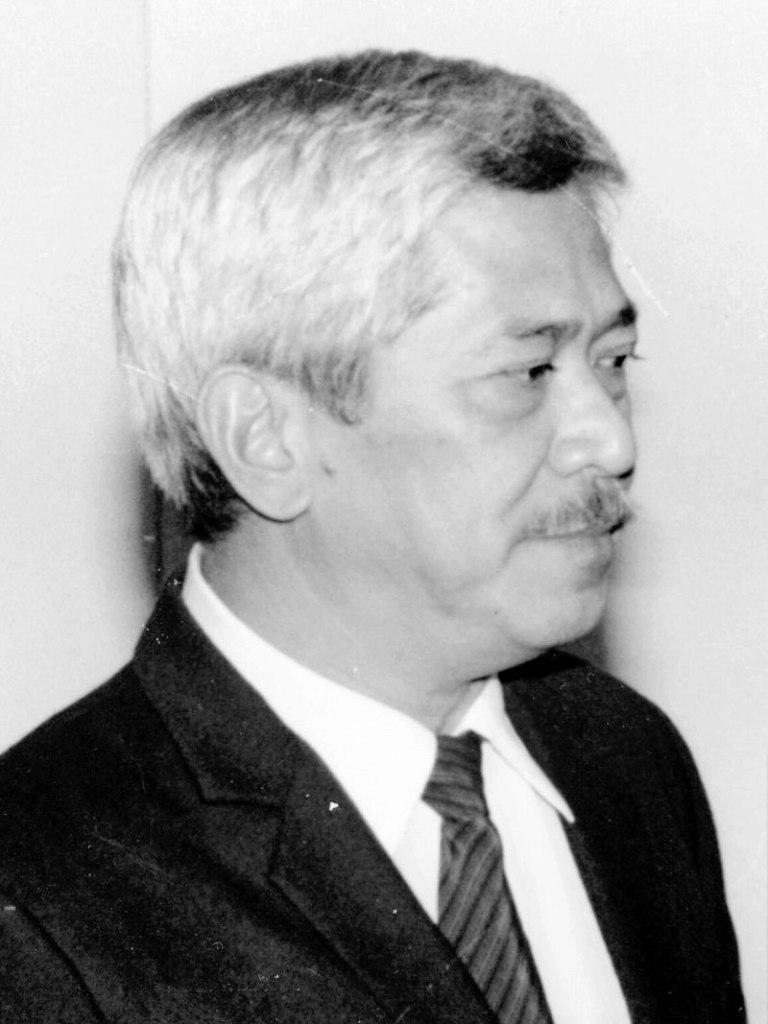
He was elected as the President of FIDE in 1982 and held the position to 1995, and it was during his tenure that we saw the abandonment of the 1984-85 World Championship match between Karpov and Kasparov, and then in 1993, the splitting of world chess between FIDE and the Professional Chess Association. It’s worth reading the short Wikipedia biography about Campomanes as one of the sections specifically notes that he has been accused of being a KGB asset in support of his candidacy for FIDE President. Politics has ever been entrenched in international chess!
However, why is this move called the Campomanes Attack? To be frank, it’s a bit obscure, but there is one recorded game where Campomanes used this variant of the Caro-Kann Defense in 1960 against no other than GM Mikhail Tal! Moreover, with the date, Tal would have been in top form having only recently become the world chess champion after defeated Botvinnik earlier in the year!
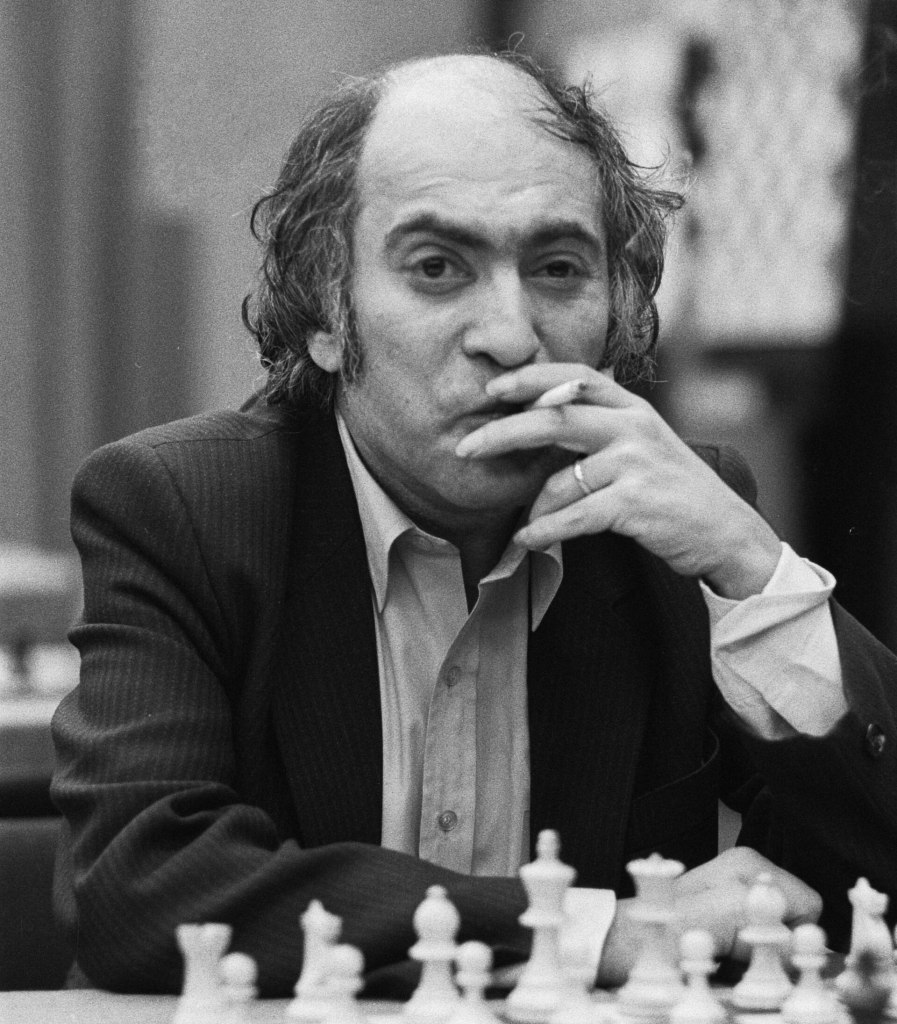
I cover the Tal vs Campomanes (1960) game briefly in my video, and the PGN is below. It is of no surprise that Tal crushes Campomanes and it’s a great demonstration of Tal’s daring attacking style, with a brilliant sacrifice and combination at the end!
In my game, after Black’s knight was threatened by e5, Black jumps their knight to the centre of the board, and we immediately trade down. This effectively results in Black losing a point of tempo and getting doubled e-pawns. Not disastrous by any means, but also not great. Moreover, it’s unclear what tactical opening advantage Black was seeking with the Campomanes Attack.
On move 7, I play an aggressive provocative move (7. f3?) which Stockfish calls a mistake. This is as I’m opening the dark square diagonal to my king and would be at risk of Qh4+. However, I made a calculation that this was “probably” fine, as it’s like some of the positions in the Vienna Gambit, as long as you’re willing to move the king and give up on the right to castle.
Next move, (8. g4) which is another aggressive expansion on the kingside, attacking Black’s bishop which is at risk of being trapped. Black does respond with the expected (8… Qh4+) but after (9. Kf1), I’m basically fine and Black’s bishop is still being attacked. They step their bishop back (9… Bg6) and interestingly on analysis, this was the last move that had ever been played before on the Lichess community database in this line, and apparently my next move was a novelty. I was pleased to discover that Stockfish considered this the most accurate move (10. Qe1), inviting Black to trade queens, and if not, they would have to lose tempo by undeveloping their queen (10… Qd8).
The following few moves involve the building of a tenuous defensive position with my White king still in the centre, and the building of a scrappy attack! Out of the opening, I’d built a strong palisade of pawns along the dark squares, cutting the board in half. With accurate play, Black could form a winning attack, but they never quite managed the complicated position to get the single step of tempo. On the other hand, I was forming an attack of my own, and like the Tal vs Campomanes game, the attack was down the h-file.
On move 23, I made a critical move (23. Ng5). Technically, this blunders a long sequence of forced mate in fifteen moves [-M15], but it required Black to find a brilliant rook sacrifice with Rf4. Luckily, my opponent was not Tal, and indeed, succumbed to the pressure along the h-file by trading their bishop for my knight (23… Bxg5+ 24. hxg5). This was a blunder for Black and the evaluation when from [-M15 → 0.00]!
The next move was similarly unclear for Black, and they possibly thought that they had one turn leeway so developed their other rook (24… Rac8), but this was a terminal blunder [0.00 → +M9]. How quickly the tables can turn! A bit like the Tal game, the opened files now allowed me to chase Black’s king with rooks and queen and I achieved what must have seemed like an unexpected ladder mate out of nowhere on move 28. Good game, GG!
The big takeaway from this game that the Campomanes Attack is probably not a great side-line for the Caro-Kann player!
Game: https://lichess.org/uHQRQBnE
Tal vs Campomanes (1960): https://www.chess.com/analysis/library/3oXHx9RHev
[Event "Rated Rapid game"]

[Site "https://lichess.org/uHQRQBnE"]

[Date "2023.12.07"]

[Round "?"]

[White "vitualis"]

[Black "Moriarty333"]

[Result "1-0"]

[UTCDate "2023.12.07"]

[UTCTime "02:11:37"]

[WhiteElo "1548"]

[BlackElo "1543"]

[WhiteRatingDiff "+14"]

[BlackRatingDiff "-5"]

[TimeControl "600+5"]

[ECO "B15"]

[Opening "Caro-Kann Defense: Campomanes Attack"]

[Termination "Normal"]

[Annotator "lichess.org"]

[WhiteUrl "https://images.chesscomfiles.com/uploads/v1/user/3711094.f52a0759.30x30o.3238398e446b@2x.png"]

[WhiteCountry "17"]

[WhiteTitle ""]

[BlackUrl "https://images.chesscomfiles.com/uploads/v1/game_analysis_self/fa42be12-a2cd-11ee-a9a5-6f8b7b67519b.a51f52df.160x160o.8d9af735be8e.png"]

[BlackCountry "225"]

[BlackTitle ""]


1. e4 {[%clk 0:10:00]} 1... c6 {[%clk 0:10:00]} 2. d4 {[%clk 0:10:03]} 2... d5

{[%clk 0:10:03]} 3. Nc3 {[%clk 0:10:08]} 3... Nf6 $6 {[%clk 0:09:51][%c_effect

f6;square;f6;type;Inaccuracy;path;null;size;100%25;persistent;true] Caro-Kann

Defense: Campomanes Attack. This is technically theory I guess, but it's not

very good [+1.1]. Weirdly, it's named after the controversial 7th FIDE

president, Florencio Campomanes and looking through the masters database,

there's evidence of him playing this once against Mikhail Tal in 1960, who

crushed him with his signature brilliant piece sacrifices...} 4. e5 {[%clk

0:10:05] And the reason why Nf6 is problematic is that anytime the knight can be

immediately kicked like this with e5, Black is forced to move their knight a

second time, losing tempo to move their knight potentially to a less favourable

position} 4... Ne4 {[%clk 0:09:54][%c_arrow

f6d7;keyPressed;none;from;f6;opacity;0.8;to;d7;persistent;false][%c_highlight

d7;keyPressed;shift;opacity;0.8;square;d7;persistent;false] The three options

according to the engine are about equally good/bad: Nfd7 (probably best), and

then Ng8 (undeveloping the knight) and Ne4} 5. Nxe4 {[%clk 0:09:55]} 5... dxe4

{[%clk 0:09:57]} 6. Bc4 {[%clk 0:09:59]} 6... Bf5 {[%clk 0:09:54]} 7. f3 $2 {[%clk

0:09:55][%c_effect

f3;square;f3;type;Mistake;path;null;size;100%25;persistent;true][%c_arrow

g1e2;keyPressed;none;from;g1;opacity;0.8;to;e2;persistent;false,e5e6;keyPressed;none;from;e5;opacity;0.8;to;e6;persistent;false,c2c3;keyPressed;none;from;c2;opacity;0.8;to;c3;persistent;false][%c_highlight

e2;keyPressed;none;opacity;0.8;square;e2;persistent;false,e6;keyPressed;shift;opacity;0.8;square;e6;persistent;false,c3;keyPressed;shift;opacity;0.8;square;c3;persistent;false]

I decided to play this provocative move which the engine calls a mistake [+0.1].

I was hoping for exf3 and then Nxf3. However, Black does not have to capture.}

7... e6 {[%clk 0:09:46]} 8. g4 $6 {[%clk 0:09:54][%c_effect

g4;square;g4;type;Inaccuracy;path;null;size;100%25;persistent;true] Here, I

decided to double-down with the aggression and struck out with g4 $1 I expected

Qh4+, but saw that Kf1 was probably fine... Stockfish thinks this is an

inaccuracy [-0.5].} 8... Qh4+ {[%clk 0:09:39]} 9. Kf1 $1 {[%clk 0:09:26][%c_effect

f1;square;f1;type;GreatFind;path;null;size;100%25;persistent;true][%c_highlight

f1;keyPressed;alt;opacity;0.8;square;f1;persistent;false]} 9... Bg6 {[%clk

0:09:19]} 10. Qe1 {[%clk 0:08:35] Up to this point, all moves have been played

before according to the Lichess community database, but this move is novel. I

was pleased to see on analysis that this was the most accurate move $1 My logic

was that trading queens is probably fine for me practically, but so is chasing

Black's queen all the way back to d8. Interestingly, according to the engine,

both are okay options for Black so this really was just about perspective.}

10... Qd8 {[%clk 0:09:01]} 11. c3 {[%clk 0:08:28][%c_highlight

b2;keyPressed;none;opacity;0.8;square;b2;persistent;false,c3;keyPressed;none;opacity;0.8;square;c3;persistent;false,d4;keyPressed;none;opacity;0.8;square;d4;persistent;false,e5;keyPressed;none;opacity;0.8;square;e5;persistent;false]

Strong palisade of pawns $1} 11... b5 $6 {[%clk 0:08:48][%c_arrow

e4f3;keyPressed;none;from;e4;opacity;0.8;to;f3;persistent;false][%c_highlight

f3;keyPressed;none;opacity;0.8;square;f3;persistent;false][%c_effect

b5;square;b5;type;Inaccuracy;path;null;size;100%252525;persistent;true]

Stockfish doesn't like this move [+0.2]} 12. Bb3 {[%clk 0:08:11]} 12... Be7

{[%clk 0:08:21]} 13. Bc2 {[%clk 0:08:08]} 13... exf3 {[%clk 0:08:18]} 14. Bxg6

{[%clk 0:08:11]} 14... fxg6 {[%clk 0:08:19]} 15. Nxf3 $2 {[%clk 0:08:11][%c_effect

f3;square;f3;type;Mistake;path;null;size;100%25;persistent;true][%c_arrow

e1e4;keyPressed;none;from;e1;opacity;0.8;to;e4;persistent;false][%c_highlight

e4;keyPressed;none;opacity;0.8;square;e4;persistent;false] This is a mistake

[-1.2], Black has Qd5, pinning the knight to the rook on h1. Then Black has

short castles, which then pins the knight yet again to the king down the f-file

- devastating $1} 15... O-O $2  {[%clk 0:08:22][%c_effect

g8;square;g8;type;Mistake;path;null;size;100%2525;persistent;true] Logical move,

but this is the wrong order [0.00]} 16. Ke2 $2 {[%clk 0:07:33][%c_effect

e2;square;e2;type;Mistake;path;null;size;100%25;persistent;true] But I make a

mistake back [-3.8] having not seen the original tactic} 16... c5 $1 {[%clk

0:08:20][%c_effect

c5;square;c5;type;GreatFind;path;null;size;100%25;persistent;true][%c_highlight

c5;keyPressed;alt;opacity;0.8;square;c5;persistent;false] Black finds the best

move, striking in the centre. Qd5 is almost just as good.} 17. h4 $6 {[%clk

0:06:59][%c_effect

h4;square;h4;type;Inaccuracy;path;null;size;100%25;persistent;true][%c_arrow

c1e3;keyPressed;none;from;c1;opacity;0.8;to;e3;persistent;false][%c_highlight

e3;keyPressed;none;opacity;0.8;square;e3;persistent;false] I knew I was in some

trouble, so I decided to attack Black's king's position with an h-pawn advance.

Stockfish disagrees [-5.3], but this strategy will end up being effective...}

17... cxd4 {[%clk 0:08:17]} 18. cxd4 {[%clk 0:07:00]} 18... Nc6 {[%clk 0:08:17]}

19. Be3 {[%clk 0:06:48]} 19... Nb4 {[%clk 0:07:31]} 20. Qf1 $6 {[%clk

0:05:54][%c_effect

f1;square;f1;type;Inaccuracy;path;null;size;100%25;persistent;true][%c_arrow

e1g3;keyPressed;none;from;e1;opacity;0.8;to;g3;persistent;false][%c_highlight

g3;keyPressed;none;opacity;0.8;square;g3;persistent;false] A bit inaccurate [-6]

as Qg3 does the same thing - defends the knight on f3, moves the queen out of a

potential knight fork, and prepares for Qh3 - but also unpins the knight.} 20...

Nd5 $2 {[%clk 0:07:22][%c_effect

d5;square;d5;type;Mistake;path;null;size;100%25;persistent;true][%c_arrow

d8d5;keyPressed;none;from;d8;opacity;0.8;to;d5;persistent;false][%c_highlight

d5;keyPressed;none;opacity;0.8;square;d5;persistent;false] However, this

backwards knight move was a mistake by Black [-3.1]} 21. Qh3 $6 {[%clk

0:05:43][%c_effect

h3;square;h3;type;Inaccuracy;path;null;size;100%25;persistent;true][%c_arrow

f1d1;keyPressed;none;from;f1;opacity;0.8;to;d1;persistent;false][%c_highlight

d1;keyPressed;none;opacity;0.8;square;d1;persistent;false] An inaccuracy [-4.6]

as Nf4+ comes with a royal fork, forcing Bxf4, Rxf4 results in a trade sequence

that sees Black advancing their rook into my position. However, the position is

quite complex.} 21... Nxe3 $6 {[%clk 0:07:16][%c_effect

e3;square;e3;type;Inaccuracy;path;null;size;100%25;persistent;true] But this

wasn't the right way to trade [-3.1]} 22. Kxe3 {[%clk 0:05:39]} 22... Qd5 {[%clk

0:07:02]} 23. Ng5 $4 {[%clk 0:04:54][%c_effect

g5;square;g5;type;Blunder;path;null;size;100%25;persistent;true] This was

technically a blunder with Black having a forced checkmate line [-M15], but only

if Black finds a brilliant rook sacrifice with Rf4 $1 However, I was baiting

Bxg5+, which I thought might be irresistable for Black...} 23... Bxg5+ $4  {[%clk

0:06:46][%c_arrow

f8f4;keyPressed;none;from;f8;opacity;0.8;to;f4;persistent;false][%c_highlight

f4;keyPressed;none;opacity;0.8;square;f4;persistent;false][%c_effect

g5;square;g5;type;Blunder;path;null;size;100%2525;keyPressed;undefined;persistent;true]

And I was right $1 This was a blunder $1 Although Stockfish calls it [-M15 $37 0.00],

I now have a massive attack on Black's king $1} 24. hxg5 {[%clk 0:04:57] I now

have a very powerful battery down the h-file, and with the fully open f-file,

and my pawns covering the dark squares on e5 and g5, Black's king is potentially

trapped...} 24... Rac8 $4 {[%clk 0:05:46][%c_effect

c8;square;c8;type;Blunder;path;null;size;100%25;persistent;true] Black might

have thought that they were fast enough, but they were wrong [0.00 $37 +M9]. How

quickly the tables turn $1} 25. Qxh7+ {[%clk 0:04:54]} 25... Kf7 {[%clk 0:05:50]}

26. Raf1+ {[%clk 0:04:28]} 26... Ke7 {[%clk 0:05:47]} 27. Qxg7+ {[%clk 0:04:31]}

27... Kd8 {[%clk 0:05:10]} 28. Rxf8# {[%clk 0:04:19][%c_effect

e3;square;e3;type;Winner,d8;square;d8;type;CheckmateBlack] A ladder mate

seemingly out of nowhere $1 GG $1} 1-0


[Event "Leipzig ol (Men) qual-B"]

[Site "Leipzig GDR"]

[Date "1960.10.20"]

[Round "4"]

[White "Mikhail Tal"]

[Black "Florencio Campomanes"]

[Result "*"]

[EventDate "?"]

[ECO "B15"]

[WhiteElo "2700"]

[BlackElo "?"]

[PlyCount "53"]

[WhiteUrl "https://images.chesscomfiles.com/uploads/v1/game_analysis_self/f89b234a-be3b-11ee-b2ee-61fdc3558d52.61efe0c1.160x160o.3194d90b1dd4.jpg"]

[WhiteCountry "85"]

[WhiteTitle "GM"]

[BlackUrl "https://images.chesscomfiles.com/uploads/v1/game_analysis_self/f89b234a-be3b-11ee-b2ee-61fdc3558d52.1b3d391d.160x160o.dc2c51a9f632.jpg"]

[BlackCountry "111"]

[BlackTitle ""]


1. e4 c6 2. d4 d5 3. Nc3 Nf6 $6 {[%c_effect

f6;square;f6;type;Inaccuracy;persistent;true] Mikhail Tal was newly the World

Chess Champion in 1960, so this was possibly an unwise move by Campomanes $1} 4.

e5 Nfd7 5. e6 fxe6 {Notice Black's exposed king along the light square

diagonal...} 6. Bd3 Nf6 $6 {[%c_arrow

g7g6;keyPressed;none;from;g7;opacity;0.8;to;g6;persistent;false][%c_highlight

g6;keyPressed;none;opacity;0.8;square;g6;persistent;false][%c_effect

f6;square;f6;type;Inaccuracy;persistent;true]} 7. Nf3 g6 8. h4 {And Tal starts

going for the attack, looking to destabilise the g-pawn} 8... c5 9. dxc5 Nc6 10.

Qe2 {Targeting the doubled e-pawns, and the Black king} 10... Bg7 11. Bd2 Qc7

12. O-O-O $6 {[%c_effect c1;square;c1;type;Inaccuracy;persistent;true][%c_arrow

f3g5;keyPressed;none;from;f3;opacity;0.8;to;g5;persistent;false][%c_highlight

g5;keyPressed;none;opacity;0.8;square;g5;persistent;false] Tal castles long to

get his king out of the centre. Stockfish believes in the immediate attack on

the e6 pawn.} 12... e5 $6 {[%c_effect

e5;square;e5;type;Inaccuracy;persistent;true][%c_arrow

f6h5;keyPressed;none;from;f6;opacity;0.8;to;h5;persistent;false][%c_highlight

h5;keyPressed;none;opacity;0.8;square;h5;persistent;false] Stockfish sees that

the h-pawn advance is very strong and recommends Nh5} 13. Bg5 $5 {[%c_effect

g5;square;g5;type;Interesting;persistent;true] Stockfish calls this a blunder

[-1.5] as Black has e4, and after a series of trades, Black is just better.

However, Tal is Tal $1 😜} 13... Be6 $4 {[%c_effect

e6;square;e6;type;Blunder;persistent;true][%c_arrow

e5e4;keyPressed;none;from;e5;opacity;0.8;to;e4;persistent;false][%c_highlight

e4;keyPressed;none;opacity;0.8;square;e4;persistent;false] However, Black

blunder back with an overly conservative move...} ({The ideal response by Black

results in a series of trades, and Black emerges fine, and up a point of

material...} 13... e4 14. Nxd5 Nxd5 15. Bxe4 Nf6 16. Bxc6+ bxc6) 14. Nb5 Qb8 15.

h5 {Tal attacks on both sides of the board $1} 15... gxh5 $2 {[%c_effect

h5;square;h5;type;Mistake;persistent;true][%c_arrow

e8g8;keyPressed;none;from;e8;opacity;0.8;to;g8;persistent;false][%c_highlight

g8;keyPressed;none;opacity;0.8;square;g8;persistent;false] This looks, but it's

a mistake $1 [+1.7]} 16. Nfd4 Bg4 $6 {[%c_arrow

e6f7;keyPressed;none;from;e6;opacity;0.8;to;f7;persistent;false][%c_highlight

f7;keyPressed;none;opacity;0.8;square;f7;persistent;false][%c_effect

g4;square;g4;type;Inaccuracy;persistent;true]} 17. f3 $1 {[%c_effect

f3;square;f3;type;GreatFind;persistent;true]} 17... e4 18. fxg4 {Tal is unafraid

of the trade down...} 18... Nxd4 $2 {[%c_effect

d4;square;d4;type;Mistake;persistent;true]} 19. Nxd4 exd3 20. Rxd3 {As at the

end of the trade sequence, he's has a big development advantage with great

attacking chances, Black still has their king in the centre and their pieces are

bound up in pins $1} 20... Ne4 21. Nf5 Qe5 22. Nxg7+ $1 {[%c_effect

g7;square;g7;type;GreatFind;persistent;true][%c_highlight

g7;keyPressed;alt;opacity;0.8;square;g7;persistent;false]} 22... Qxg7 23. Rxd5 $3

{[%c_effect d5;square;d5;type;Brilliant;persistent;true][%c_highlight

d5;keyPressed;alt;opacity;0.8;square;d5;persistent;false] Tal in a trademark

move, sacrifices his bishop, and Stockfish rates this as a brilliancy $1} 23...

Nxg5 24. Qb5+ $1 {[%c_effect

b5;square;b5;type;GreatFind;persistent;true][%c_highlight

b5;keyPressed;alt;opacity;0.8;square;b5;persistent;false] And now the king is

chased for the win $1} 24... Kf7 25. Rf1+ Kg6 26. Qd3+ Kh6 27. Rh1 {And in this

position Black resigns as Black will be forced to trade their queen for a

rook...} 1-0
 Adventures of a Chess Noob