
Do you like playing against the French Defense? I certainly don’t! As a (1. e4) player, the French Defence (1… e6) is my Achilles’ heel. When I look at my stats, I lose against the French Defense around 55-60% of the time! Indeed, one of my insights in my 2023 Year In Review was to learn a more effective response to the French Defense. Historically, I tended to enter the French Defense Main Line (2. Nf6) because I didn’t like the Advance Variation with (2… e5), which closes the centre immediately. However, this results in playing INTO the French Defense player’s comfort zone. I thought about the Exchange Variation with (2… exd5), but Black just seems to be better in that position.
So recently, I decided to have a closer look at the Lichess community database, and I asked myself the question – do I need to play (2. d4) at all? Clearly, this is allowing the French Defense player to call the shots. And this is where I found something very interesting! There are over 300 million games of the French Defense on Lichess, and overall, White and Black are equal winning at 48% vs 48%. However, there are two uncommon responses for White that clearly perform better than all the others. The first is the Steiner Variation (2. c4) occurring in 2% of French games, with a win ratio of 51% vs 45%. The second is the Chigorin Variation (2. Qe2) occurring in less than 0.5% games, with a win ratio of 53% vs 43%!
As I was already slightly familiar with the Steiner Variation, having previously had a brilliant quick win submitted from a subscriber and liking the feel of the line. So, I have decided to try this first!
And looking at my very limited number of Steiner Variation games (four!), it has been my most successful response to the French as I’ve won 3 of them! This might be a fluke, but I want to learn more, and this could even become my standard approach!
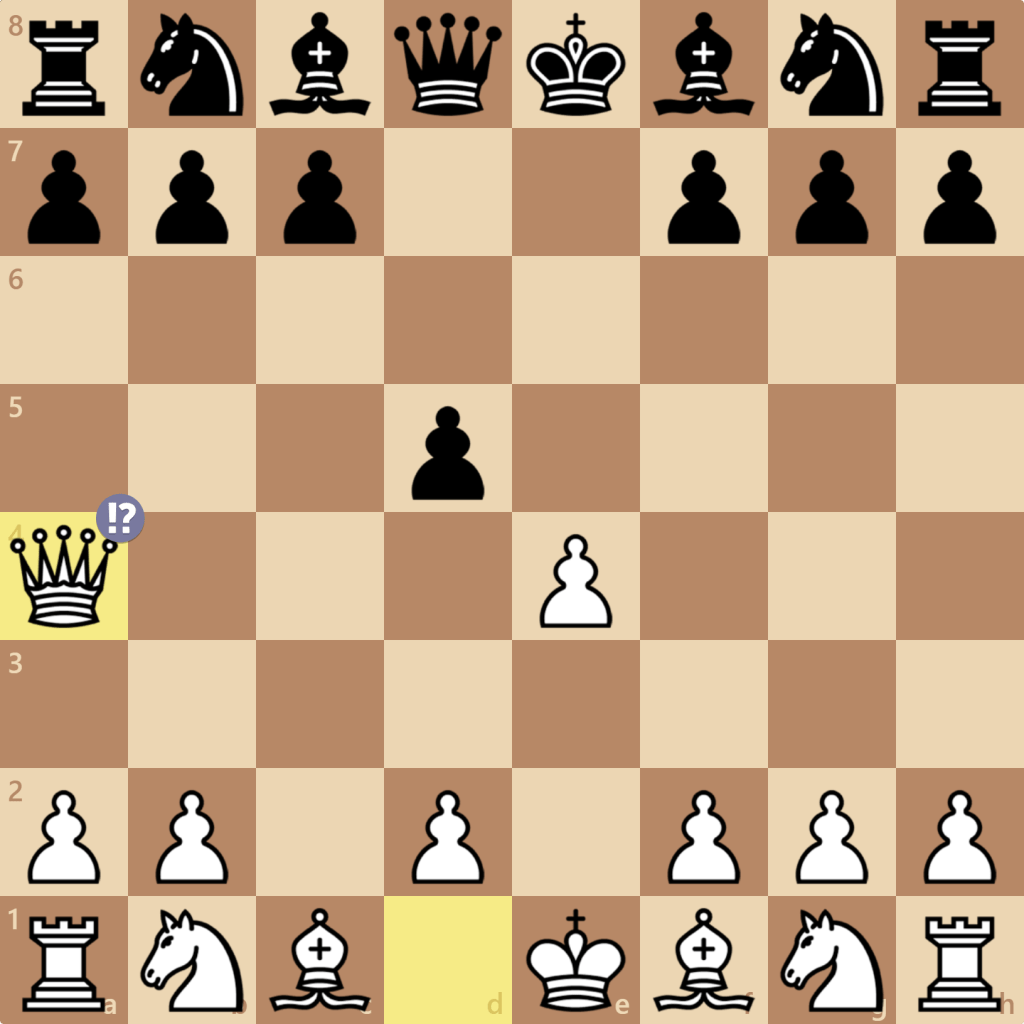
Let’s have a look at two very recent games down a specific line that I really like: (1. e4 e6 2. c4 d5 3. cxd5 exd5 4. Qa4+!?). Now, Stockfish doesn’t like this queen check at all, giving it an evaluation of [-1.1]. However, it’s one of the most winning lines against the French Defense on Lichess – with White winning 54% vs Black 42%. Moreover, this might be the OG Steiner line!
Historical note:
What we now call the French Defense: Steiner Variation (1. e4 e6 2. c4) was played and known by the 19th century chess masters, including by Cochrane, Staunton, Loewe, Paulsen, Lasker, and into the early 1900s, by Nimzowitsch, Tartakower, Alekhine, and Rubinstein. So, it has quite a pedigree as an aggressive counterattack against the French Defense. It can be understood as c4 immediately challenges Black’s desire to control the centre with d5, potentially opening the centre in a more favourable way for White. What I would say, however, is that for many of these historical games, (2. c4) didn’t seem very successful with White typically losing when a master was playing another master.
This is where Hungarian chess master Endre Steiner (1901-1944) enters the scene. The first game of him playing the Steiner Variation was in a tournament in 1928, where he used it to beat Réti! However, it is his victory against Tartakower in a tournament in Budapest the following year using the novel (4. Qa4+!?) Line that was notable and had his name attached to the opening. Have a look at the amazing game (Steiner—Tartakower, 1929, Budapest), where Steiner scores two brilliancies!
Sadly, Endre Steiner died in a Nazi concentration camp near Budapest on 29 December 1944. Interestingly, there is an Australian connection; Endre’s younger brother, IM Lajos Steiner (1903-1975) emigrated to Australia in 1939, living in Sydney, and became the Australian chess champion four times (1945, 1946/7, 1952/3, and 1958/9) and the New South Wales champion nine times!
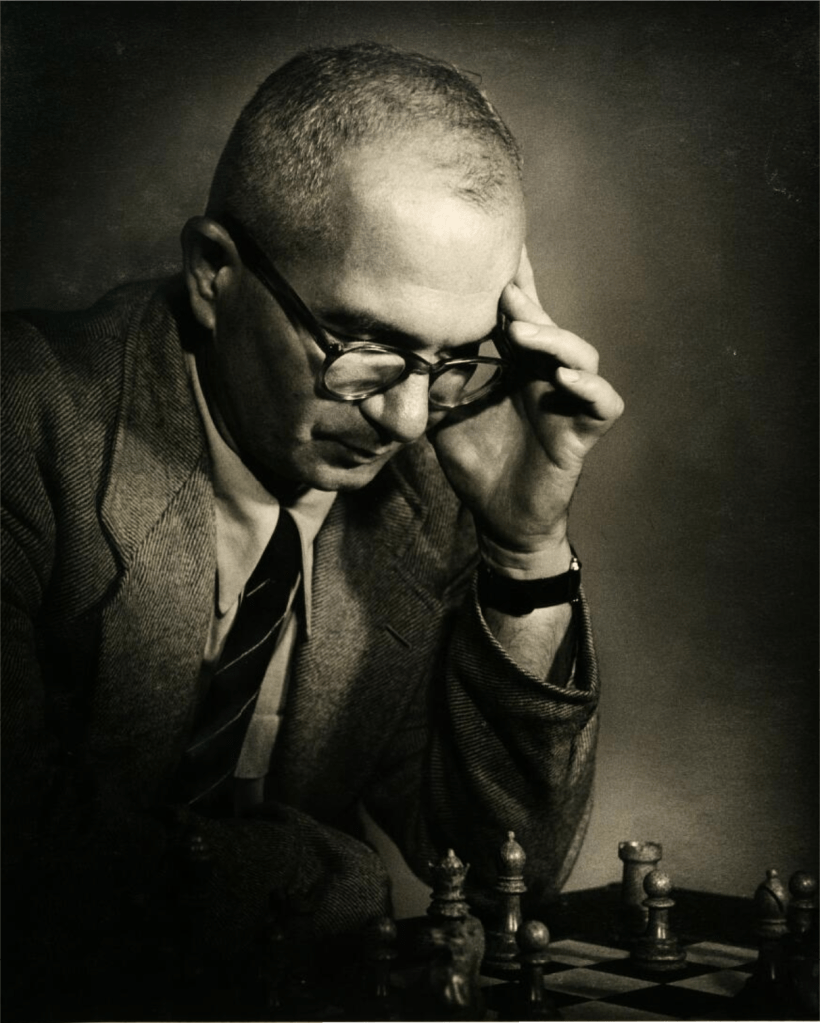
Leslie, Len. (1940). Portrait of Lajos Steiner, from http://nla.gov.au/nla.obj-136590591
Game 1:
I played this game a couple of weeks ago and entered the Steiner Variation opportunistically. After (4… Bd7), I slid the queen back (5. Qb3), which places pressure on Black’s d5-pawn and their b7-pawn. This position transposes potentially to an opening that is more familiar to modern audiences, the Orthoschnapp Gambit, where White plays (4. Qb3) earlier in the Steiner Variation line. The Orthoschnapp Gambit is a contemporary invention of FM Stefan Bueckner in 1983, and I couldn’t find any evidence that it has been previously played by others.
Black plays the expected move (5… dxe4) and here, I mis-remembered the trap line and captured Black’s b-pawn (6. Qxb7?), a mistake, but only if Black finds (6… Nc6). Fundamentally, my queen can be harassed and even trapped by Black. However, Black didn’t find the optimal move, playing (6… Bc5??) instead. I could see what Black was trying to do – it looked like they had a trap after I captured their hanging rook with (7. Qxa8 7. Bc6!). This was indeed a good move for Black (and suboptimal for me), but I saw that I had (8. Bb5!) pinning their bishop to their king! These positions look almost a bit like a reverse Englund Complex, so I had some familiarity with them. And here, a very interesting phenomenon happed. Black is still slightly ahead, though it was mostly equal at [-0.2]. However, the loss of the rook in the opening seems to have been devastating for my French Defense playing opponent, and they resigned on move 8! Emotional damage!
This demonstrates a particular notion and idea in the romantic style of chess – you can win by making your opponent believe that they’ve lost!
Game 2:
Black responded to my wayward queen check by blocking with their c-pawn (4. Qa4+!? c6). In this game, I had no quick win aspirations, but the opening still transformed in the manner that I wanted. Black had to recapture in the centre with their queen, and then with the fully open e-file, I forced a queen trade. This wasn’t the most accurate according to the engine, but it meant that by move 9, I had gained a small advantage in the opening, and the game had taken an open and tactical flavour. I had transformed the French Defense into something that didn’t look very much like a French Defense at all. I like it!
And this bore fruit almost immediately in the early middlegame. Black made tactical errors against my attack and lost a rook and the right to castle. I carelessly blundered right back [+3.8 → -3.5], but Black didn’t capitalise on my mistakes. This gave me the opportunity to strike back and regain the initiative. On move 23, Black didn’t realise that their b3-knight was about to be trapped (admittedly, not easy to see), and blunders by playing an innocuous pawn advance [-0.9 → +3]. The gave me back numerical piece equality (3 vs 3 pieces), instantly making the game easier to play.
We then entered an endgame where I had the rook pair, and Black had a rook and knight. I knew that I was better, but I found Black’s knight rather tricky and annoying to manoeuvre around. And so, on move 36, I made a calculated gamble to trade one of my rooks for Black’s knight with (36. Rxe5+!?). Stockfish considers this a mistake, with the evaluation dropping back to equality [+5 → 0.00]. However, my logic was that I had three passed pawns on the kingside, and I was confident that Black would not be able to prevent one of them from promoting or be forced to trade their rook for a pawn). It was interesting to see that Stockfish believed that the position was defendable (and thus, a draw), but in the game, I was right. It was very difficult for Black to find the correct rook moves, and they couldn’t prevent my f-pawn from advancing gradually, supported by my rook and king. On their penultimate move, Black placed their rook to defend their back rank (50… Ra8), but it was too late as my pawn was on the seventh rank, a step from promotion. Black had no checks so couldn’t gain a step of tempo. With (51. Re8), it was over. Promotion came next turn (51… Rxe8 52. fxe8=Q) and Black resigned, GG!
The big take away from this game is that the Steiner Variation with (2. c4), especially down the OG line with (4. Qa4+) is potentially a really promising approach to playing the French Defense for people who prefer open tactical games! Give it a go!
Game 1: https://www.chess.com/game/live/107612649773
Game 2: https://www.chess.com/game/live/108346247457
[Event "Live Chess"]
[Site "Chess.com"]
[Date "2024.04.23"]
[Round "-"]
[White "vitualis"]
[Black "dollyin123"]
[Result "1-0"]
[CurrentPosition "Qn1qk1nr/p1p2ppp/2b5/1Bb5/4p3/8/PP1P1PPP/RNB1K1NR b KQk -"]
[Timezone "UTC"]
[ECO "C00"]
[ECOUrl "https://www.chess.com/openings/French-Defense-Steiner-Variation-2...d5-3.cxd5-exd5"]
[UTCDate "2024.04.23"]
[UTCTime "12:03:21"]
[WhiteElo "1293"]
[BlackElo "1291"]
[TimeControl "900+10"]
[Termination "vitualis won by resignation"]
[StartTime "12:03:21"]
[EndDate "2024.04.23"]
[EndTime "12:07:07"]
[Link "https://www.chess.com/game/live/107612649773"]
[WhiteUrl "https://images.chesscomfiles.com/uploads/v1/user/3711094.f52a0759.50x50o.ab18600a8723.png"]
[WhiteCountry "17"]
[WhiteTitle ""]
[BlackUrl "https://images.chesscomfiles.com/uploads/v1/user/128255648.56bd6a0f.50x50o.6acb8ce831f1.jpeg"]
[BlackCountry "175"]
[BlackTitle ""]

1. e4 {[%clk 0:15:10]} 1... e6 {[%clk 0:15:09.1]} 2. c4 {[%clk 0:15:13] Frech
Defense: Steiner Variation} 2... d5 {[%clk 0:15:18.1]} 3. cxd5 {[%clk
0:14:57.2]} 3... exd5 {[%clk 0:15:28]} 4. Qa4+ $5 {[%clk 0:15:05.6][%c_effect
a4;square;a4;type;Interesting;persistent;true] This is a very interesting line
in the Steiner Variation. Stockfish rates it an inaccuracy [-1.1], BUT it's one
of the most winning lines against the French Defense $1 According to the Lichess
community database, White wins 54\% compared to Black 42\% in this position $1
Moreover, the very first game of this position in the LumbrasGigabase is none
other than the game by Steiner himself, winning against Tartakower in Budapest
1929. This notable game is why the variation is named after Endre Steiner $1} 4...
Bd7 {[%clk 0:15:31.8]} 5. Qb3 {[%clk 0:15:09.7] This transposes into the
Orthoschnapp Gambit where White plays (4. Qb3). However, the Orthoschnapp is a
much more contemporary invention by FM Stefan Bueckner in 1983.} 5... dxe4
{[%clk 0:15:38.7]} 6. Qxb7 $2 {[%clk 0:15:15.6][%c_effect
b7;square;b7;type;Mistake;persistent;true][%c_arrow
f1c4;keyPressed;none;from;f1;opacity;0.8;to;c4;persistent;false][%c_highlight
c4;keyPressed;none;opacity;0.8;square;c4;persistent;false] This is a mistake as
the queen will be relatively trapped and harrassed after Nc6 [-3.3]. However, I
was mostly exploring the Steiner Variation in this game, having only very
briefly covered some of the lines prior. I realised in the game that I probably
should have played Bc4 first.} 6... Bc5 $4 {[%clk 0:15:05.3][%c_arrow
b8c6;keyPressed;none;from;b8;opacity;0.8;to;c6;persistent;false][%c_highlight
c6;keyPressed;none;opacity;0.8;square;c6;persistent;false,c5;keyPressed;none;opacity;0.8;square;c5;persistent;false][%c_effect
c5;square;c5;type;Blunder;persistent;true] Black, however, wasn't familiar with
the Steiner either and this move is a blunder. I think they were trying to give
an extra defender to the a7 square, trapping the queen after Qxa8, but it
doesn't quite work [+0.8].} 7. Qxa8 $2 {[%clk 0:14:56.6][%c_effect
a8;square;a8;type;Mistake;persistent;true][%c_arrow
b7d5;keyPressed;none;from;b7;opacity;0.8;to;d5;persistent;false][%c_highlight
d5;keyPressed;none;opacity;0.8;square;d5;persistent;false] I decided to keep it
simple and just captured the rook [-0.2]. Stockfish thinks that the best move is
Qd5, threatening Black's dark square bishop. And when Black moves the bishop,
Bc4 forming a battery on the f7 square is very strong.} 7... Bc6 $1 {[%clk
0:15:11.4][%c_effect c6;square;c6;type;GreatFind;persistent;true][%c_highlight
c6;keyPressed;alt;opacity;0.8;square;c6;persistent;false] Great move $1} 8. Bb5 $1
{[%clk 0:15:01.4][%c_effect
b5;square;b5;type;GreatFind;persistent;true,e1;square;e1;type;Winner,e8;square;e8;type;ResignBlack][%c_highlight
b5;keyPressed;alt;opacity;0.8;square;b5;persistent;false] But I had one of my
own $1 Interestingly, Black resigns in this position even though they are
technically a little better in evaluation having suffered from emotional damage $1
GG $1} 1-0

[Event "Live Chess"]
[Site "Chess.com"]
[Date "2024.05.01"]
[Round "-"]
[White "vitualis"]
[Black "tyrranny"]
[Result "1-0"]
[CurrentPosition "4Q3/8/2p3K1/1p6/8/8/5k2/8 b - -"]
[Timezone "UTC"]
[ECO "C00"]
[ECOUrl "https://www.chess.com/openings/French-Defense-Steiner-Variation-2...d5-3.cxd5-exd5"]
[UTCDate "2024.05.01"]
[UTCTime "23:50:51"]
[WhiteElo "1320"]
[BlackElo "1280"]
[TimeControl "900+10"]
[Termination "vitualis won by resignation"]
[StartTime "23:50:51"]
[EndDate "2024.05.02"]
[EndTime "00:25:53"]
[Link "https://www.chess.com/game/live/108346247457"]
[WhiteUrl "https://images.chesscomfiles.com/uploads/v1/user/3711094.f52a0759.50x50o.ab18600a8723.png"]
[WhiteCountry "17"]
[WhiteTitle ""]
[BlackUrl "https://images.chesscomfiles.com/uploads/v1/user/26471750.12b9cdde.50x50o.2a6f658d23d1.jpeg"]
[BlackCountry "2"]
[BlackTitle ""]

1. e4 {[%clk 0:15:09.9]} 1... e6 {[%clk 0:15:08.9]} 2. c4 {[%clk 0:15:14.4]
French Defense: Steiner Variation} 2... d5 {[%clk 0:15:13.7]} 3. cxd5 {[%clk
0:15:05.7]} 3... exd5 {[%clk 0:15:21.8]} 4. Qa4+ $5 {[%clk 0:15:15.1][%c_effect
a4;square;a4;type;Interesting;persistent;true]} 4... c6 {[%clk 0:14:50][%c_arrow
c8d7;keyPressed;none;from;c8;opacity;0.8;to;d7;persistent;false][%c_highlight
d7;keyPressed;shift;opacity;0.8;square;d7;persistent;false]} 5. exd5 {[%clk
0:15:15.4]} 5... Qxd5 {[%clk 0:14:47.9]} 6. Nc3 {[%clk 0:15:09.9]} 6... Qe5+
{[%clk 0:14:04]} 7. Qe4 $6 {[%clk 0:15:08.9][%c_arrow
f1e2;keyPressed;none;from;f1;opacity;0.8;to;e2;persistent;false][%c_effect
e4;square;e4;type;Inaccuracy;persistent;true][%c_highlight
e2;keyPressed;none;opacity;0.8;square;e2;persistent;false] This was perhaps a
bit inaccurate compared to Be2, which I considered [+0.1 $37 -0.4]. However, my
thoughts were that I didn't mind trading queens having created opened centre
files, as I've happily nerfed the French Defense for the French player $1} 7...
Bd6 $6 {[%clk 0:13:35][%c_effect
d6;square;d6;type;Inaccuracy;persistent;true][%c_arrow
e5e4;keyPressed;none;from;e5;opacity;0.8;to;e4;persistent;false][%c_highlight
e4;keyPressed;none;opacity;0.8;square;e4;persistent;false] And actually, we've
simply moved back to equality now [0.00]} 8. Nf3 {[%clk 0:15:06.5]} 8... Qxe4+
{[%clk 0:13:22.4]} 9. Nxe4 {[%clk 0:15:14.9] And we've moved into tactical
territory, which I like $1} 9... Bb4 {[%clk 0:12:59][%c_arrow
d6e7;keyPressed;none;from;d6;opacity;0.8;to;e7;persistent;false][%c_highlight
e7;keyPressed;shift;opacity;0.8;square;e7;persistent;false] This is slightly
inaccurate [+0.2], and I make use of Black's slightly misplaced bishop in the
coming moves...} 10. Bc4 {[%clk 0:15:14.7]} 10... Nd7 {[%clk 0:12:32.5]} 11. a3
{[%clk 0:15:11.3]} 11... Ba5 $4 {[%clk 0:12:38.2][%c_arrow
b4e7;keyPressed;none;from;b4;opacity;0.8;to;e7;persistent;false][%c_highlight
e7;keyPressed;none;opacity;0.8;square;e7;persistent;false,a5;keyPressed;none;opacity;0.8;square;a5;persistent;false][%c_effect
a5;square;a5;type;Blunder;persistent;true] And, there we go, a blunder $1 [+4.3]
Black needed the bishop on the diagonal to defend the d6 square from Nd6+ and
the two attackers on Black's weak f7-pawn $1} 12. Nd6+ $1 {[%clk
0:15:16.5][%c_effect d6;square;d6;type;GreatFind;persistent;true][%c_highlight
d6;keyPressed;alt;opacity;0.8;square;d6;persistent;false]} 12... Ke7 {[%clk
0:12:25.5]} 13. Nxf7 {[%clk 0:15:09.8]} 13... b5 {[%clk 0:12:13.5]} 14. Bb3 $6
{[%clk 0:14:45.1][%c_arrow
c4a2;keyPressed;none;from;c4;opacity;0.8;to;a2;persistent;false][%c_effect
b3;square;b3;type;Inaccuracy;persistent;true][%c_highlight
a2;keyPressed;none;opacity;0.8;square;a2;persistent;false] This was an
inaccuracy [+3.8] and I knew in the game after I made the move that Ba2 was
probably the better move. This position gives Black counterplay, and I then
compound the mistake $1} 14... Nc5 {[%clk 0:12:15.6]} 15. Nxh8 $4 {[%clk
0:13:44.9][%c_arrow
b3a2;keyPressed;none;from;b3;opacity;0.8;to;a2;persistent;false][%c_highlight
h8;keyPressed;none;opacity;0.8;square;h8;persistent;false,a2;keyPressed;none;opacity;0.8;square;a2;persistent;false][%c_effect
h8;square;h8;type;Blunder;persistent;true] Retrospectively, I don't know what I
was thinking $1 I thought that trading the bishop for the rook would be \"fine\",
but it was obviously unnecessary $1 [+3.8 $37 -3.5]} 15... Nxb3 {[%clk 0:12:21.6]}
16. Rb1 $6 {[%clk 0:13:50.7][%c_effect
b1;square;b1;type;Inaccuracy;persistent;true][%c_arrow
e1d1;keyPressed;none;from;e1;opacity;0.8;to;d1;persistent;false][%c_highlight
d1;keyPressed;none;opacity;0.8;square;d1;persistent;false] The rook was lost
anyway as Black has Bf5.} 16... Kf6 $2 {[%clk 0:11:44.5][%c_effect
f6;square;f6;type;Mistake;persistent;true][%c_arrow
c8f5;keyPressed;none;from;c8;opacity;0.8;to;f5;persistent;false][%c_highlight
f5;keyPressed;none;opacity;0.8;square;f5;persistent;false] Luckily for me, they
didn't see it $1 [-5 $37 -3] The thing is, Black has a potentially winning position,
but I'm still up on material. If they don't take the advantage and convert, I'm
not actually losing $1} 17. O-O {[%clk 0:13:35.1] Time to consolidate and to try
to disentangle my predicament $1} 17... Bg4 {[%clk 0:11:35.8]} 18. d4 {[%clk
0:12:58.8]} 18... Bxf3 {[%clk 0:11:31.8]} 19. gxf3 {[%clk 0:13:06.3]} 19... Nh6
{[%clk 0:11:14.1]} 20. h4 {[%clk 0:12:59.1]} 20... Rxh8 {[%clk 0:11:16.1]} 21.
Bg5+ {[%clk 0:13:05.2] Attacking and exposing the king $1} 21... Kf5 {[%clk
0:11:18.8]} 22. Rbd1 {[%clk 0:12:59.3]} 22... Nf7 $2 {[%clk 0:11:15][%c_arrow
a5b6;keyPressed;none;from;a5;opacity;0.8;to;b6;persistent;false][%c_highlight
b6;keyPressed;none;opacity;0.8;square;b6;persistent;false][%c_effect
f7;square;f7;type;Mistake;persistent;true] This is a mistake [-0.9] as Black's
b3-knight is about the to trapped $1} 23. Be3 $2 {[%clk 0:12:41.8][%c_arrow
d1d3;keyPressed;none;from;d1;opacity;0.8;to;d3;persistent;false][%c_highlight
d3;keyPressed;none;opacity;0.8;square;d3;persistent;false][%c_effect
e3;square;e3;type;Mistake;persistent;true] I didn't want to lose any more
pieces, but Stockfish says it's fine and better to play Rd3 immediately as after
Nxg5 hxg5, Black's knight is still trapped so it simplfies to an endgame with a
rook pair vs rook and bishop.} 23... a6 $4 {[%clk 0:10:15.3][%c_effect
a6;square;a6;type;Blunder;persistent;true][%c_highlight
a6;keyPressed;none;opacity;0.8;square;a6;persistent;false,d8;keyPressed;none;opacity;0.8;square;d8;persistent;false][%c_arrow
h8d8;keyPressed;none;from;h8;opacity;0.8;to;d8;persistent;false] Black probably
didn't see that their knight was trapped and so misses their final chance and
blunders [+3]} 24. Rd3 $1 {[%clk 0:12:41][%c_effect
d3;square;d3;type;GreatFind;persistent;true][%c_highlight
d3;keyPressed;alt;opacity;0.8;square;d3;persistent;false]} 24... Nxd4 {[%clk
0:09:05.8]} 25. Bxd4 {[%clk 0:12:43.3]} 25... Rg8 $6 {[%clk 0:08:50.3][%c_effect
g8;square;g8;type;Inaccuracy;persistent;true][%c_arrow
h8d8;keyPressed;none;from;h8;opacity;0.8;to;d8;persistent;false][%c_highlight
d8;keyPressed;none;opacity;0.8;square;d8;persistent;false]} 26. Kh1 $6 {[%clk
0:12:32.7][%c_arrow
f1c1;keyPressed;none;from;f1;opacity;0.8;to;c1;persistent;false][%c_highlight
c1;keyPressed;none;opacity;0.8;square;c1;persistent;false][%c_effect
h1;square;h1;type;Inaccuracy;persistent;true] Rook endgame manoeuvres can be
tricky. However, I didn't wan my king to be potentially on an open file against
Black's rook.} 26... Rd8 {[%clk 0:08:16.3]} 27. b4 {[%clk 0:12:17.7]} 27... Bb6
{[%clk 0:08:20.9]} 28. Rfd1 $1 {[%clk 0:12:25.1][%c_effect
d1;square;d1;type;GreatFind;persistent;true][%c_highlight
d1;keyPressed;alt;opacity;0.8;square;d1;persistent;false] Now, we have an
opportunity to simplify $1} 28... Bxd4 {[%clk 0:07:42.2]} 29. Rxd4 {[%clk
0:12:32.2]} 29... Rc8 {[%clk 0:07:44.3]} 30. Rd7 {[%clk 0:12:07.7]} 30... Kf6
{[%clk 0:07:35.3]} 31. R1d4 {[%clk 0:11:44.6]} 31... Ke6 {[%clk 0:07:33.8]} 32.
Ra7 {[%clk 0:11:09.6]} 32... Ne5 {[%clk 0:07:25.3]} 33. Re4 {[%clk 0:10:49.3]}
33... Kf5 {[%clk 0:07:02.6]} 34. Kg2 {[%clk 0:10:18.9]} 34... g5 {[%clk
0:06:06.1]} 35. hxg5 {[%clk 0:09:49.2]} 35... Rg8 {[%clk 0:06:09.2]} 36. Rxe5+ $5
{[%clk 0:09:04.9][%c_effect
e5;square;e5;type;Interesting;persistent;true][%c_arrow
a7e7;keyPressed;none;from;a7;opacity;0.8;to;e7;persistent;false][%c_highlight
e7;keyPressed;none;opacity;0.8;square;e7;persistent;false] Stockfish calls this
a blunder [+5 $37 0.00] but this was a calculated risk, though I'd admit that I
miscalculated. I found Black's knight difficult to deal with and thought that I
was likely to win with my massive kingside pawn majority anyway. Stockfish
disagrees and thinks that the evaluation is equal. Nonetheless, I do manage to
win from the position $1} 36... Kxe5 {[%clk 0:06:12]} 37. Re7+ {[%clk 0:08:56.8]}
37... Kf4 {[%clk 0:06:08]} 38. Rxh7 {[%clk 0:08:43.8] And now, I have three
passed pawns. I was confident that Black couldn't stop all of them $1} 38... Rxg5+
{[%clk 0:05:55.3]} 39. Kh3 {[%clk 0:08:19.7]} 39... Kxf3 {[%clk 0:05:35.5]} 40.
Rf7+ {[%clk 0:08:28.4]} 40... Ke2 {[%clk 0:05:42.1]} 41. f4 {[%clk 0:08:32.2]}
41... Rh5+ $2 {[%clk 0:05:39][%c_arrow
g5g6;keyPressed;none;from;g5;opacity;0.8;to;g6;persistent;false][%c_highlight
g6;keyPressed;none;opacity;0.8;square;g6;persistent;false][%c_effect
h5;square;h5;type;Mistake;persistent;true] And Black cracks $1 Rook endgames are
difficult and Black needed to play very accurately. This move makes some sense,
but it actually allowed White's king to walk up with their f-pawn [+4] $1} 42.
Kg4 $1 {[%clk 0:08:41.1][%c_effect
g4;square;g4;type;GreatFind;persistent;true][%c_highlight
g4;keyPressed;alt;opacity;0.8;square;g4;persistent;false]} 42... Rd5 {[%clk
0:05:16.4]} 43. Re7+ {[%clk 0:08:41.7]} 43... Kf2 {[%clk 0:04:46.7]} 44. Re5
{[%clk 0:08:25.6] Inviting Black to simplify $1} 44... Rd3 {[%clk 0:04:40.2]} 45.
f5 $1 {[%clk 0:08:21.4][%c_effect f5;square;f5;type;GreatFind;persistent;true]}
45... Rg3+ {[%clk 0:04:43.1]} 46. Kh5 {[%clk 0:08:21.8]} 46... Rf3 {[%clk
0:04:21.4]} 47. Kg6 {[%clk 0:08:24.4]} 47... Rxa3 {[%clk 0:03:51.6]} 48. f6
{[%clk 0:08:33]} 48... a5 $4 {[%clk 0:03:52][%c_effect
a5;square;a5;type;Blunder;persistent;true][%c_highlight
a5;keyPressed;none;opacity;0.8;square;a5;persistent;false] [+M20] - the f-pawn
is now unstoppable $1} 49. bxa5 {[%clk 0:08:37.1]} 49... Rxa5 {[%clk 0:03:58.8]}
50. f7 {[%clk 0:08:45.9]} 50... Ra8 {[%clk 0:03:53.3]} 51. Re8 {[%clk
0:08:54.3]} 51... Rxe8 {[%clk 0:03:43.2]} 52. fxe8=Q {[%clk 0:09:02.9][%c_effect
g6;square;g6;type;Winner,f2;square;f2;type;ResignBlack] Good game, GG $1} 1-0

[Event "Budapest"]
[Site "Budapest HUN"]
[Date "1929.??.??"]
[Round "?"]
[White "Steiner, Endre"]
[Black "Tartakower, Savielly"]
[Result "1-0"]
[ECO "C00e"]
[Source "PGNMentor"]

1.e4 e6 2.c4 d5 3.cxd5 exd5 4.Qa4+ Bd7 5.Qb3 Bc6 6.d4 Nf6 7.e5 Nfd7 8.Qg3
f6 9.Bd3 Bb4+ 10.Nc3 O-O 11.Qh3 g6 12.Bh6 Re8 13.f4 Nf8 14.Nf3 Qd7 15.Qh4
fxe5 16.fxe5 Bb5 17.Bxb5 Qxb5 18.Qf6 Ne6 19.Ng5 Qd7 20.O-O Nxg5 21.Qxg5
Nc6 22.Rf6 Nxd4 23.Nxd5 Ne6 24.Rxg6+ hxg6 25.Qxg6+ Kh8 26.Nf6 Rg8 27.Qh5
Rxg2+ 28.Kxg2 Qc6+ 29.Kh3 Ng7 30.Bxg7+ Kxg7 31.Rg1+ Kf8 32.Rg8+ Ke7 33.
Rxa8 Qe6+ 34.Qg4 1-0
 Adventures of a Chess Noob