
One of the most exciting aspects in a game of chess is when there is a reversal. This is especially the case when you manage to transform a losing position to one that is winning through a planned tricky manoeuvre!
This game was an Australian online tournament for players rated under 1500, where I played for New South Wales against Victoria. To set the context for those of you who aren’t Australians, there has been a long standing, mostly friendly (😏) rivalry between these two eastern states of Australia, particularly between their respective capital cities of Sydney and Melbourne. Although I don’t often enjoy daily games, I do like the occasional daily tournament games as the feel is different as there is stake of playing for your team.
In the tournament, I was matched against @Ceazelef, who is somewhat higher rated than me (1465 vs 1240 in daily).
Today, I’m going to cover the game where I played with the white pieces. Black led with the Modern Defense (1. e4 g6), one of the hypermodern openings. A curious thing with this opening is that despite its name, modern, it substantially predates the hypermodern movement and was known and played (uncommonly) a century before in the 19th century!
A historical note:
Those of you who follow my channel and blog might have already detected a pattern… Although hypermodernism started in the early 20th century in Europe, many of these ideas were part of the Indian chess tradition, and thus, appear in the extraordinary series of games played by “the Brahmin”, the very strong Indian chess player, Moheschunder Bannerjee against John Cochrane in Calcutta (Kolkata) in the 1850s. In these games we see the sophisticated use of openings for the first time in Western chess, including the entire class of Indian Defense, but also the Catalan Opening, and the Grünfeld Defense. Thematically, the Modern Defense was also played by Bannerjee, but in this case, it was already known to European chess players, but especially Cochrane…
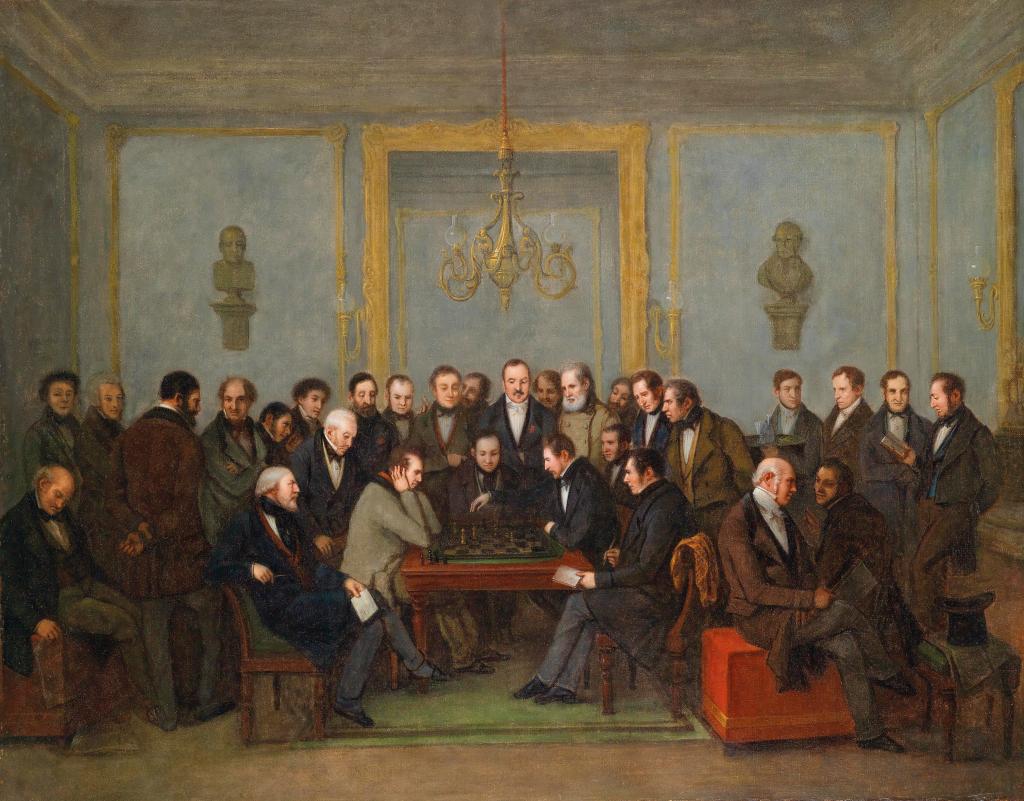
This is as the first game of the Modern Defense in the massive LumbrasGigabase was also faced by John Cochrane a decade earlier in 1842. It was played by Pierre Charles Fournier de Saint-Amant (1800-1872), the strongest French chess master of the time, who was visiting London. Saint-Amant was in his prime, having only recently taken over as the master of the famous Parisian chess institution, the Café de la Régence, after the death of La Bourdonnais (possibly the strongest player in the world in the early 19th century) in 1840. Under modern computer-assisted analysis sensibilities, Saint-Amant with the Black pieces perhaps fumbled the opening, but Cochrane was nonetheless overwhelmed by the unorthodox play! Check out (Cochrane — Saint-Amant, 1842, London).

Historically, the chess battle between Saint-Amant and Cochrane’s protégé, Howard Staunton (1810-1874) is better known. In early 1843, Staunton lost a short match (2 ½ — 3 ½) against Saint-Amant who was again visiting London. Staunton challenged Saint-Amant to a longer match to be played in Paris in what some considered a de facto world championship challenge! In December 1843, Staunton prevailed winning (13 — 8) becoming the de facto World Champion; de facto because the title didn’t exist then. 😅 In this epic battle between England and France, Staunton prepared the opening line (1. c4), which after the match became known as the English Opening!
In our game, the opening was characterised with some positional shuffling, but I was happy with my move (7. d5), placing pressure on Black’s c6-knight. Stockfish evaluates that un-developing the knight (7… Nb8) was best for Black, but this is difficult to see and play. Instead, we had (7… Ne5), but then after (8. Nxe5 dxe5), Black’s fianchetto dark square bishop has their long diagonal blocked in by their own pawn on e5. This is not a disaster for Black, but reduces the usefulness, or perhaps, the “scariness” of that bishop!
However, the Modern Defense can be tricky to play against, as Cochrane also found. On move 9, I had a sense that I was ahead in the opening, but I also wasn’t sure what to play next. I played (9. Qd2?), thinking that developing my queen and forming a battery with the dark square bishop, and preparing for castling in either direction would be good. Stockfish, however, rated this a mistake [+0.7 → -1.1]. The reason is that after (9… Bxb5 10. Nxb5), my e4-pawn is hanging! Luckily for me, Black didn’t see it. 😏
I opposite-side castled (castled long) and at the beginning of the middlegame, found the right tactical idea with (12. h4). However, I then fumble this approach; I should have kept pushing the h-pawn to destabilise Black’s king’s defences! Instead, I lost tempo trying to rotate my knight into the attack, and then got myself tangled in knots against Black counterattack.
On turn 18, I undercalculated an exchange (18. Bxg4? Qxg4) and didn’t appreciate the looseness of my pawns against Black’s infiltrating queen [-3.1]. I managed to kick out Black’s queen but lose two pawns in the process. Black’s superior middlegame technique was on display and after (27… Qc4), forming mating threat with a battery of rook and queen on my c2-pawn, it crystalised in my mind that I was in serious trouble, and probably losing unless I do something drastic. We each had only three pieces left: queen and rook, and I had a knight for their dark square bishop. I needed to make a counterattack now while there were still some pieces left, or it would be an inexorable attrition to death.
Black played (28… Bh6), a powerful threat attacking my hanging e3-pawn, which if captured, would pin my d2-rook to the king. Stockfish recommends b3 in this position, which effective accepts that the game is lost and instead, aims to delay mate as long as possible. However, I saw a speculative and very tricky move that set up counterattacking resources – (29. Ng5!?)! This blocks Black’s bishop’s vision of the dark square diagonal, and pressures Black’s f7-pawn with a second attacker. The position also creates a scenario where Black can play a devastating blunder with (29… f6) as I would then follow up with (30. Qh7+) and Stockfish sees a [+M11]!
I suspect that this move was unexpected by Black, and my intuition was this move was probably “bad” according to the engine. It was [-2.7 → -4.1] and the simplest approach that Black could take would be to trade their bishop for my knight (29… Bxg5 30. hxg5), gaining on outside passed pawn and simply playing on. However, as we had numerical piece equality (3 pieces vs 3 pieces), my hunch was that they would attempt to preserve material. Loss aversion can be a strong cognitive bias – Black knew that they were winning positionally (but not materially) and thus, were likely to not consider moves involving material sacrifice. When one is already losing, playing tactics from a psychological perspective can give an edge!
My hunch was correct and rather than take the straightforward approach of simplification, Black opted to attack and chase my queen giving a brief shuffle (29… Rc7 30. Qb8+ Kg7). I doubled down on my tactical approach with another technically inaccurate but tricky move (31. Rf2!?), now bringing my rook onto the f-file, pressure Black’s f7-pawn. And here, with Black having already decided that their f-pawn was safe, they blunder not recognising the new threat! With (31… Qc5??), Black pinned my e3-pawn to my f2-rook, a move that tactically makes perfect sense. Except now with the brilliant (32. Rxf7+!!), I sacrifice the ROOK! The tactical manoeuvring worked with a REVERSAL in the game from [-5 → +2]. Black has a single legal move (32… Rxf7) and then (33. Ne6+!) a royal fork and I win Black’s queen! 🤩
The game quickly simplifies into an endgame with Black able to win my knight with a bishop fork. Moreover, Black’s rook and bishop synergise well, and I needed to play accurately to avoid mate on the back rank, or Black pinning my queen against my king. However, this was a daily game and I had plenty of time to calculate my endgame moves. In a queen vs bishop + rook endgame, the queen will overwhelm.
My opportunity arose about ten turns later with (45. Qa7+!) – my queen was able to force Black’s king into a position where I could give an absolute fork on the subsequent position. First the bishop (46. Qe3+!), then their a-pawn (50. Qa7+), and then finally (53. Qf4+) their final piece, the rook. With all hope extinguished, Black resigned, GG!
The big takeaway from this game is that when you are losing at the beginner-intermediate level, don’t be afraid to making speculative moves, especially if they help create complications and new tactical resources for a counterattack. Your opponent is more likely to blunder a reversal if you create the opportunities for them to blunder!
Game: https://www.chess.com/game/daily/666067133
[Event "2024 ANZ U1500 R5: NSW vs VIC - Board 4"]
[Site "Chess.com"]
[Date "2024.06.08"]
[Round "-"]
[White "vitualis"]
[Black "Ceazelef"]
[Result "1-0"]
[Match "https://www.chess.com/club/matches/1635807"]
[CurrentPosition "8/8/6pk/7p/5Q1P/KP4r1/P7/8 b - - 2 53"]
[Timezone "UTC"]
[ECO "B06"]
[ECOUrl "https://www.chess.com/openings/Modern-Defense-Standard-Two-Knights-Variation"]
[UTCDate "2024.06.08"]
[UTCTime "00:03:02"]
[WhiteElo "1240"]
[BlackElo "1465"]
[TimeControl "1/259200"]
[Termination "vitualis won by resignation"]
[StartTime "00:03:02"]
[EndDate "2024.06.10"]
[EndTime "05:46:27"]
[Link "https://www.chess.com/game/daily/666067133"]
[WhiteUrl "https://images.chesscomfiles.com/uploads/v1/user/3711094.f52a0759.50x50o.ab18600a8723.png"]
[WhiteCountry "17"]
[WhiteTitle ""]
[BlackUrl "https://www.chess.com/bundles/web/images/noavatar_l.84a92436.gif"]
[BlackCountry "17"]
[BlackTitle ""]

1. e4 g6 {Modern Defense - a tricky opening that significantly predates the
hypermodern system, which it now fits within. [+0.5] I often find that the
opening results in a lot of positional shuffling, which isn't my favourite $1} 2.
d4 Bg7 3. Nf3 d6 4. Nc3 Nc6 5. Bb5 Bd7 6. Be3 Nf6 7. d5 Ne5 {[%c_arrow
c6b8;keyPressed;none;from;c6;opacity;0.8;to;b8;persistent;false][%c_highlight
b8;keyPressed;shift;opacity;0.8;square;b8;persistent;false] This move was a bit
suboptimal [+0.5 $37 +0.7]. Interestingly, the engine considers un-developing the
knight to b8 to be the most accurate move $1} 8. Nxe5 dxe5 {I was happy with this
transformation as Black's fianchetto bishop is now blocked by their own pawn on
e5.} 9. Qd2 $2 {[%c_effect d2;square;d2;type;Mistake;persistent;true][%c_arrow
f2f3;keyPressed;none;from;f2;opacity;0.8;to;f3;persistent;false,a2a4;keyPressed;none;from;a2;opacity;0.8;to;a4;persistent;false,b5d7;keyPressed;none;from;b5;opacity;0.8;to;d7;persistent;false,d1d3;keyPressed;none;from;d1;opacity;0.8;to;d3;persistent;false][%c_highlight
f3;keyPressed;none;opacity;0.8;square;f3;persistent;false,a4;keyPressed;shift;opacity;0.8;square;a4;persistent;false,d7;keyPressed;shift;opacity;0.8;square;d7;persistent;false,d3;keyPressed;shift;opacity;0.8;square;d3;persistent;false]
Here, I wasn't sure what was the best move. Stockfish thinks that f3 is the most
accurate, but likes a range of other options. I played Qd2 with the idea of
forming a battery with the queen and bishop, and potentially getting rid of
Black's fianchetto bishop, but the engine doesn't like this [+0.7 $37 -1.1]. The
reason is that after Bxb5 Nxb5, my e4-pawn is hanging.} 9... Ng4 $2 {[%c_arrow
d7b5;keyPressed;none;from;d7;opacity;0.8;to;b5;persistent;false][%c_highlight
b5;keyPressed;none;opacity;0.8;square;b5;persistent;false][%c_effect
g4;square;g4;type;Mistake;persistent;true] Luckily for me, Black didn't see it $1}
10. O-O-O Nxe3 11. fxe3 $6 {[%c_arrow
d2e3;keyPressed;none;from;d2;opacity;0.8;to;e3;persistent;false][%c_highlight
e3;keyPressed;none;opacity;0.8;square;e3;persistent;false][%c_effect
e3;square;e3;type;Inaccuracy;persistent;true] I spooked myself that Qxe3 could
result in a future pin of my queen against the king along the dark square
diagonal. Stockfish wasn't worried. I also thought that opening the f-file might
give some tactical opportunities...} 11... O-O 12. h4 Bg4 13. Be2 Qd7 14. Bf3
{[%c_arrow
h4h5;keyPressed;none;from;h4;opacity;0.8;to;h5;persistent;false][%c_highlight
h5;keyPressed;shift;opacity;0.8;square;h5;persistent;false] Continuing with the
h-pawn push was best, but was too uncertain to committ... It seems obvious in
hindsight $1} 14... a6 15. Ne2 $6 {[%c_arrow
h4h5;keyPressed;none;from;h4;opacity;0.8;to;h5;persistent;false][%c_highlight
h5;keyPressed;none;opacity;0.8;square;h5;persistent;false][%c_effect
e2;square;e2;type;Inaccuracy;persistent;true] My idea was to rotate the knight
into the attack. As per the previous turn, pushing the h-pawn was best.} 15...
b5 $6 {[%c_arrow
h7h5;keyPressed;none;from;h7;opacity;0.8;to;h5;persistent;false][%c_highlight
h5;keyPressed;none;opacity;0.8;square;h5;persistent;false][%c_effect
b5;square;b5;type;Inaccuracy;persistent;true] And the effectiveness of the
h-pawn push meant that Black's best option was to take the h5 square
themselves.} 16. Ng3 $6 {[%c_arrow
h4h5;keyPressed;none;from;h4;opacity;0.8;to;h5;persistent;false][%c_highlight
h5;keyPressed;none;opacity;0.8;square;h5;persistent;false][%c_effect
g3;square;g3;type;Inaccuracy;persistent;true] I brought an (unnecessary) extra
attacker to h5 $1} 16... h5 {... but too late, Black closes the attack
possibility.} 17. Nf1 $2 {[%c_arrow
d2e2;keyPressed;none;from;d2;opacity;0.8;to;e2;persistent;false][%c_highlight
e2;keyPressed;none;opacity;0.8;square;e2;persistent;false][%c_effect
f1;square;f1;type;Mistake;persistent;true] And here, some tunnel vision with the
knight, moving it over and over again. This was a mistake [-1.7] as the best
approach was to double down with Qe2.} 17... Rfd8 $6 {[%c_arrow
g4f3;keyPressed;none;from;g4;opacity;0.8;to;f3;persistent;false][%c_highlight
f3;keyPressed;none;opacity;0.8;square;f3;persistent;false][%c_effect
d8;square;d8;type;Inaccuracy;persistent;true]} 18. Bxg4 $2 {[%c_effect
g4;square;g4;type;Mistake;persistent;true] And I compound the mistake [-3.1] $1 I
undercalculated and didn't appreciate that after Qxg4, my e4-pawn was hanging $1}
18... Qxg4 19. Qb4 e6 20. Qc5 {Take my queen out of the pin. Here, I resigned
myself that my e4- and g2-pawns were hanging and that I was probably losing
material.} 20... Qxg2 {[%c_arrow
g4e4;keyPressed;none;from;g4;opacity;0.8;to;e4;persistent;false][%c_highlight
e4;keyPressed;shift;opacity;0.8;square;e4;persistent;false]} 21. Nd2 exd5 22.
Rhg1 Qh3 23. Rh1 Qe6 {Black's superior middlegame skills on display $1} 24. Qxc7
Rac8 25. Qb7 dxe4 26. Nxe4 Rxd1+ 27. Rxd1 Qc4 {[%c_highlight
c8;keyPressed;none;opacity;0.8;square;c8;persistent;false,c4;keyPressed;none;opacity;0.8;square;c4;persistent;false,c2;keyPressed;none;opacity;0.8;square;c2;persistent;false][%c_arrow
c8c2;keyPressed;none;from;c8;opacity;0.8;to;c2;persistent;false] Black sets up
the mating attack...} 28. Rd2 Bh6 {Powerful threat $1 Black is winning in this
position and I was in a bind [-2.7]} 29. Ng5 $5 {[%c_arrow
b2b3;keyPressed;none;from;b2;opacity;0.8;to;b3;persistent;false][%c_highlight
b3;keyPressed;none;opacity;0.8;square;b3;persistent;false][%c_effect
g5;square;g5;type;Interesting;persistent;true] Here, I played a tricky and
speculative move $1 Stockfish thinks that it's a mistake, but I knew that I was
losing already. So, I decided to counterattack Black's f7-pawn, while blocking
Black's bishop's access to the dark square diagonal $1 [-4.1] Note: I was hoping
that Black would blunder (29... f6 $4) as I saw that Qh7+ was extremely powerful.
Indeed, Stockfish sees a [+M11] $1} 29... Rc7 30. Qb8+ Kg7 31. Rf2 $5 {[%c_effect
f2;square;f2;type;Interesting;persistent;true][%c_arrow
a2a3;keyPressed;none;from;a2;opacity;0.8;to;a3;persistent;false][%c_highlight
a3;keyPressed;none;opacity;0.8;square;a3;persistent;false] Another high
speculative move, but places pressure again on the f7-pawn $1 I'm inviting Black
to make a catastrophic mistake $1 [-5.5]} 31... Qc5 $4 {[%c_effect
c5;square;c5;type;Blunder;persistent;true][%c_highlight
c5;keyPressed;none;opacity;0.8;square;c5;persistent;false,g5;keyPressed;none;opacity;0.8;square;g5;persistent;false][%c_arrow
h6g5;keyPressed;none;from;h6;opacity;0.8;to;g5;persistent;false] And then it
happens $1 Black cracks under pressure. They were trying to play conservatively,
but putting pressure on my seemingly hanging e3-pawn. However, Black blunders
their queen in a beautiful tactic $1} 32. Rxf7+ $3 {[%c_effect
f7;square;f7;type;Brilliant;persistent;true][%c_highlight
f7;keyPressed;alt;opacity;0.8;square;f7;persistent;false] And I sacrifice, the
ROOK $3 And with this, we get a REVERSAL in the game $1 [-5 $37 +2]} 32... Rxf7 {This
capture is forced and is Black's only legal move. With the f7-pawn gone, there
are no defenders of the e6 square...} 33. Ne6+ $1 {[%c_effect
e6;square;e6;type;GreatFind;persistent;true][%c_arrow
e6g7;keyPressed;none;from;e6;opacity;0.8;to;g7;persistent;false,e6c5;keyPressed;none;from;e6;opacity;0.8;to;c5;persistent;false][%c_highlight
g7;keyPressed;none;opacity;0.8;square;g7;persistent;false,c5;keyPressed;none;opacity;0.8;square;c5;persistent;false,e6;keyPressed;alt;opacity;0.8;square;e6;persistent;false]
ROYAL FORK $1} 33... Kh7 34. Nxc5 Bxe3+ 35. Kd1 $1 {[%c_effect
d1;square;d1;type;GreatFind;persistent;true][%c_highlight
d1;keyPressed;alt;opacity;0.8;square;d1;persistent;false] This is the only move
that avoids Rf1# $1 Tricky $1} 35... Bxc5 36. Qxe5 {And we now enter an endgame of
queen vs rook and bishop. I am ahead, but need to play very carefully as the
rook and bishop can coordinate well $1} 36... Rd7+ 37. Kc1 $1 {[%c_effect
c1;square;c1;type;GreatFind;persistent;true][%c_highlight
c1;keyPressed;alt;opacity;0.8;square;c1;persistent;false] Again, this is the
only move that doesn't result in Re7 and a winning pin of White's queen against
the king $1} 37... Bd6 38. Qe4 {[%c_highlight
f4;keyPressed;none;opacity;0.8;square;f4;persistent;false][%c_arrow
d6f4;keyPressed;none;from;d6;opacity;0.8;to;f4;persistent;false,f4c1;keyPressed;none;from;f4;opacity;0.8;to;c1;persistent;false]
It was critical that I keep control of the f4 square $1} 38... a5 39. c3 {A loft
and escape square for the king $1} 39... b4 40. cxb4 Bxb4 41. Kc2 Re7 42. Qd3 Be1
43. Qd4 Re2+ {And here, I saw it $1 Black was aiming for Rh2 to have two attackers
on my h4-pawn. However, with both of Black's pieces on dark squares, I saw a
forced winning move $1} 44. Kb3 Rh2 $4 {[%c_effect
h2;square;h2;type;Blunder;persistent;true][%c_highlight
h2;keyPressed;none;opacity;0.8;square;h2;persistent;false] This was a
game-ending blunder as I could force win either Black's bishop or rook with
forks $1 [+10]} 45. Qa7+ $1 {[%c_effect
a7;square;a7;type;GreatFind;persistent;true][%c_highlight
a7;keyPressed;alt;opacity;0.8;square;a7;persistent;false,b8;keyPressed;none;opacity;0.8;square;b8;persistent;false,e3;keyPressed;none;opacity;0.8;square;e3;persistent;false][%c_arrow
a7b8;keyPressed;none;from;a7;opacity;0.8;to;b8;persistent;false,b8h2;keyPressed;none;from;b8;opacity;0.8;to;h2;persistent;false,b8h8;keyPressed;shift;from;b8;opacity;0.8;to;h8;persistent;false,a7e3;keyPressed;none;from;a7;opacity;0.8;to;e3;persistent;false,e3h6;keyPressed;shift;from;e3;opacity;0.8;to;h6;persistent;false,e3e1;keyPressed;none;from;e3;opacity;0.8;to;e1;persistent;false]
Black must move their king out of check, and only have 3 legal squares. It might
either move the the eight rank, and then suffer an absolute fork of the king and
rook, or move to h6, and suffer an absolute fork of the king and bishop $1} 45...
Kh6 46. Qe3+ $1 {[%c_arrow
e3h6;keyPressed;none;from;e3;opacity;0.8;to;h6;persistent;false,e3e1;keyPressed;none;from;e3;opacity;0.8;to;e1;persistent;false][%c_effect
e3;square;e3;type;GreatFind;persistent;true][%c_highlight
e1;keyPressed;none;opacity;0.8;square;e1;persistent;false,h6;keyPressed;none;opacity;0.8;square;h6;persistent;false]}
46... Kh7 47. Qxe1 a4+ 48. Ka3 Kh6 {[+M15]} 49. Qe3+ Kh7 50. Qa7+ Kh6 51. Qxa4
Rh3+ 52. b3 Rg3 53. Qf4+ {[%c_effect
a3;square;a3;type;Winner,h6;square;h6;type;ResignBlack][%c_arrow
f4h6;keyPressed;none;from;f4;opacity;0.8;to;h6;persistent;false,f4g3;keyPressed;none;from;f4;opacity;0.8;to;g3;persistent;false][%c_highlight
h6;keyPressed;none;opacity;0.8;square;h6;persistent;false,g3;keyPressed;none;opacity;0.8;square;g3;persistent;false]
Black now loses their rook from an absolute fork and opts to resign the game.
GG $1} 1-0
 Adventures of a Chess Noob
[…] little while ago, I wrote an article and recorded a video about the reversal, transforming a losing position into a win through a planned tricky manoeuvre. As noted previously, […]
LikeLike