
About a week ago, I had this really fun and tactical game of the Four Knights Italian with Black (1. e4 e5 2. Nf3 Nc6 3. Nc3 Nf6 4. Bc4). This was an unrated daily game against a new friend and subscriber from the UK @nathanru23119 who asked whether I would be willing to give some trips after a game.
The interesting thing about this game is that they actually played really well for someone rated just under ELO 900, with the single exception of something that I’ve written about previously. In the Four Knights Italian, the critical move for Black on turn four is (4… Nxe4), which is not an intuitive move at the beginner level for either side.

However, once played, the next moves follow automatically (5. Nxe4 d5), and with the fork, the dynamic of the game changes completely! According to the Lichess community database, Black wins 59% to White 37% at this position, and more than that, White finds the correct response (6. Bd3) only 17% of the time overall, and only 10% of the time for low-rated players! 😲
In the game, White plays the seemingly aggressive and tactical (6. Bb5), pinning my c6-knight to the king. However, this is a blunder [0.00 → -2.2] even though in a few moves, White seems to win back all the material!
A historical digression:
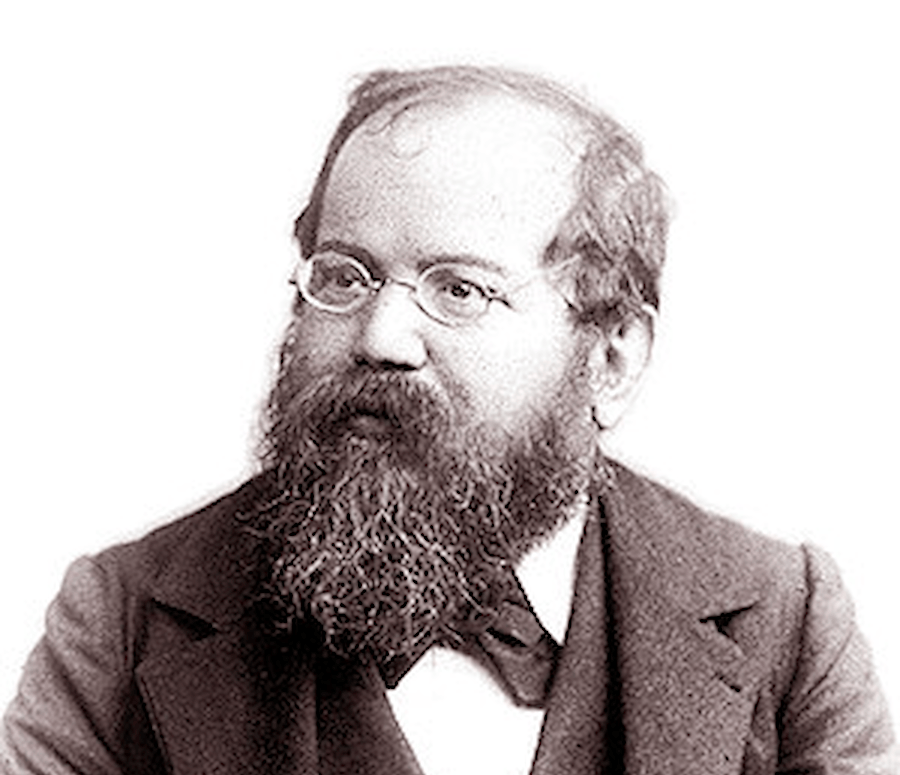
The earliest example of (4… Nxe4) against the Four Knights Italian in the massive LumbrasGigabase was by none other than first world chess champion, Wilhelm Steinitz (1836-1900). I see Steinitz as an inflection point in chess. He pioneered, advocated, and won using the then new positional style, revealing it with grandeur in 1873 by winning the First International Vienna Chess Congress. It was this chess event that second-place winner, Joseph Blackburne gained his magnificent nick name, der Swartze Tod or in English, “The Black Death”! This approach was ultimately accepted and adopted by later chess players, ushering the transition from the Romantic era to what we now call the Classical era of chess. However, for a significant part of his chess career, Steinitz was a master of the romantic style of aggressive chess, and perhaps, the best of his generation.
Indeed, Steinitz’s (4… Nxe4) was played in a casual game two years after he revealed his positional approach (Seymour — Steinitz, 1875, London) and is a masterpiece of chess romanticism! Take note of Steinitz’s multiple piece sacrifices starting with the rook on turn 15. The chess.com analytic engine rates Steinitz’s moves 15 to 18 as: brilliant, excellent, brilliant, brilliant! 🤯🤩👍
After White’s (6. Bb5), Black wins back the knight with (6… dxe4) and here White played down a seemingly logical sequence of moves, starting with by trading their bishop for my knight (7. Bxc6+ bxc6), removing the defender to the e5-pawn allowing (8. Nxe5). White has regained material balance and so should be fine right?
No! In fact, the evaluation is almost [-4], and the reason is that Black has (8… Qg5!), which is a fork of White’s e5-knight and g2-pawn! White guards the knight with (9. d4) and thus succumbs to (9… Qxg2)!
My opponent with the White pieces surprised me with a fascinating counterattack (10. Qh5) threatening a mating attack starting with Qxf7+. Here, I thought for a long time before making my next move and wondered whether I might have made a mistake somewhere! However, I realised after calculating carefully, that White had no mating attack after I defended my f-pawn with my light square bishop through Be6!
Stockfish agreed evaluating White’s romantic Qh5 a mistake [-4 → -7], but I think this was potentially a great tactical manoeuvre by my opponent! In a time control that wasn’t daily, I can’t say that I wouldn’t have been spooked by the counter-offensive and potentially made an inaccurate move in response!
In the game, I was unperturbed and thus came a chomping down on material and manoeuvring to get a win! I could ignore White’s counterattack by a move by capturing White’s rook for free (10… Qxh1+). And then, the neutralisation of White’s counterattack with (12… Be6). And then, chasing White’s queen (12… g6 and 13… Be7) and finally, dislodging White’s e5-knight (14… f6). Unfortunately for White, their centrally placed e5-knight was not only pivotal to their counterattack, but also defence.
My queen could not give a winning attack on her own. After White’s knight was forced to move (15. Nxc6) and relinquish the control of the c4 square, this allowed (15… Bc4+), bringing a second piece into the attack of White’s king – the beginning of the end!
All the following moves were attacks on White’s king, corralling the king and opening the centre with captures and clearance sacrifices. After (23… Rf8+), White resigned as the only legal move was to avoid the checkmate for a single turn with a queen sacrifice. Good game, GG!
I’ve commonly seen declarations that beginner players shouldn’t waste time learning any opening theory. I think, however, it’s important to understand this within a context and it’s a matter of balance. Only learning theory and memorising countless computer lines of an opening is unhelpful, especially if this doesn’t come with learning the ideas, principles, and tactics of the opening. It also doesn’t sound like much fun! However, the big takeaway from this game is that learning some opening theory, especially of the critical common positions you play should be acknowledged as commonsense and inescapable.
Game: https://www.chess.com/game/daily/700247999
[Event "Let's Play"]
[Site "Chess.com"]
[Date "2024.09.08"]
[Round "-"]
[White "nathanru23119"]
[Black "vitualis"]
[Result "0-1"]
[CurrentPosition "r3kr2/p1p1b2p/6p1/8/P1bp1KQ1/8/1PP4P/R1B1q3 w q - 3 24"]
[Timezone "UTC"]
[ECO "C47"]
[ECOUrl "https://www.chess.com/openings/Four-Knights-Game-Italian-Variation-4...Nxe4-5.Nxe4-d5"]
[UTCDate "2024.09.08"]
[UTCTime "06:00:26"]
[WhiteElo "879"]
[BlackElo "1242"]
[TimeControl "1/259200"]
[Termination "vitualis won by resignation"]
[StartTime "06:00:26"]
[EndDate "2024.09.08"]
[EndTime "07:32:16"]
[Link "https://www.chess.com/game/daily/700247999"]
[WhiteUrl "https://images.chesscomfiles.com/uploads/v1/user/226163571.0ac0cba9.50x50o.7f8c0edc87e5.jpg"]
[WhiteCountry "164"]
[WhiteTitle ""]
[BlackUrl "https://images.chesscomfiles.com/uploads/v1/user/3711094.f52a0759.50x50o.ab18600a8723.png"]
[BlackCountry "17"]
[BlackTitle ""]

1. e4 {[%clk 0:00:18][%timestamp 180]} 1... e5 {[%clk 0:13:18][%timestamp 7980]}
2. Nf3 {[%clk 0:08:36][%timestamp 5160]} 2... Nc6 {[%clk 0:00:00.1][%timestamp
1]} 3. Nc3 {[%clk 0:01:32][%timestamp 920]} 3... Nf6 {[%clk
0:00:00.1][%timestamp 1]} 4. Bc4 {[%clk 0:01:23][%timestamp 830] Four Knights
Game: Italian Variation} 4... Nxe4 {[%clk 0:02:02][%timestamp 1220]} 5. Nxe4
{[%clk 0:00:27][%timestamp 270]} 5... d5 {[%clk 0:00:01][%timestamp 10][%c_arrow
d5e4;keyPressed;none;from;d5;opacity;0.8;to;e4;persistent;false,d5c4;keyPressed;none;from;d5;opacity;0.8;to;c4;persistent;false][%c_highlight
c4;keyPressed;none;opacity;0.8;square;c4;persistent;false,e4;keyPressed;none;opacity;0.8;square;e4;persistent;false]
Critical move by Black $1 According to the Lichess community database, in this
position Black wins 59\% to White 37\% $1} 6. Bb5 $4 {[%clk 0:01:29][%timestamp
890][%c_arrow
c4d3;keyPressed;none;from;c4;opacity;0.8;to;d3;persistent;false][%c_highlight
d3;keyPressed;none;opacity;0.8;square;d3;persistent;false,b5;keyPressed;none;opacity;0.8;square;b5;persistent;false][%c_effect
b5;square;b5;type;Blunder;persistent;true] And the fascinating thing is that in
this critical position, White finds the correct response only 17\% of the time
(and only 10\% of the time for lower-rated players $1). This move makes sense but
is a blunder $1 [0.00 $37 -2.2]} 6... dxe4 {[%clk 0:00:42][%timestamp 420]} 7.
Bxc6+ $6 {[%clk 0:01:04][%timestamp 640][%c_effect
c6;square;c6;type;Inaccuracy;persistent;true][%c_arrow
f3e5;keyPressed;none;from;f3;opacity;0.8;to;e5;persistent;false][%c_highlight
e5;keyPressed;none;opacity;0.8;square;e5;persistent;false] Understandable, but
inaccurate [-4]. And we can see how for the beginner player with White, things
can rapidly go in the wrong direction $1} 7... bxc6 {[%clk 0:00:20][%timestamp
200]} 8. Nxe5 {[%clk 0:00:09][%timestamp 90] Even though there is material
balance, it's pretty bad for White $1} 8... Qg5 $1 {[%clk 0:00:57][%timestamp
570][%c_effect g5;square;g5;type;GreatFind;persistent;true][%c_highlight
g5;keyPressed;alt;opacity;0.8;square;g5;persistent;false]} 9. d4 {[%clk
0:00:46][%timestamp 460]} 9... Qxg2 {[%clk 0:00:19][%timestamp 190]} 10. Qh5 $2
{[%clk 0:05:17][%timestamp 3170][%c_arrow
h1f1;keyPressed;none;from;h1;opacity;0.8;to;f1;persistent;false][%c_highlight
f1;keyPressed;none;opacity;0.8;square;f1;persistent;false][%c_effect
h5;square;h5;type;Mistake;persistent;true] This is a clever counterattack and I
thought for quite a long time. However, once I recognised that Be6 seems to
clearly prevent checkmate, I felt that it would be safe to capture the rook $1 [-4
$37 -7]} 10... Qxh1+ {[%clk 0:05:01][%timestamp 3010]} 11. Ke2 {[%clk
0:00:56][%timestamp 560]} 11... Be6 {[%clk 0:00:00.1][%timestamp 1]} 12. a4
{[%clk 0:03:42][%timestamp 2220]} 12... g6 {[%clk 0:03:40][%timestamp
2200][%c_arrow
e8c8;keyPressed;none;from;e8;opacity;0.8;to;c8;persistent;false,f8b4;keyPressed;none;from;f8;opacity;0.8;to;b4;persistent;false][%c_highlight
c8;keyPressed;shift;opacity;0.8;square;c8;persistent;false,b4;keyPressed;shift;opacity;0.8;square;b4;persistent;false]
I decided to play a simple move - hit the queen $1 Stockfish finds some more
accurate moves, but simplicity is sometimes good $1} 13. Qh4 {[%clk
0:02:49][%timestamp 1690]} 13... Be7 {[%clk 0:01:54][%timestamp 1140] Chase
White's queen with development} 14. Qg3 $6 {[%clk 0:02:36][%timestamp
1560][%c_arrow
h4e7;keyPressed;none;from;h4;opacity;0.8;to;e7;persistent;false][%c_highlight
e7;keyPressed;none;opacity;0.8;square;e7;persistent;false][%c_effect
g3;square;g3;type;Inaccuracy;persistent;true] Surprisingly, Stockfish evaluates
that White's most accurate move is to trade their queen for the bishop $1 [-8.3]}
14... f6 {[%clk 0:03:38][%timestamp 2180] Dislodges White's knight from the
defence of the c4 square...} 15. Nxc6 {[%clk 0:01:35][%timestamp 950]} 15...
Bc4+ {[%clk 0:00:20][%timestamp 200] ... which now allows White's light square
bishop to join the attack on White's king $1} 16. Ke3 $2 {[%clk 0:01:16][%timestamp
760][%c_arrow
e2d2;keyPressed;none;from;e2;opacity;0.8;to;d2;persistent;false][%c_highlight
d2;keyPressed;none;opacity;0.8;square;d2;persistent;false][%c_effect
e3;square;e3;type;Mistake;persistent;true] And a mating net has formed [-M11]}
16... Qe1+ {[%clk 0:00:19][%timestamp 190]} 17. Kf4 {[%clk 0:02:23][%timestamp
1430]} 17... Bd6+ {[%clk 0:00:00.1][%timestamp 1]} 18. Ne5 {[%clk
0:00:35][%timestamp 350]} 18... fxe5+ {[%clk 0:01:59][%timestamp 1190]} 19. Kg5
{[%clk 0:02:09][%timestamp 1290]} 19... exd4 {[%clk 0:00:47][%timestamp 470]
Discovered attack on White's queen} 20. Qg4 {[%clk 0:02:33][%timestamp 1530]}
20... Be7+ {[%clk 0:02:15][%timestamp 1350]} 21. Kf4 {[%clk 0:01:28][%timestamp
880]} 21... Qxf2+ {[%clk 0:00:26][%timestamp 260]} 22. Kxe4 {[%clk
0:00:43][%timestamp 430]} 22... Qe1+ {[%clk 0:00:07][%timestamp 70]} 23. Kf4
{[%clk 0:04:34][%timestamp 2740]} 23... Rf8+ {[%clk 0:01:25][%timestamp
850][%c_effect e8;square;e8;type;Winner,f4;square;f4;type;ResignWhite][%c_arrow
f8f1;keyPressed;none;from;f8;opacity;0.8;to;f1;persistent;false,e1h4;keyPressed;none;from;e1;opacity;0.8;to;h4;persistent;false,e1e6;keyPressed;none;from;e1;opacity;0.8;to;e6;persistent;false,e7h4;keyPressed;none;from;e7;opacity;0.8;to;h4;persistent;false][%c_highlight
f5;keyPressed;none;opacity;0.8;square;f5;persistent;false,f4;keyPressed;none;opacity;0.8;square;f4;persistent;false,f3;keyPressed;none;opacity;0.8;square;f3;persistent;false,g3;keyPressed;none;opacity;0.8;square;g3;persistent;false,e3;keyPressed;none;opacity;0.8;square;e3;persistent;false,e4;keyPressed;none;opacity;0.8;square;e4;persistent;false,e5;keyPressed;none;opacity;0.8;square;e5;persistent;false,g5;keyPressed;none;opacity;0.8;square;g5;persistent;false]
And in this position, White resigned. Good game, GG $1} (23... Rf8+ {[%c_arrow
f8f1;keyPressed;none;from;f8;opacity;0.8;to;f1;persistent;false]} 24. Qf5
{[%c_arrow
e1h4;keyPressed;none;from;e1;opacity;0.8;to;h4;persistent;false,e7h4;keyPressed;none;from;e7;opacity;0.8;to;h4;persistent;false,e1e6;keyPressed;none;from;e1;opacity;0.8;to;e6;persistent;false][%c_highlight
g3;keyPressed;none;opacity;0.8;square;g3;persistent;false,g5;keyPressed;none;opacity;0.8;square;g5;persistent;false,e3;keyPressed;none;opacity;0.8;square;e3;persistent;false,e4;keyPressed;none;opacity;0.8;square;e4;persistent;false,e5;keyPressed;none;opacity;0.8;square;e5;persistent;false]
forced move $1} 24... Rxf5+ {[%c_arrow
f5f1;keyPressed;none;from;f5;opacity;0.8;to;f1;persistent;false,e1e6;keyPressed;none;from;e1;opacity;0.8;to;e6;persistent;false,e7h4;keyPressed;none;from;e7;opacity;0.8;to;h4;persistent;false,g6f5;keyPressed;none;from;g6;opacity;0.8;to;f5;persistent;false,e1h4;keyPressed;none;from;e1;opacity;0.8;to;h4;persistent;false][%c_highlight
f4;keyPressed;none;opacity;0.8;square;f4;persistent;false,f3;keyPressed;none;opacity;0.8;square;f3;persistent;false,e3;keyPressed;none;opacity;0.8;square;e3;persistent;false,e4;keyPressed;none;opacity;0.8;square;e4;persistent;false,e5;keyPressed;none;opacity;0.8;square;e5;persistent;false,g5;keyPressed;none;opacity;0.8;square;g5;persistent;false,f5;keyPressed;none;opacity;0.8;square;f5;persistent;false,g3;keyPressed;none;opacity;0.8;square;g3;persistent;false]}
25. Kg4 {[%c_arrow
f5f1;keyPressed;none;from;f5;opacity;0.8;to;f1;persistent;false,f5h5;keyPressed;none;from;f5;opacity;0.8;to;h5;persistent;false,g6f5;keyPressed;none;from;g6;opacity;0.8;to;f5;persistent;false,e1h4;keyPressed;none;from;e1;opacity;0.8;to;h4;persistent;false][%c_highlight
f4;keyPressed;none;opacity;0.8;square;f4;persistent;false,f3;keyPressed;none;opacity;0.8;square;f3;persistent;false,g5;keyPressed;none;opacity;0.8;square;g5;persistent;false,h5;keyPressed;none;opacity;0.8;square;h5;persistent;false,f5;keyPressed;none;opacity;0.8;square;f5;persistent;false,g3;keyPressed;none;opacity;0.8;square;g3;persistent;false,h4;keyPressed;none;opacity;0.8;square;h4;persistent;false]
forced move} 25... Qh4# {[%c_arrow
f5f1;keyPressed;none;from;f5;opacity;0.8;to;f1;persistent;false,f5h5;keyPressed;none;from;f5;opacity;0.8;to;h5;persistent;false,e7h4;keyPressed;none;from;e7;opacity;0.8;to;h4;persistent;false,h4e4;keyPressed;none;from;h4;opacity;0.8;to;e4;persistent;false,h4e1;keyPressed;none;from;h4;opacity;0.8;to;e1;persistent;false,h4h3;keyPressed;none;from;h4;opacity;0.8;to;h3;persistent;false,g6f5;keyPressed;none;from;g6;opacity;0.8;to;f5;persistent;false][%c_highlight
f4;keyPressed;none;opacity;0.8;square;f4;persistent;false,f3;keyPressed;none;opacity;0.8;square;f3;persistent;false,g5;keyPressed;none;opacity;0.8;square;g5;persistent;false,h5;keyPressed;none;opacity;0.8;square;h5;persistent;false,h4;keyPressed;none;opacity;0.8;square;h4;persistent;false,g4;keyPressed;none;opacity;0.8;square;g4;persistent;false,g3;keyPressed;none;opacity;0.8;square;g3;persistent;false,h3;keyPressed;none;opacity;0.8;square;h3;persistent;false,f5;keyPressed;none;opacity;0.8;square;f5;persistent;false]})
0-1
 Adventures of a Chess Noob