I haven’t played a daily game in a while but enrolled in the currently running under-1500s Team New Zealand vs Team Australia (Sydney NSW) tournament. I’ve just finished this amazing game against my Kiwi opponent.
If you follow my blog and channel, you’d know that I love exciting and tactical chess in the Romantic style. As is sometimes the case, my opening gambit or attack doesn’t work out, but then we have the rest of the game to try to get a reversal – wrangling at least a draw if not a win with tricky manoeuvres and pirate tactics, i.e., unsound, illegitimate, but swashbuckling fun!
My first game has just finished, and I must share it! My opponent played the very civilised Queen’s Pawn Opening and I, of course, respond with the Englund Gambit (1. d4 e5)! We go into the Englund Gambit Complex and my opponent impressively starts the refutation line (2. dxe5 Nc6 3. Nf3 Qe7 4. Bf4 Qb4+ 5. Bd2! Qxb2 6. Nc3! Bb4 7. Rb1!). You’d note that to find the refutation White must play three consecutive excellent moves (as rated by the chess.com analytic engine), which isn’t so easy for beginner-intermediate players. When analysing the data from the Lichess community database, the refutation from the Englund Complex position (4… Qb4+) is only played this only occurs around 41% of the time for all games, and only 22% of the time when limited to players rated ELO 1000 and below.
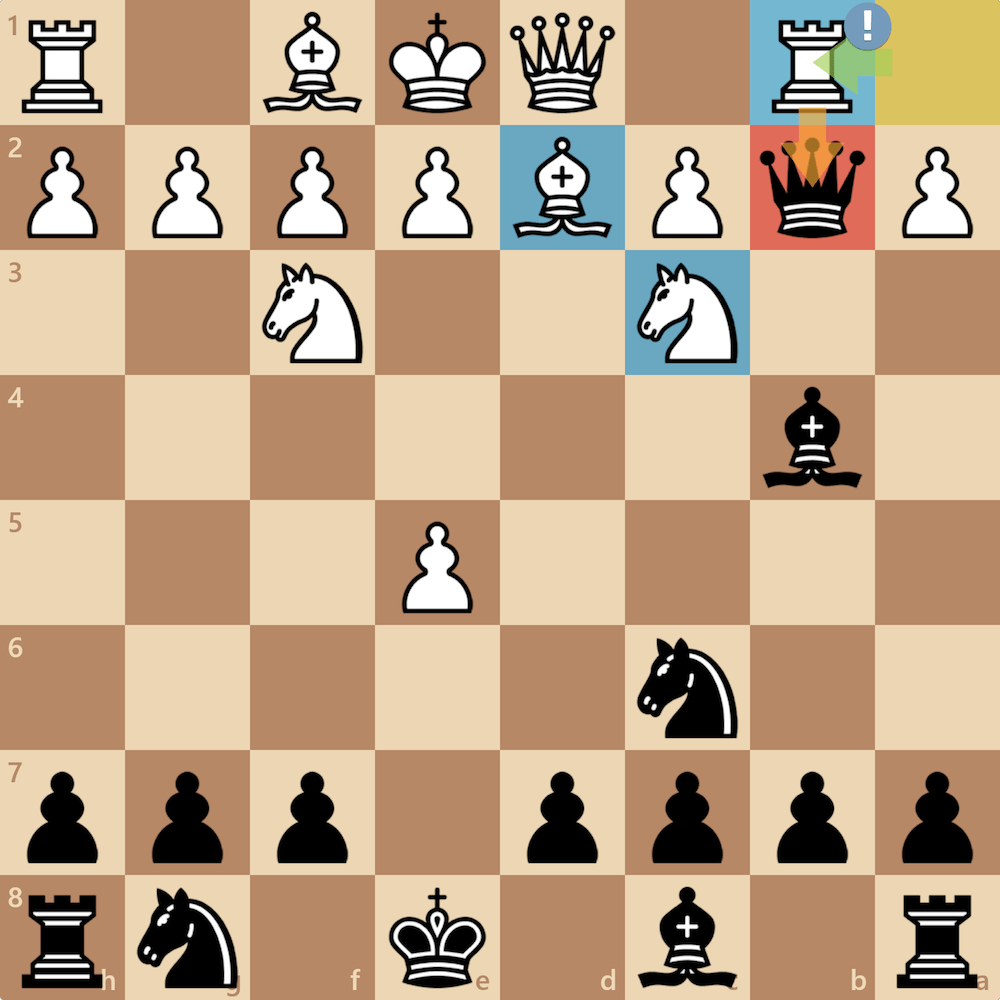
For this reason, the Englund Gambit is often labelled (with understandable rationale) as “hope chess” as the refutation is not especially hard to find, and Black seems to have completely lost the initiative from this point. To avoid the queen being captured, the forced move is (7… Qa3), an awkward move to the edge of the board, and White now has activity, development, and an obvious powerful attack by advancing the queen’s knight on c3 to d5, a fork on Black’s b4-bishop and Black’s c7-pawn which would come with an absolute fork of the king and a8-rook. Disastrous!
My view, however, is that one only plays the Englund Gambit if they are willing to double down with aggressive and sacrificial tactics. And what could be more adventurous and dastardly than sacrificing your own queen! 🤪👍
We don’t have to play the accurate but withering (7… Qa3), which is a move that can only be characterised as Black waiting to die. Instead, there is the magnificent Queen Sacrifice Line of (7. Qxc3!?).
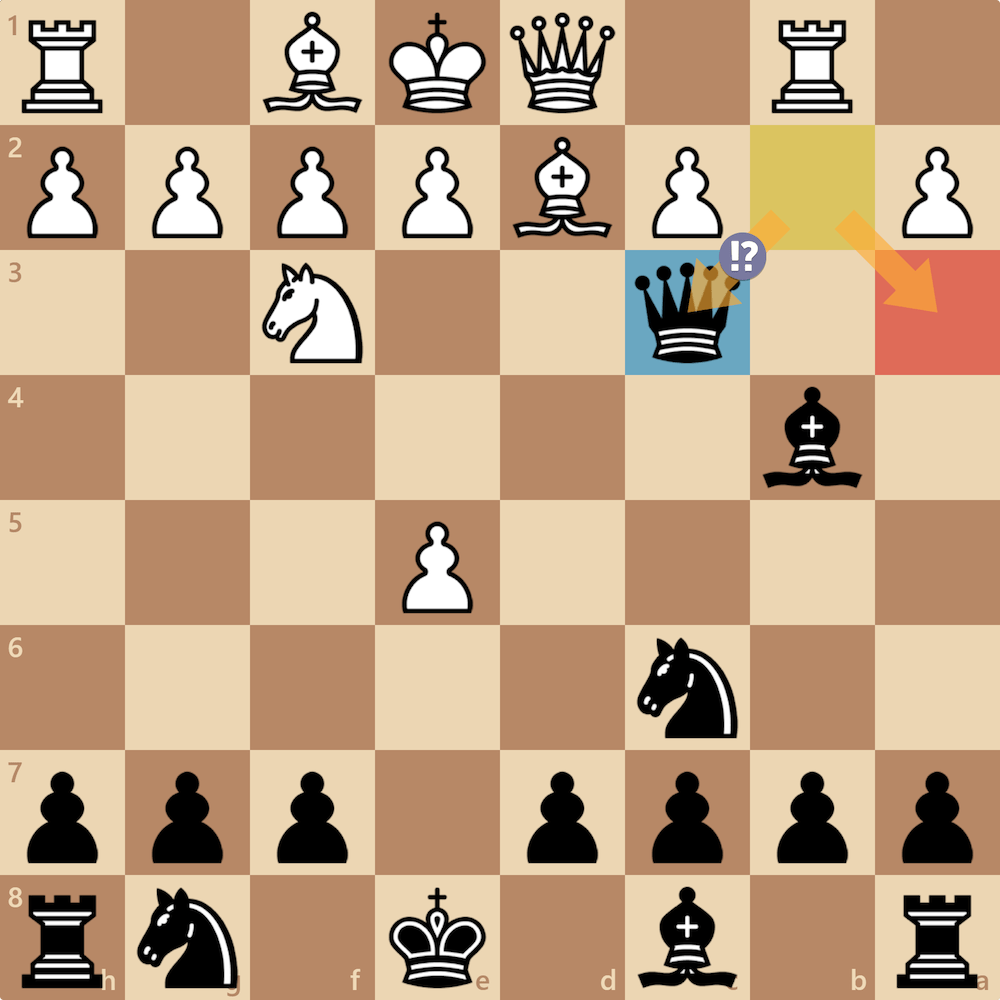
What is the logic behind this mad looking move? Well, the next moves are obvious and practically forced – White captures the queen with their bishop, and Black captures back with check, and White must block the check with their knight or queen (knight obviously!): (8. Bxc3 Bxc3+ 9. Nd2).
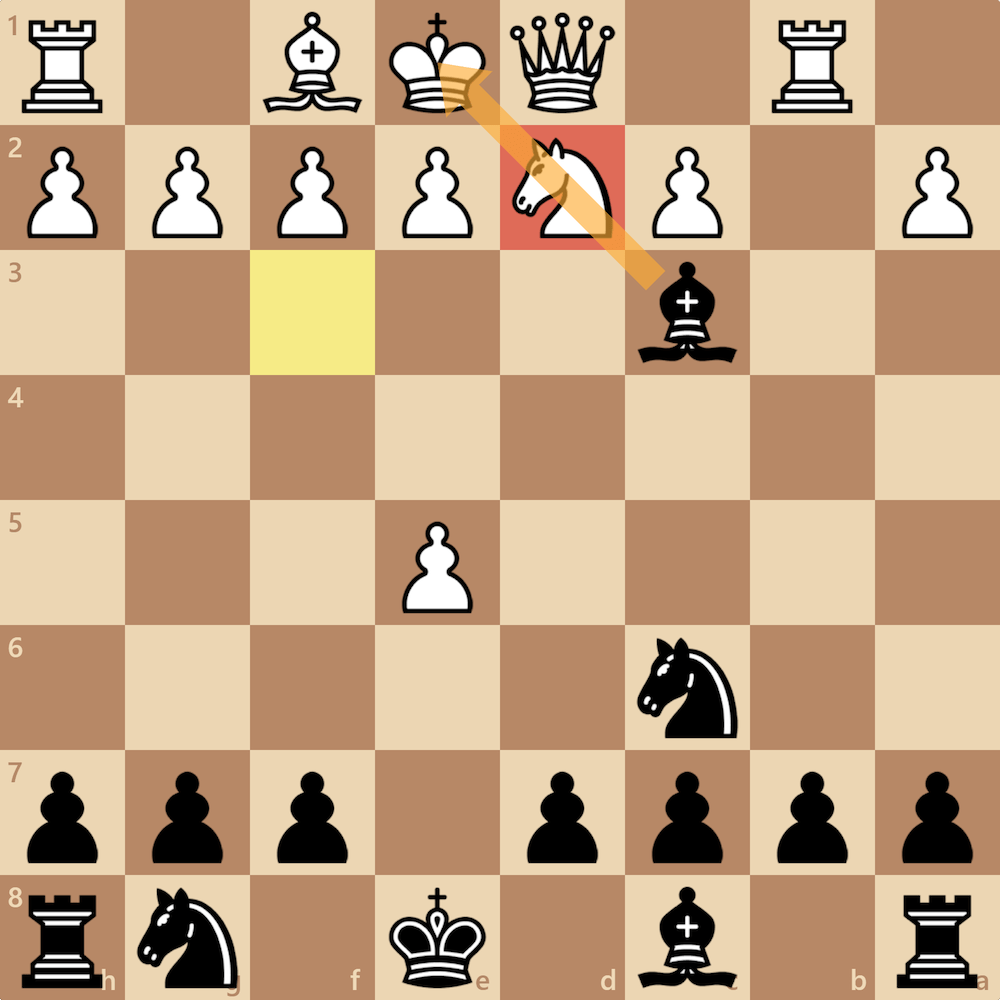
Black has traded their queen for two minor pieces (a knight and bishop) and a pawn, and damaged White’s pawn structure (doubled e-pawns, and isolated c- and a-pawns), and has more development. Numerically, Black has six pieces to White’s five. Stockfish obviously evaluates that the queen sacrifice is “bad”, but surprisingly it’s not that much different compared to (7… Qa3) [+2.4 → +2.9]. Importantly, in the great tradition of romantic chess it has created both tactical and psychological opportunities against our opponent. To quote Rudolf Spielmann (1883-1942), a master of the romantic school at a time when the chess world had moved on:
“A good sacrifice is one that is not necessarily sound but leaves your opponent dazed and confused.”
I first discovered this amazing queen sacrifice line in the Englund Gambit from the social media posts and videos by Canadian GM Aman Hambleton (@KNVB on chess.com) of the chessbrahs, and he is probably the highest rated player to have regularly used this variation in competitive chess with prize money at stake, for instance, in Titled Tuesday events. Hambleton seems to be someone who also enjoys creating art on the chessboard and if you haven’t seen it yet, check out this extraordinary finish (YouTube) which I think demands to be called the Immortal Checkmate, in a game of 3 min blitz he played on 3rd October 2024, against IM Ruben Gideon Köllner (@The_Machine04), that finished with the following checkmate position 🤯:

Another very big-name chess YouTuber and streamer who has explored the queen sacrifice line of the Englund Gambit, and found it successful (admittedly, not in competitive chess) is IM Eric Rosen:
One of the winning games for Hambleton using this line in Titled Tuesday is (Liu — Hambleton, 2023).
* * *
Just like in GM Hambleton’s game, I captured White’s e5-pawn with (9… Nxe5). As noted, there is no question that White is objectively “winning” at around [+3]. However, here I’m reminded by Emanuel Lasker’s quip that, “the hardest game to win is a won game”!
From a tactical perspective with Black, what I’m trying to do is create new threats with every move, and potentially try to induce a reversal by White making a mistake. The goal is to at least force a draw, or even find a win!
We had a bit of shuffling with White developing their rook, correct but weird so early in the game prior to other development. I miss an opportunity to counterattack with my knight on turn 15, which would have come close to equality, and if White played a natural move, a reversal to [-1]!
Surprisingly, White’s (21. g3), a completely “okay” looking move is a mistake that returns to [+0.1], but this is subtle, and I didn’t see it.
Into the middlegame, I found a devious multiple attack on White’s f2-pawn. With (31… Ng4), I attacked the f-pawn with my knight, bishop, and rook, with a simultaneous discovered attack on White’s queen! The correct move for White (32. Qd2) is not at all obvious, and instead, White plays the intuitive (32. Qd2??) which blunders back to [0.00]. The problem? Although White had three defenders for the f-pawn, these were the rook, queen, and king. This doesn’t work when the attacking pieces are of much lower value: rook, bishop and knight!
I have a beautiful sequence starting with (32… Nxf2) – White can’t do anything without losing serious material, but it seems that White’s damaged is contained. However, the next move (33… Nh3+) is a killer – DOUBLE-CHECK and in the game, I had calculated that I could at the very least, force a draw by threefold repetition! I had my reversal! 🤪👍
White’s king is forced into the corner, but just where it seemed like my attack was over, I force a rook exchange with (34… Rxf1+!). 🤩 The knight is the key to the attack with almost a windmill like manoeuvre, hits the king again with check (35… Nf2+ 36. Kg2), and just when it looked like the attack was over, again, my light square bishop strikes forward (36… Bh3+!).
In the position on turn 37, White had only two legal moves: Kg1 or Kf3. I was hoping that White would try to run their king and miss that it was a sneaky checkmate-in-one with the a8-rook on the other side of the board flying across my back rank (37. Kf3?? Rf8#). White didn’t make that mistake, but this now dooms the game to a threefold repetition, a draw, or White could lose at least two of their remaining pieces for my dark square bishop. An endgame with one piece versus three? That’s losing, so White decided to draw by repetition instead. GG!
The big takeaway from this game is to not be afraid to continuing playing the Englund Gambit if you love swashbuckling romantic chess! Even if the opponent plays the refutation line, the Queen Sacrifice Line (or the Hambleton Variation as unofficial dubbed it) is a practical way to play on and keep the initiative.
Game: https://www.chess.com/game/daily/713836873
[Event “Let’s Play”]
[Site “Chess.com”]
[Date “2024.10.09”]
[Round “-“]
[White “wpostma”]
[Black “vitualis”]
[Result “1/2-1/2”]
[Match “https://www.chess.com/club/matches/1684827”%5D
[CurrentPosition “r5k1/6pp/1bp5/p2P4/Pp6/1R4Pb/4Qn1P/5BK1 b – – 12 41”]
[Timezone “UTC”]
[ECO “A40”]
[ECOUrl “https://www.chess.com/openings/Englund-Gambit-2.dxe5-Nc6-3.Nf3-Qe7”%5D
[UTCDate “2024.10.09”]
[UTCTime “20:04:06”]
[WhiteElo “1092”]
[BlackElo “1236”]
[TimeControl “1/259200”]
[Termination “Game drawn by repetition”]
[StartTime “20:04:06”]
[EndDate “2024.10.11”]
[EndTime “00:01:39”]
[Link “https://www.chess.com/analysis/game/pgn/5L52ebzbfk?tab=analysis”%5D
[WhiteUrl “https://images.chesscomfiles.com/uploads/v1/user/232101.d64aa771.50x50o.cd8c157e02ad.jpeg”%5D
[WhiteCountry “102”]
[WhiteTitle “”]
[BlackUrl “https://images.chesscomfiles.com/uploads/v1/user/3711094.f52a0759.50x50o.ab18600a8723.png”%5D
[BlackCountry “17”]
[BlackTitle “”]
- d4 {[%clk 71:32:43]} 1… e5 {[%clk 71:58:38]} 2. dxe5 {[%clk 71:58:44]
Englund Gambit Accepted $1 Let’s go $1} 2… Nc6 {[%clk 71:59:11]} 3. Nf3 {[%clk
71:50:49]} 3… Qe7 {[%clk 71:38:09]} 4. Bf4 {[%clk 71:15:11]} 4… Qb4+ {[%clk
71:53:40][%c_arrow
b4b2;keyPressed;none;from;b4;opacity;0.8;to;b2;persistent;false,b4e1;keyPressed;none;from;b4;opacity;0.8;to;e1;persistent;false,b4f4;keyPressed;none;from;b4;opacity;0.8;to;f4;persistent;false][%c_highlight
b2;keyPressed;none;opacity;0.8;square;b2;persistent;false,e1;keyPressed;none;opacity;0.8;square;e1;persistent;false,f4;keyPressed;none;opacity;0.8;square;f4;persistent;false]
Englund Gambit Complex – the killer Black queen $1} 5. Bd2 $1 {[%clk
62:29:33][%c_effect
d2;square;d2;type;GreatFind;path;null;size;100%25;animated;false;persistent;true][%c_highlight
d2;keyPressed;alt;opacity;0.8;square;d2;persistent;false]} 5… Qxb2 {[%clk
71:59:06]} 6. Nc3 $1 {[%clk 71:58:58][%c_effect
c3;square;c3;type;GreatFind;path;null;size;100%25;animated;false;persistent;true][%c_highlight
c3;keyPressed;alt;opacity;0.8;square;c3;persistent;false] Nice $1 White finds the
best move and the refutation line $1} 6… Bb4 {[%clk 71:58:59]} 7. Rb1 $1 {[%clk
71:51:44][%c_effect
b1;square;b1;type;GreatFind;path;null;size;100%25;animated;false;persistent;true][%c_highlight
b1;keyPressed;alt;opacity;0.8;square;b1;persistent;false] Nice $1 However, I have
a secret weapon $1} 7… Qxc3 $5 {[%clk 71:59:34][%c_effect
c3;square;c3;type;Interesting;persistent;true][%c_highlight
c3;keyPressed;alt;opacity;0.8;square;c3;persistent;false,a3;keyPressed;none;opacity;0.8;square;a3;persistent;false][%c_arrow
b2a3;keyPressed;none;from;b2;opacity;0.8;to;a3;persistent;false] The Queen
Sacrifice Line $1 This has been suggested by GM Aman Hambleton of chessbrahs, and
has also been played by IM Eric Rosen $1 Clearly Qa3 saves the queen, but this
just results in a terrible position where White has the initiative where the
[+3] or so is completely felt.} 8. Bxc3 {[%clk 71:57:57]} 8… Bxc3+ {[%clk
71:59:48]} 9. Nd2 {[%clk 71:59:33][%c_arrow
c3e1;keyPressed;none;from;c3;opacity;0.8;to;e1;persistent;false][%c_highlight
d2;keyPressed;none;opacity;0.8;square;d2;persistent;false] Note: apart from
White’s b1-rook, they have no development whatsoever.} 9… Nxe5 {[%clk
71:59:48][%c_arrow
c3e5;keyPressed;none;from;c3;opacity;0.8;to;e5;persistent;false,h7h6;keyPressed;none;from;h7;opacity;0.8;to;h6;persistent;false,b7b6;keyPressed;none;from;b7;opacity;0.8;to;b6;persistent;false,c6e5;keyPressed;none;from;c6;opacity;0.8;to;e5;persistent;false][%c_highlight
e5;keyPressed;shift;opacity;0.8;square;e5;persistent;false,h6;keyPressed;shift;opacity;0.8;square;h6;persistent;false,b6;keyPressed;shift;opacity;0.8;square;b6;persistent;false]
Bxe5 is the most accurate, but are number of other moves have very similar
evaluation. I wanted to try Nxe5 this time as it keeps the annoying pin on
White’s knight, removes White’s e5-pawn, and moves my knight forward. The
strategy here is to make use of the numerical piece advantage (I sacrificed a
queen for two minor pieces, a pawn, and development) to wrangle at least a draw.
The position is roughly [+3] in evaluation.} 10. Rb3 {[%clk 71:57:54]} 10… Ba5
{[%clk 71:59:09]} 11. e4 {[%clk 71:48:46]} 11… Nf6 {[%clk 71:59:19]} 12. Rb5
{[%clk 71:58:53]} 12… Bc3 {[%clk 71:59:24]} 13. Rc5 $2 {[%clk
71:59:05][%c_effect c5;square;c5;type;Mistake;persistent;true][%c_arrow
f2f4;keyPressed;none;from;f2;opacity;0.8;to;f4;persistent;false][%c_highlight
f4;keyPressed;none;opacity;0.8;square;f4;persistent;false] A mistake, but f4,
which is the best move is difficult to commit to $1} 13… Bd4 {[%clk 71:58:42]} - Rb5 {[%clk 71:58:29]} 14… c6 {[%clk 71:58:34]} 15. Ra5 $2 {[%clk
71:56:18][%c_effect a5;square;a5;type;Mistake;persistent;true][%c_arrow
b5b3;keyPressed;none;from;b5;opacity;0.8;to;b3;persistent;false][%c_highlight
b3;keyPressed;none;opacity;0.8;square;b3;persistent;false] Curiously, this is a
mistake already [+0.7] though I didn’t see how to exploit it} 15… Bc3 $6
{[%clk 71:51:29][%c_arrow
f6g4;keyPressed;none;from;f6;opacity;0.8;to;g4;persistent;false][%c_highlight
g4;keyPressed;none;opacity;0.8;square;g4;persistent;false][%c_effect
c3;square;c3;type;Inaccuracy;persistent;true] I had an immediate attack on
White’s weak f-pawn with Neg4} (15… Neg4 {The move to see $1 The best move for
White is very hard to find $1} 16. Qe2 {[%c_arrow
g4f2;keyPressed;none;from;g4;opacity;0.8;to;f2;persistent;false,d4f2;keyPressed;none;from;d4;opacity;0.8;to;f2;persistent;false,a5f5;keyPressed;none;from;a5;opacity;0.8;to;f5;persistent;false][%c_highlight
f2;keyPressed;none;opacity;0.8;square;f2;persistent;false,f5;keyPressed;none;opacity;0.8;square;f5;persistent;false]
The best move was Rf5 to defend the f2-pawn – a weird looking move. If White
played Qe2, there’s already a reversal at almost [-1] $1}) 16. Ra3 {[%clk
71:48:58]} 16… Bb4 {[%clk 71:59:43]} 17. Ra4 {[%clk 71:47:19]} 17… Bc3 $6
{[%clk 71:58:27][%c_effect c3;square;c3;type;Inaccuracy;persistent;true]
Shuffling moves with the bishop and rook – trying to get a draw $1} 18. Qe2 $2
{[%clk 71:51:12][%c_effect e2;square;e2;type;Mistake;persistent;true][%c_arrow
f2f4;keyPressed;none;from;f2;opacity;0.8;to;f4;persistent;false][%c_highlight
f4;keyPressed;none;opacity;0.8;square;f4;persistent;false] The move is a mistake
- once again f4 is the most accurate move [+1.7]} 18… b5 {[%clk 71:59:06]} 19.
Ra3 {[%clk 71:59:38]} 19… Bb4 {[%clk 71:58:13]} 20. Rb3 {[%clk 72:00:00]}
20… Ba5 {[%clk 71:59:45]} 21. g3 $2 {[%clk 71:59:47][%c_effect
g3;square;g3;type;Mistake;persistent;true][%c_arrow
f2f4;keyPressed;none;from;f2;opacity;0.8;to;f4;persistent;false,b3a3;keyPressed;none;from;b3;opacity;0.8;to;a3;persistent;false,g2g4;keyPressed;none;from;g2;opacity;0.8;to;g4;persistent;false][%c_highlight
f4;keyPressed;none;opacity;0.8;square;f4;persistent;false,a3;keyPressed;none;opacity;0.8;square;a3;persistent;false,g4;keyPressed;none;opacity;0.8;square;g4;persistent;false]
Surprisingly, this is a mistake that returns to [+0.1]. The best moves are
difficult to accept – g4 (which looks very weird), f4 (hard to commit), and Ra3
(to shuffle the rook).} 21… Nc4 $6 {[%clk 71:59:18][%c_effect
c4;square;c4;type;Inaccuracy;persistent;true][%c_arrow
e8g8;keyPressed;none;from;e8;opacity;0.8;to;g8;persistent;false][%c_highlight
g8;keyPressed;none;opacity;0.8;square;g8;persistent;false] I opted to make an
attack on White’s pinned knight, which is painfully only defended by the king
and queen, a problem when it is attacked by two minor pieces. Stockfish
identifies that the attack can be negated, so prefers castling kingside [+1.4]}
- c3 $1 {[%clk 71:59:28][%c_effect
c3;square;c3;type;GreatFind;persistent;true][%c_highlight
c3;keyPressed;alt;opacity;0.8;square;c3;persistent;false] Great move by White $1}
22… Nxd2 {[%clk 71:58:41]} 23. Qxd2 {[%clk 71:59:40]} 23… O-O {[%clk
71:59:14]} 24. Bg2 {[%clk 71:59:51]} 24… Bb6 $6 {[%clk 71:58:56][%c_effect
b6;square;b6;type;Inaccuracy;persistent;true][%c_arrow
b6f2;keyPressed;none;from;b6;opacity;0.8;to;f2;persistent;false,d7d5;keyPressed;none;from;d7;opacity;0.8;to;d5;persistent;false][%c_highlight
f2;keyPressed;none;opacity;0.8;square;f2;persistent;false,d5;keyPressed;none;opacity;0.8;square;d5;persistent;false]
Stockfish thinks an immediate confrontation on d5 was best. I didn’t want to do
this but instead, wanted to set up a future trap. After White castles, the
f-pawn is pinned. [$37 +2.1]} 25. O-O {[%clk 71:59:49]} 25… a5 $2 {[%clk
71:59:22][%c_effect a5;square;a5;type;Mistake;persistent;true][%c_arrow
f6g4;keyPressed;none;from;f6;opacity;0.8;to;g4;persistent;false][%c_highlight
g4;keyPressed;none;opacity;0.8;square;g4;persistent;false] Again, Stockfish
thinks an immediate forward push was best, but from the perspective of
repositioning the knight. I wasn’t sure about that. [$37 +3.9]. However, in a
sense I’ve let the pressure off and as White has had an opportunity to
consolidate and develop, I’m definitely in a losing position at the moment.} 26.
e5 {[%clk 71:59:22]} 26… Ng4 {[%clk 71:59:29]} 27. Qf4 {[%clk 71:58:52]} 27…
f5 $5 {[%clk 71:58:02][%c_effect
f5;square;f5;type;Interesting;persistent;true][%c_highlight
f5;keyPressed;alt;opacity;0.8;square;f5;persistent;false,d6;keyPressed;none;opacity;0.8;square;d6;persistent;false][%c_arrow
d7d6;keyPressed;none;from;d7;opacity;0.8;to;d6;persistent;false] Now, I thought
that this move was super clever as I expected that White would capture en
passant, which opens my f-file… $1} 28. exf6 $4 {[%clk 71:59:40][%c_effect
f6;square;f6;type;Blunder;persistent;true] White does do this and it’s a blunder
major blunder $1 My idea was to have three pieces attacking White’s weak f2-pawn.
In fact, I didn’t even recognise how strong my attack was, which I could unleash
right now $1} 28… Nxf6 $2 {[%clk 71:59:39][%c_highlight
f6;keyPressed;none;opacity;0.8;square;f6;persistent;false][%c_effect
f6;square;f6;type;Mistake;persistent;true] A mistake of the missed opportunity
of immediate Nxf2 $1} (28… Nxf2 $1 {[%c_effect
f2;square;f2;type;GreatFind;persistent;true] The immediate tricky line $1} 29.
Rxf2 Rxf6 30. Qd2 $4 {[%c_effect
d2;square;d2;type;Blunder;persistent;true][%c_highlight
d2;keyPressed;none;opacity;0.8;square;d2;persistent;false] Consider this very
sensible looking move – it’s a blunder $1 Surprisingly, Stockfish evaluates that
the best move is for White to play Kh1 and LOSE THEIR QUE $146 as the best move $1}
30… Rxf2 {[%c_arrow
f2d2;keyPressed;none;from;f2;opacity;0.8;to;d2;persistent;false,b6g1;keyPressed;none;from;b6;opacity;0.8;to;g1;persistent;false][%c_highlight
d2;keyPressed;none;opacity;0.8;square;d2;persistent;false,g1;keyPressed;none;opacity;0.8;square;g1;persistent;false]
And this is as with this move, it doesn’t matter where White moves their queen,
the rook will be able to chase after the queen, with a step of tempo from the
discovered check from the bishop, winning the queen $1} 31. Qe1 Re2+ {[%c_arrow
b6g1;keyPressed;none;from;b6;opacity;0.8;to;g1;persistent;false,e2e1;keyPressed;none;from;e2;opacity;0.8;to;e1;persistent;false][%c_highlight
g1;keyPressed;none;opacity;0.8;square;g1;persistent;false,e1;keyPressed;none;opacity;0.8;square;e1;persistent;false]} - Kf1 Rxe1+) 29. c4 {[%clk 71:59:10]} 29… b4 {[%clk 71:46:03]} 30. a4 $2
{[%clk 71:52:26][%c_effect a4;square;a4;type;Mistake;persistent;true][%c_arrow
c4c5;keyPressed;none;from;c4;opacity;0.8;to;c5;persistent;false][%c_highlight
c5;keyPressed;none;opacity;0.8;square;c5;persistent;false] This is a hard to
find best move. It gives White’s queen access to the c4 square. This means that
Black cannot capture Bxc5 as Qc4+ comes as an absolute fork.} 30… d5 $5 {[%clk
71:55:29][%c_effect d5;square;d5;type;Interesting;persistent;true][%c_arrow
c8a6;keyPressed;none;from;c8;opacity;0.8;to;a6;persistent;false][%c_highlight
a6;keyPressed;none;opacity;0.8;square;a6;persistent;false] Admittedly, I didn’t
see that tactic either. From that perspective, Ba6 pins the pawn. However, I
needed the bishop to be on the other light square diagonal. Instead, I distract
with d5 as a trap $1 [+4]} 31. cxd5 {[%clk 61:11:32]} 31… Ng4 {[%clk
71:54:28][%c_arrow
f8f2;keyPressed;none;from;f8;opacity;0.8;to;f2;persistent;false,g4f2;keyPressed;none;from;g4;opacity;0.8;to;f2;persistent;false,b6f2;keyPressed;none;from;b6;opacity;0.8;to;f2;persistent;false,c8g4;keyPressed;none;from;c8;opacity;0.8;to;g4;persistent;false][%c_highlight
f2;keyPressed;none;opacity;0.8;square;f2;persistent;false]} 32. Qd2 $4 {[%clk
71:58:30][%c_effect d2;square;d2;type;Blunder;persistent;true][%c_highlight
d2;keyPressed;none;opacity;0.8;square;d2;persistent;false,c4;keyPressed;none;opacity;0.8;square;c4;persistent;false][%c_arrow
f4c4;keyPressed;none;from;f4;opacity;0.8;to;c4;persistent;false,c4g8;keyPressed;none;from;c4;opacity;0.8;to;g8;persistent;false,c4f1;keyPressed;none;from;c4;opacity;0.8;to;f1;persistent;false]
My trap is sprung $1 [0.00] Qd2, defending f2 seems to make sense, except, once
again having two defenders of the f2-pawn being the king and queen doesn’t work
when all my attackers are lower value pieces. The correct move is difficult to
find (Qc4), threatening a discovered check and defending the f1-rook.} 32…
Nxf2 {[%clk 71:53:41]} 33. Qe2 {[%clk 71:32:20]} (33. Rf3 $5 {[%c_effect
f3;square;f3;type;Interesting;persistent;true][%c_highlight
f3;keyPressed;alt;opacity;0.8;square;f3;persistent;false] An amazing trap that
White had in the position $1} 33… Ne4+ {[%c_arrow
b6g1;keyPressed;none;from;b6;opacity;0.8;to;g1;persistent;false,e4d2;keyPressed;none;from;e4;opacity;0.8;to;d2;persistent;false][%c_highlight
g1;keyPressed;none;opacity;0.8;square;g1;persistent;false,d2;keyPressed;none;opacity;0.8;square;d2;persistent;false]
It looks like Black wins the queen $1} 34. Kh1 {[%c_arrow
e4d2;keyPressed;none;from;e4;opacity;0.8;to;d2;persistent;false][%c_highlight
d2;keyPressed;none;opacity;0.8;square;d2;persistent;false]} 34… Nxd2 $4
{[%c_effect d2;square;d2;type;Blunder;persistent;true][%c_highlight
d2;keyPressed;none;opacity;0.8;square;d2;persistent;false,f3;keyPressed;none;opacity;0.8;square;f3;persistent;false][%c_arrow
f8f3;keyPressed;none;from;f8;opacity;0.8;to;f3;persistent;false] But it blunders
checkmate $1} 35. Rxf8# {[%c_arrow
f1f8;keyPressed;none;from;f1;opacity;0.8;to;f8;persistent;false,f8g8;keyPressed;none;from;f8;opacity;0.8;to;g8;persistent;false][%c_highlight
f8;keyPressed;none;opacity;0.8;square;f8;persistent;false,f7;keyPressed;none;opacity;0.8;square;f7;persistent;false,g8;keyPressed;none;opacity;0.8;square;g8;persistent;false]
Wow $1}) 33… Nh3+ {[%clk 69:43:25][%c_arrow
h3g1;keyPressed;none;from;h3;opacity;0.8;to;g1;persistent;false,b6g1;keyPressed;none;from;b6;opacity;0.8;to;g1;persistent;false][%c_highlight
g1;keyPressed;none;opacity;0.8;square;g1;persistent;false] DOUBLE-CHECK $3 At
this point, I calculated that I could AT LEAST force a draw by repetition, and I
had my reversal $1} 34. Kh1 {[%clk 71:40:04]} 34… Rxf1+ $1 {[%clk
71:59:59][%c_effect f1;square;f1;type;GreatFind;persistent;true][%c_highlight
f1;keyPressed;alt;opacity;0.8;square;f1;persistent;false,h1;keyPressed;none;opacity;0.8;square;h1;persistent;false][%c_arrow
f1h1;keyPressed;none;from;f1;opacity;0.8;to;h1;persistent;false] This forces
either the queen or bishop to f1. It doesn’t matter which. Both result in a
draw $1} 35. Bxf1 {[%clk 71:50:56]} 35… Nf2+ $1 {[%clk 72:00:00][%c_effect
f2;square;f2;type;GreatFind;persistent;true][%c_highlight
f2;keyPressed;alt;opacity;0.8;square;f2;persistent;false,h1;keyPressed;none;opacity;0.8;square;h1;persistent;false][%c_arrow
f2h1;keyPressed;none;from;f2;opacity;0.8;to;h1;persistent;false,b6f2;keyPressed;none;from;b6;opacity;0.8;to;f2;persistent;false]} - Kg2 {[%clk 71:59:32][%c_arrow
b6f2;keyPressed;none;from;b6;opacity;0.8;to;f2;persistent;false,f2h1;keyPressed;none;from;f2;opacity;0.8;to;h1;persistent;false,f2h3;keyPressed;none;from;f2;opacity;0.8;to;h3;persistent;false][%c_highlight
f2;keyPressed;none;opacity;0.8;square;f2;persistent;false,h1;keyPressed;none;opacity;0.8;square;h1;persistent;false,h3;keyPressed;none;opacity;0.8;square;h3;persistent;false]}
36… Bh3+ $1 {[%clk 71:58:57][%c_effect
h3;square;h3;type;GreatFind;persistent;true][%c_arrow
h3g2;keyPressed;none;from;h3;opacity;0.8;to;g2;persistent;false,f2h3;keyPressed;none;from;f2;opacity;0.8;to;h3;persistent;false,b6f2;keyPressed;none;from;b6;opacity;0.8;to;f2;persistent;false][%c_highlight
g2;keyPressed;none;opacity;0.8;square;g2;persistent;false,h3;keyPressed;none;opacity;0.8;square;h3;persistent;false,f2;keyPressed;none;opacity;0.8;square;f2;persistent;false]
Oh yeah $1 White’s king has two legal moves – either Kg1 (draw) or Kf3, which
would be a delicious checkmate $1} 37. Kg1 $1 {[%clk 71:53:53][%c_effect
g1;square;g1;type;GreatFind;persistent;true][%c_arrow
b6f2;keyPressed;none;from;b6;opacity;0.8;to;f2;persistent;false,h3g2;keyPressed;none;from;h3;opacity;0.8;to;g2;persistent;false][%c_highlight
f2;keyPressed;none;opacity;0.8;square;f2;persistent;false,g2;keyPressed;none;opacity;0.8;square;g2;persistent;false]}
(37. Kf3 $4 {[%c_effect f3;square;f3;type;Blunder;persistent;true][%c_highlight
f3;keyPressed;none;opacity;0.8;square;f3;persistent;false,g2;keyPressed;none;opacity;0.8;square;g2;persistent;false,f2;keyPressed;none;opacity;0.8;square;f2;persistent;false,e3;keyPressed;none;opacity;0.8;square;e3;persistent;false,g4;keyPressed;none;opacity;0.8;square;g4;persistent;false,e4;keyPressed;none;opacity;0.8;square;e4;persistent;false][%c_arrow
h3g2;keyPressed;none;from;h3;opacity;0.8;to;g2;persistent;false,b6f2;keyPressed;none;from;b6;opacity;0.8;to;f2;persistent;false,f2g4;keyPressed;none;from;f2;opacity;0.8;to;g4;persistent;false,f2e4;keyPressed;none;from;f2;opacity;0.8;to;e4;persistent;false]
If they tried to run their king…} 37… Rf8# {[%c_arrow
f8f3;keyPressed;none;from;f8;opacity;0.8;to;f3;persistent;false,b6f2;keyPressed;none;from;b6;opacity;0.8;to;f2;persistent;false,f2e4;keyPressed;none;from;f2;opacity;0.8;to;e4;persistent;false,f2g4;keyPressed;none;from;f2;opacity;0.8;to;g4;persistent;false,h3g2;keyPressed;none;from;h3;opacity;0.8;to;g2;persistent;false][%c_highlight
f3;keyPressed;none;opacity;0.8;square;f3;persistent;false,f2;keyPressed;none;opacity;0.8;square;f2;persistent;false,e3;keyPressed;none;opacity;0.8;square;e3;persistent;false,f4;keyPressed;none;opacity;0.8;square;f4;persistent;false,e4;keyPressed;none;opacity;0.8;square;e4;persistent;false,g4;keyPressed;none;opacity;0.8;square;g4;persistent;false,g2;keyPressed;none;opacity;0.8;square;g2;persistent;false]
Mating net $1 Beautiful $1}) 37… Ng4+ {[%clk 71:59:01][%c_arrow
h3g2;keyPressed;none;from;h3;opacity;0.8;to;g2;persistent;false,b6g1;keyPressed;none;from;b6;opacity;0.8;to;g1;persistent;false][%c_highlight
g2;keyPressed;none;opacity;0.8;square;g2;persistent;false,f2;keyPressed;none;opacity;0.8;square;f2;persistent;false,g1;keyPressed;none;opacity;0.8;square;g1;persistent;false]} - Kh1 {[%clk 71:55:47][%c_arrow
h3g2;keyPressed;none;from;h3;opacity;0.8;to;g2;persistent;false,b6g1;keyPressed;none;from;b6;opacity;0.8;to;g1;persistent;false][%c_highlight
g2;keyPressed;none;opacity;0.8;square;g2;persistent;false,g1;keyPressed;none;opacity;0.8;square;g1;persistent;false,f2;keyPressed;none;opacity;0.8;square;f2;persistent;false]}
38… Nf2+ $1 {[%clk 71:58:58][%c_effect
f2;square;f2;type;GreatFind;persistent;true][%c_arrow
b6f2;keyPressed;none;from;b6;opacity;0.8;to;f2;persistent;false,h3g2;keyPressed;none;from;h3;opacity;0.8;to;g2;persistent;false,f2h1;keyPressed;none;from;f2;opacity;0.8;to;h1;persistent;false][%c_highlight
f2;keyPressed;none;opacity;0.8;square;f2;persistent;false,g2;keyPressed;none;opacity;0.8;square;g2;persistent;false,h1;keyPressed;none;opacity;0.8;square;h1;persistent;false]} - Kg1 {[%clk 71:59:11][%c_arrow
b6f2;keyPressed;none;from;b6;opacity;0.8;to;f2;persistent;false,h3g2;keyPressed;none;from;h3;opacity;0.8;to;g2;persistent;false,f2h1;keyPressed;none;from;f2;opacity;0.8;to;h1;persistent;false][%c_highlight
f2;keyPressed;none;opacity;0.8;square;f2;persistent;false,g2;keyPressed;none;opacity;0.8;square;g2;persistent;false,h1;keyPressed;none;opacity;0.8;square;h1;persistent;false]}
39… Ng4+ {[%clk 72:00:00][%c_arrow
b6g1;keyPressed;none;from;b6;opacity;0.8;to;g1;persistent;false,h3g2;keyPressed;none;from;h3;opacity;0.8;to;g2;persistent;false][%c_highlight
f2;keyPressed;none;opacity;0.8;square;f2;persistent;false,g1;keyPressed;none;opacity;0.8;square;g1;persistent;false,g2;keyPressed;none;opacity;0.8;square;g2;persistent;false]} - Kh1 {[%clk 71:59:45][%c_arrow
b6g1;keyPressed;none;from;b6;opacity;0.8;to;g1;persistent;false,h3g2;keyPressed;none;from;h3;opacity;0.8;to;g2;persistent;false][%c_highlight
g1;keyPressed;none;opacity;0.8;square;g1;persistent;false,f2;keyPressed;none;opacity;0.8;square;f2;persistent;false,g2;keyPressed;none;opacity;0.8;square;g2;persistent;false]}
40… Nf2+ $1 {[%clk 71:59:52][%c_effect
f2;square;f2;type;GreatFind;persistent;true][%c_arrow
f2h1;keyPressed;none;from;f2;opacity;0.8;to;h1;persistent;false,b6f2;keyPressed;none;from;b6;opacity;0.8;to;f2;persistent;false,h3g2;keyPressed;none;from;h3;opacity;0.8;to;g2;persistent;false][%c_highlight
h1;keyPressed;none;opacity;0.8;square;h1;persistent;false,f2;keyPressed;none;opacity;0.8;square;f2;persistent;false,g2;keyPressed;none;opacity;0.8;square;g2;persistent;false]} - Kg1 {[%clk 71:59:50][%c_effect
g8;square;g8;type;DrawBlack,g1;square;g1;type;DrawWhite][%c_arrow
b6f2;keyPressed;none;from;b6;opacity;0.8;to;f2;persistent;false,h3g2;keyPressed;none;from;h3;opacity;0.8;to;g2;persistent;false,f2h1;keyPressed;none;from;f2;opacity;0.8;to;h1;persistent;false][%c_highlight
f2;keyPressed;none;opacity;0.8;square;f2;persistent;false,g2;keyPressed;none;opacity;0.8;square;g2;persistent;false,h1;keyPressed;none;opacity;0.8;square;h1;persistent;false]
GG $1} 1/2-1/2
 Adventures of a Chess Noob

