
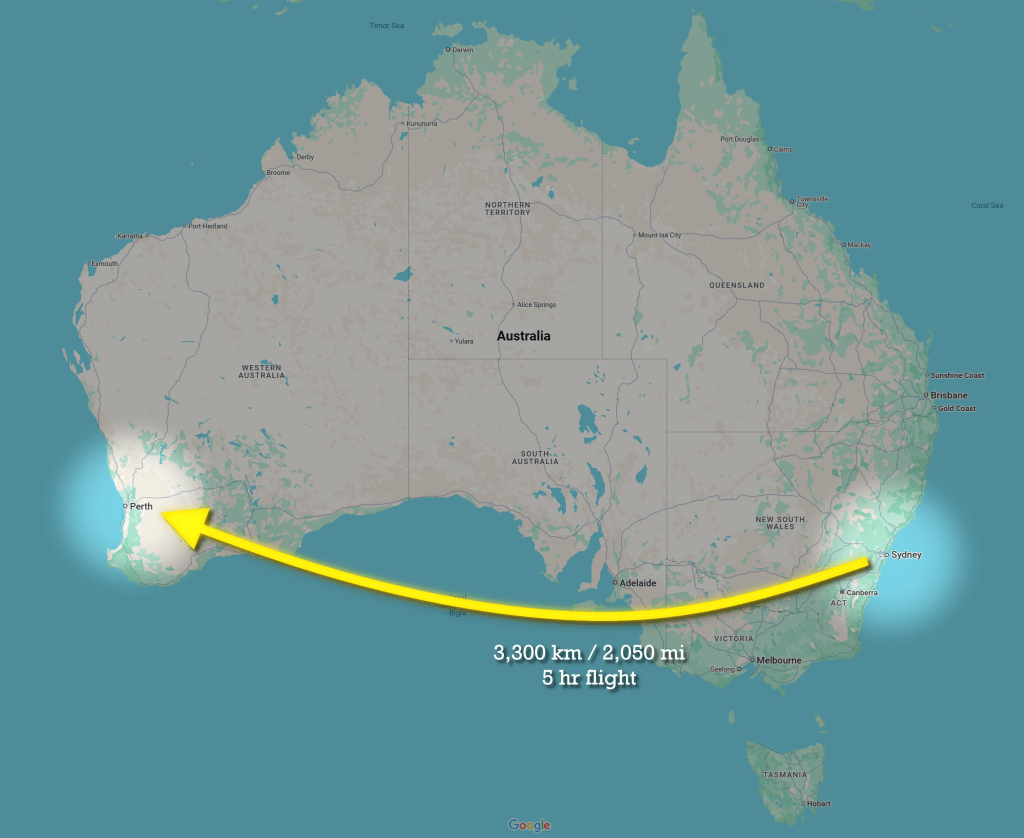
Last week I attended an academic conference in Perth. For those who aren’t familiar with Australia, Perth is the capital city of the state of Western Australia and is on the west coast of the Australian continent. Effectively, it is the opposite side of the country from Sydney: it is five hours by plane and three time zones away!
Mrs Chess Noob also attended the conference and Little Chess Noob came along as well! We visited Penguin Island which is about an hour south of Perth to see the wildlife. Little Chess Noob is especially keen on lizards and the King’s skink is one of the largest skinks in the world. The King’s skink is especially common on Rottnest Island and Penguin Island in Western Australia.
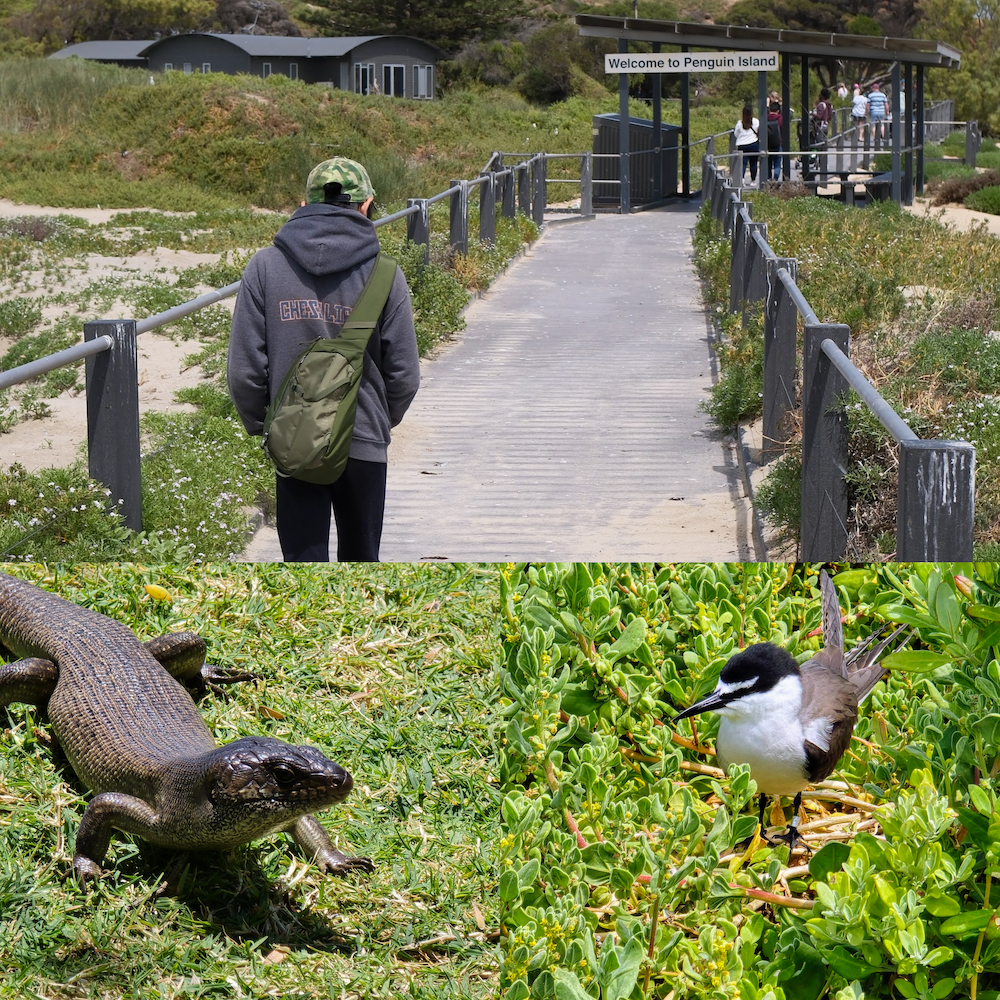
Perhaps, contrary to the stereotype of Australian animals, neither the skink nor tern are dangerous creatures. In fact, Penguin Island as a nature reserve doesn’t have any animals that would try to kill a human! 😌
That isn’t to say that it’s entire safe on the beaches of the Western Australian coast. The Western Brown Snake is commonly found on the beach, and though less aggressive than the Eastern Brown, it has nonetheless a potent neurotoxic venom which should always be assumed to be life-threatening if bitten. 🐍😬

I always bring along a portable chess set when I go to conferences (silicone board and a 3.4” king weighted set) and on the Friday, met up with an old friend and colleague. ProfessorJ is someone I’ve worked with for most of my academic career and is the leader of our Discipline at our medical school. Both of us play chess for fun and previously, we would have a casual game or two over lunch after a business meeting. A couple of years ago, ProfessorJ was the stronger player, and he was rated around ELO 1350 in rapid on Chess.com.

However, I have improved somewhat since then and have found my groove with the Romantic style! With having only recently published my new book, Become a Chess Assassin!, I was keen to see if playing aggressive, Romantic, trappy opening attacks would be effective against my mate! 🤩
Game 1: French-to-English rout!
https://www.chess.com/analysis/library/5GbxFS695Q
My friend was of course aware of my book launch and that my preferred opening was (1. e4 e5). He noted that his strategy for the games was that he was going to “try get me out of my opening theory” by playing other lines. I had the White pieces in the first game and true to his intention, ProfessorJ played the French Defense (1. e4 e6).
Now, forcing your opponent out of theory is often a good idea, but it can be a double-edged sword. I’ve discovered that I like playing against offbeat openings, as it is a fertile ground for Romantic opening tactical play!
Against the French, I usually play the Steiner Variation (2. c4) as it commonly takes the French Defense player out of their expectation. I suspected that even if my friend was familiar with the French Defense Main Line, this would be new to them; and later he acknowledged that this was indeed the case!
Black responded already with an inaccuracy (2… Nf6?!) as (3. e5) immediately kicks their knight! Indeed, Black’s best response would be to un-develop their knight but if they attempted to keep the knight in play, the subsequent turns (see the PGN) results in White winning tempo after tempo with pawn development threats on Black’s hapless knight!
I saw this in the game, but sometimes, it can be fruitful from an attacking perspective to delay the attack and develop. Black should have played into the Steiner Variation with (2… d5), and the fact that they hadn’t moved the d-pawn meant that they probably won’t. A calculated risk! I took the chance that e5 would remain available on the following turn. Instead, I developed my queen’s knight (3. Nc3), which transposed the position from the French into the English Opening: Mikėnas-Carls Variation.
From my previous games with ProfessorJ, I knew that they liked playing the Ruy López Opening with White, and so I wasn’t surprised to see (3… Bb4?). This was a mistake and striking in the centre à la the French with (3… d5) was best. As expected, I struck forward with my e-pawn (4. e5!).
Black opted to trade their bishop for the knight (4… Bxc3? 5. dxc3), which was an exchange that wasn’t beneficial for them. Although my c-pawns were doubled, the capture also activated my dark square bishop and queen. Black’s king’s knight (correctly) un-developed and at the end of turn 5, White had a major advantage even though there was material equality.
On turn 6, I could have launched an immediate Giraffe-ish Attack with (6. Qg4), and I considered it in the game. I didn’t calculate this fully and chose the slightly more conservative (6. Nf3) first before launching the kingside attack. Black responded with (6… f6?!) to put pressure on my e5-pawn. Although the Chess.com analytic engine only evaluates this as an inaccuracy, this was a strategic error. Moving the f-pawn in the opening can create a game-ending weakness, as we’ll soon see in this game.
Specifically, Black’s king was now exposed along the f7 light square diagonal. So, (7. Bd3) and I’d set up both my light square bishop and queen to potentially attack that diagonal. Black didn’t appreciate the looming threat, and played (7… fxe5? 8. Nxe5?!). My recapture wasn’t the most accurate, but regardless, advancing the knight forward was winning as I had four attackers on Black’s exposed kingside! Black attempted to kick the knight with (8… d6??), and this was the last blunder! At high depth, Stockfish finds forced checkmate with no more than 12 moves.
The mating attack started with (9. Qh5+) and (9… g6) is forced, else [+M1] with Qf7#. However, the g6-pawn was immediately lost with check with (10. Bxg6+). More than that, the bishop was immortal as (10… hxg6) would result in [+M2] after (11. Qxg6+ Ke7 12. Qf7#).
ProfessorJ slid his king out of check (10… Kf8) but with it now on the dark squares, my dark square bishop joins the attack (10. Bh6+) and it was looking very “checkmate-y”! Indeed, Black traded their knight for the bishop, but this allowed the queen to infiltrate (11… Nxh6? 12. Qxh6+) and then (12… Ke7 13. Qg7#); good game, GG!
Game 2: Crushing 1. d4 — from the Englund to the English!
https://www.chess.com/analysis/library/3f1FtSD2cN
I had the Black pieces in our second game. To avoid (1. e4 e5) ProfessorJ led with the Queen’s Pawn Opening (1. d4), and I suspected that he was hoping for a Queen’s Gambit. However, as per my usual Romantic response, I struck with (1… e5), the Englund Gambit! The Englund Gambit is inaccurate, but White only keeps the technical advantage by Accepting the gambit (2. dxe5) and playing into the Black’s preparation. ProfessorJ decided instead to go down a Queen’s Gambit like line (2. c4?!), which returns the evaluation back to [0.00]. I find the Englund Gambit to be a fantastic way of forcing 1. d4 games out of theory and into openings where I have Romantic tactical attacks!
Possibly because of his loss from game 1, my mate played this game in a defensive and conservative manner. After (2. exd4), White’s simplest move would have been to recapture with (3. Qxd4) but they played the slower (3. Nf3). Seemingly, ProfessorJ wanted to recapture the pawn with their knight rather than queen, and this was proved after (3… Nc6 4. Nxd4). Just like in game 1, the slightly slower moves have transposed the game into the English Opening.
In response for Black, the principled moves are relatively obvious: developing a minor piece (for instance, Nf6 or Bc5) would be best. However, I played the tricky (4… Bb4+!?). What’s the idea here? Firstly, it invites White to blunder their d4-knight by playing Nd2 to block the check, and accidentally cut off their queen’s vision down the d-file. Admittedly, this isn’t very likely. My main purpose was more subtle; I expected that at some point, White would kick my bishop and I’d be “forced” to pull back the overextended bishop to the c5 square. The bishop on c5 puts pressure on White’s f2-pawn. However, but using this manoeuvre, it obscures the intent while setting up an attack! As we’ll see, this stratagem worked!
White blocked the check with a more passive move than I expected with (5. Nc3?!) rather than the more assertive and tactical (5. Bd2). Great! This meant that I didn’t need to move my dark square bishop immediately. I developed my king’s knight (5… Nf6) and ProfessorJ attempted another bishop pin with (6. Bg5). This was technically an okay move, very Ruy López-ish, but I now had the potential attack on his f2-pawn that I wanted! It was time for that backward bishop move (6… Bc5!?).
My mate now attacked (7. Nxc6) and I saw what they were up to. The “best” move would be to recapture the knight with the b-pawn (7… bxc6), resulting in doubled c-pawns. If I captured with the d-pawn (7… dxc6), then White would then follow up with (8. Qxd8 Kxd8) and if (9. Bxf6+ gxf6), I would have lost the right to castle, my king would be stuck in the centre, and I would have doubled c-pawns, and very awkward isolated doubled f-pawns! Ouch!
However, my plan was to hit White with a bishop-sacrifice unpin tactic starting with (7… Bxf2+!?). Now, technically this entire attack line was a mistake according to the engine. If White plays accurately, my attack is refuted, and they are up a couple of points of material (see the PGN). However, this counterattack came with a massive initiative and checkmate threat, and wasn’t easy to navigate! A calculated risk!
White naturally captured the sacrificed bishop and the f6-knight leapt forward, unpinning itself with another check (8. Kxf2 Ng4+). This was a critical position for White and the only good move to refute the attack was by returning the king to e1. This is not at all obvious and according to the Lichess community database, around half the time White will play what my mate did in the game (9. Kg1??), running the king to the side and out of the centre. This was a blunder as after (9… Qxg5), Black had a double attack. First the obvious: White’s c6-knight will be taken by a pawn if it doesn’t move. With White’s eye drawn to their material, it was easy to miss the second and greater threat: Qe3 will be checkmate along the weak dark squares! White cannot defend against both attacks and so must give up their c6-knight to defend against checkmate.
ProfessorJ missed the checkmate threat and saved their knight with (10. Nd4??), only to hang (10… Qe3#) checkmate! Good game, GG!
The big takeaway is that playing in the Romantic style in the opening is not just about relentless aggression. It is the weaving together of opening tactics to take advantage of your opponent’s mistakes and inaccuracies, and taking judicious risk by taking into account psychological factors in choosing moves!

[Event "RACGP Annual Conference GP24"]
[Site "Perth, Australia "]
[Date "2024.11.22"]
[Round "1"]
[White "vitualis"]
[Black "ProfessorJ"]
[Result "1-0"]
[WhiteUrl "https://images.chesscomfiles.com/uploads/v1/user/3711094.f52a0759.100x100o.671ef4f371ed@3x.png"]
[WhiteCountry "17"]
[WhiteTitle ""]
[BlackUrl "https://images.chesscomfiles.com/uploads/v1/game_analysis_self/64fbabce-aabb-11ef-8d66-017a7a974de6.56f09c3f.160x160o.8c48c24ed9a1.jpg"]
[BlackCountry "17"]
[BlackTitle ""]
[TimeControl "Casual"]
[Link "https://www.chess.com/analysis/game/pgn/2rjvUUvVJN?tab=analysis"]

1. e4 e6 {ProfessorJ strategy for the match was that he would \"try to get me
out of my opening theory\". So with Black, he played the French Defense,
acknowledging that he didn't know how to play the French  $1} 2. c4 {This isn't a
bad idea, but it can be a double-edged sword  $1 I LIKE playing against offbeat
openings as it is a fertile ground for Romantic opening tactical play  $1 I was
pretty sure my mate at least knew the standard Main Line of the French, as do
most beginner-intermediate players, but few are familiar with my current
favourite, the Steiner Variation  $1} 2... Nf6 $6 {[%c_effect
f6;square;f6;type;Inaccuracy;path;null;size;100%25;animated;false;persistent;true]
This is already an inaccuracy as e5 kicks the knight. I saw this, but decided to
delay this to see whether I could get some trappy tactics  $1} 3. Nc3 {I delayed
e5 to develop first. Interestingly, this transposes the position into the
English Opening: Mikėnas-Carls Variation} (3. e5 {[%c_arrow
e5f6;keyPressed;none;from;e5;opacity;0.8;to;f6;persistent;false,f6g8;keyPressed;none;from;f6;opacity;0.8;to;g8;persistent;false,f6g4;keyPressed;none;from;f6;opacity;0.8;to;g4;persistent;false,d1g4;keyPressed;none;from;d1;opacity;0.8;to;g4;persistent;false,f6h5;keyPressed;none;from;f6;opacity;0.8;to;h5;persistent;false,g4h5;keyPressed;none;from;g4;opacity;0.8;to;h5;persistent;false,f6d5;keyPressed;none;from;f6;opacity;0.8;to;d5;persistent;false,c4d5;keyPressed;none;from;c4;opacity;0.8;to;d5;persistent;false][%c_highlight
g8;keyPressed;none;opacity;0.8;square;g8;persistent;false,g4;keyPressed;none;opacity;0.8;square;g4;persistent;false,h5;keyPressed;none;opacity;0.8;square;h5;persistent;false,d5;keyPressed;none;opacity;0.8;square;d5;persistent;false,f6;keyPressed;none;opacity;0.8;square;f6;persistent;false]
This is the \"best\" and most accurate move as White wins tempo on Black's
knight. It should un-develop to g8. If Black attempts to keep the knight on the
board, it gets chased by pawns with tempo, gifting White control of the centre}
3... Ne4 $2 {[%c_effect
e4;square;e4;type;Mistake;path;null;size;100%25;animated;false;persistent;true][%c_arrow
f6g8;keyPressed;none;from;f6;opacity;0.8;to;g8;persistent;false][%c_highlight
g8;keyPressed;none;opacity;0.8;square;g8;persistent;false]} 4. d3 {[%c_highlight
d6;keyPressed;none;opacity;0.8;square;d6;persistent;false,c3;keyPressed;none;opacity;0.8;square;c3;persistent;false,f2;keyPressed;none;opacity;0.8;square;f2;persistent;false,g3;keyPressed;none;opacity;0.8;square;g3;persistent;false,g5;keyPressed;none;opacity;0.8;square;g5;persistent;false,c5;keyPressed;ctrl;opacity;0.8;square;c5;persistent;false,e4;keyPressed;none;opacity;0.8;square;e4;persistent;false][%c_arrow
b1c3;keyPressed;none;from;b1;opacity;0.8;to;c3;persistent;false,e1f2;keyPressed;none;from;e1;opacity;0.8;to;f2;persistent;false,c1d2;keyPressed;none;from;c1;opacity;0.8;to;d2;persistent;false,f2g3;keyPressed;none;from;f2;opacity;0.8;to;g3;persistent;false,d2g5;keyPressed;none;from;d2;opacity;0.8;to;g5;persistent;false,e5f6;keyPressed;none;from;e5;opacity;0.8;to;f6;persistent;false,e5d6;keyPressed;none;from;e5;opacity;0.8;to;d6;persistent;false,d3e4;keyPressed;none;from;d3;opacity;0.8;to;e4;persistent;false]
Black's knight has only one escape square} 4... Nc5 5. d4 {[%c_arrow
d4c5;keyPressed;none;from;d4;opacity;0.8;to;c5;persistent;false][%c_highlight
c5;keyPressed;none;opacity;0.8;square;c5;persistent;false] And the knight is
kicked once again} 5... Ne4 {The game continues at [+1.5]...}) 3... Bb4 $2
{[%c_effect
b4;square;b4;type;Mistake;path;null;size;100%25;animated;false;persistent;true][%c_arrow
d7d5;keyPressed;none;from;d7;opacity;0.8;to;d5;persistent;false][%c_highlight
d5;keyPressed;none;opacity;0.8;square;d5;persistent;false] This is a mistake,
but a very thematic one for ProfessorJ as he likes these bishop pins (he often
plays the Ruy López Opening with White)} 4. e5 $1 {[%c_effect
e5;square;e5;type;GreatFind;path;null;size;100%25;animated;false;persistent;true][%c_highlight
e5;keyPressed;alt;opacity;0.8;square;e5;persistent;false] Now e5  $1} 4... Bxc3 $2
{[%c_arrow
f6g8;keyPressed;none;from;f6;opacity;0.8;to;g8;persistent;false][%c_highlight
g8;keyPressed;none;opacity;0.8;square;g8;persistent;false][%c_effect
c3;square;c3;type;Mistake;path;null;size;100%25;animated;false;persistent;true]
The exchange is not beneficial for Black. The general principle that you
shouldn't trade a bishop for a knight without good reason stands.} 5. dxc3
{[%c_arrow
d1d6;keyPressed;shift;from;d1;opacity;0.8;to;d6;persistent;false,c1h6;keyPressed;shift;from;c1;opacity;0.8;to;h6;persistent;false]
Notice the semi-open d-file. Effectively, this has activated my queen and dark
square bishop  $1} 5... Ng8 {And at the end of turn 5, White has a major advantage
even though there is material equality.} 6. Nf3 $6 {[%c_arrow
d1g4;keyPressed;none;from;d1;opacity;0.8;to;g4;persistent;false][%c_effect
f3;square;f3;type;Inaccuracy;path;null;size;100%2525;animated;false;persistent;true]
I played another developing move, and was looking at attacking Black's kingside.
This was slower than necessary as Qg4 could be played immediately  $1} (6. Qg4 {I
considered Qg4, a very Giraffe Attack-ish move to punish Black's lost dark
square bishop, but I fully didn't calculate the line. This would have been the
best attack  $1} 6... g6 {This is the most natural move in the position; the most
accurate is the difficult to contemplate Kf8.} 7. Bg5 {[%c_arrow
g5d8;keyPressed;none;from;g5;opacity;0.8;to;d8;persistent;false][%c_highlight
d8;keyPressed;none;opacity;0.8;square;d8;persistent;false]} 7... f6 8. exf6
{[%c_arrow
f6f7;keyPressed;none;from;f6;opacity;0.8;to;f7;persistent;false,f7e8;keyPressed;none;from;f7;opacity;0.8;to;e8;persistent;false,g5d8;keyPressed;none;from;g5;opacity;0.8;to;d8;persistent;false][%c_highlight
e8;keyPressed;none;opacity;0.8;square;e8;persistent;false,d8;keyPressed;none;opacity;0.8;square;d8;persistent;false]
The game continues from this fantastic attack  $1}) 6... f6 $6 {[%c_effect
f6;square;f6;type;Inaccuracy;path;null;size;100%25;animated;false;persistent;true]
Curiously, the Chess.com analytic engine only evaluates this as an inaccuracy.
However, moving the f-pawn in the opening can create a game ending weakness, as
was the case in this game  $1} (6... Nc6) 7. Bd3 {[%c_arrow
d3g6;keyPressed;shift;from;d3;opacity;0.8;to;g6;persistent;false,d1h5;keyPressed;shift;from;d1;opacity;0.8;to;h5;persistent;false,h5e8;keyPressed;shift;from;h5;opacity;0.8;to;e8;persistent;false]
The weakness is along the exposed light square diagonal to Black's king  $1} 7...
fxe5 $2 {[%c_arrow
d7d6;keyPressed;none;from;d7;opacity;0.8;to;d6;persistent;false][%c_highlight
d6;keyPressed;none;opacity;0.8;square;d6;persistent;false][%c_effect
e5;square;e5;type;Mistake;path;null;size;100%25;animated;false;persistent;true]
This was a mistake  $1} 8. Nxe5 $6 {[%c_arrow
f3g5;keyPressed;none;from;f3;opacity;0.8;to;g5;persistent;false][%c_highlight
g5;keyPressed;none;opacity;0.8;square;g5;persistent;false][%c_effect
e5;square;e5;type;Inaccuracy;path;null;size;100%25;animated;false;persistent;true]
Ng5 was more accurate, but in either case, the knight advancing into the attack
was winning. I chose Nxe5 to keep the dark square diagonal opening for my dark
square bishop.} 8... d6 $4 {[%c_effect
d6;square;d6;type;Blunder;path;null;size;100%25;animated;false;persistent;true][%c_highlight
d6;keyPressed;none;opacity;0.8;square;d6;persistent;false,f6;keyPressed;none;opacity;0.8;square;f6;persistent;false,h4;keyPressed;none;opacity;0.8;square;h4;persistent;false][%c_arrow
d8f6;keyPressed;none;from;d8;opacity;0.8;to;f6;persistent;false,f6h4;keyPressed;none;from;f6;opacity;0.8;to;h4;persistent;false]
This was an understandable blunder, attempting to kick the knight. However, it
permits a mating attack  $1 [+M12]} 9. Qh5+ $1 {[%c_effect
h5;square;h5;type;GreatFind;path;null;size;100%25;animated;false;persistent;true][%c_highlight
h5;keyPressed;alt;opacity;0.8;square;h5;persistent;false]} 9... g6 10. Bxg6+
{[%c_arrow
h5h8;keyPressed;none;from;h5;opacity;0.8;to;h8;persistent;false,h7g6;keyPressed;none;from;h7;opacity;0.8;to;g6;persistent;false][%c_highlight
h8;keyPressed;none;opacity;0.8;square;h8;persistent;false]} 10... Kf8 11. Bh6+
Nxh6 $2 {[%c_effect
h6;square;h6;type;Mistake;path;null;size;100%25;animated;false;persistent;true]
This hangs [+M2]} 12. Qxh6+ Ke7 13. Qg7# {[%c_effect
e1;square;e1;type;Winner,e7;square;e7;type;CheckmateBlack][%c_arrow
g6e8;keyPressed;none;from;g6;opacity;0.8;to;e8;persistent;false,g7f8;keyPressed;none;from;g7;opacity;0.8;to;f8;persistent;false,g7d7;keyPressed;none;from;g7;opacity;0.8;to;d7;persistent;false,g7f6;keyPressed;none;from;g7;opacity;0.8;to;f6;persistent;false][%c_highlight
e8;keyPressed;none;opacity;0.8;square;e8;persistent;false,f8;keyPressed;none;opacity;0.8;square;f8;persistent;false,f7;keyPressed;none;opacity;0.8;square;f7;persistent;false,e7;keyPressed;none;opacity;0.8;square;e7;persistent;false,d7;keyPressed;none;opacity;0.8;square;d7;persistent;false,f6;keyPressed;none;opacity;0.8;square;f6;persistent;false]
Good game, GG  $1} 1-0

[Event "RACGP Annual Conference GP24"]
[Site "Perth, Australia "]
[Date "2024.11.22"]
[Round "2"]
[White "ProfessorJ"]
[Black "vitualis"]
[Result "0-1"]
[BlackUrl "https://images.chesscomfiles.com/uploads/v1/user/3711094.f52a0759.100x100o.671ef4f371ed@3x.png"]
[BlackCountry "17"]
[BlackTitle ""]
[WhiteUrl "https://images.chesscomfiles.com/uploads/v1/game_analysis_self/64fbabce-aabb-11ef-8d66-017a7a974de6.56f09c3f.160x160o.8c48c24ed9a1.jpg"]
[WhiteCountry "17"]
[WhiteTitle ""]
[TimeControl "Casual"]
[Link "https://www.chess.com/analysis/game/pgn/svVFh5BF4?tab=analysis"]

1. d4 e5 {[%c_arrow
e5d4;keyPressed;none;from;e5;opacity;0.8;to;d4;persistent;false][%c_highlight
d4;keyPressed;none;opacity;0.8;square;d4;persistent;false] ProfessorJ usually
plays the Ruy López Opening, but knew that I liked e4 e5 games, and that I
respond with the Jaenisch Gambit. So in this game, he tried d4. Just like in
game 1 though, I like to immediately play an aggressive Romantic response, and
in this case, the Englund Gambit  $1} 2. c4 $6 {[%c_effect
c4;square;c4;type;Inaccuracy;path;null;size;100%2525;animated;false;persistent;true][%c_arrow
d4e5;keyPressed;none;from;d4;opacity;0.8;to;e5;persistent;false][%c_highlight
e5;keyPressed;none;opacity;0.8;square;e5;persistent;false] The great thing about
the Englund Gambit is that White only holds the advantage by Accepting the
gambit and stepping into the swamp $1 In this game, my mate didn't want to do this
and so played a solid Queen's Gambit type move, which returns the game to
equality [0.00].} 2... exd4 3. Nf3 {[%c_arrow
d1d4;keyPressed;none;from;d1;opacity;0.8;to;d4;persistent;false][%c_highlight
d4;keyPressed;shift;opacity;0.8;square;d4;persistent;false] White plays
defensively, choosing to develop first.} 3... Nc6 {And interestingly enough, for
the second game in a row, we transposed into the English Opening $1 This is the
King's English, Nimzowitsch Variation, but we transpose further into the Four
Knights Variation soon.} 4. Nxd4 Bb4+ $5 {[%c_effect
b4;square;b4;type;Interesting;persistent;true][%c_arrow
b4e1;keyPressed;none;from;b4;opacity;0.8;to;e1;persistent;false,g8f6;keyPressed;none;from;g8;opacity;0.8;to;f6;persistent;false,f8c5;keyPressed;none;from;f8;opacity;0.8;to;c5;persistent;false][%c_highlight
e1;keyPressed;none;opacity;0.8;square;e1;persistent;false,f6;keyPressed;shift;opacity;0.8;square;f6;persistent;false,c5;keyPressed;shift;opacity;0.8;square;c5;persistent;false]
This is not the most accurate move according to the engine. Theory and opening
principles would suggest that a simple developing move such as Nf6 or Bc5 is
best. However, this was a tricky move with two purposes. Firstly, it invites
White to blunder with Nd2, hanging their d4-knight. This isn't likely to occur.
The main reason, however, is that at some point (potentially \"forced\"), I'd
make a backward bishop move (Bc5) which was my intention all along to pressure
White's f2-pawn. However, the tactical strike on f2 will be likely more
effective as the purpose of Bc5 is obscured by the shuffle. As we'll see, this
worked $1 Romantic style attacks FTW $1} 5. Nc3 $6 {[%c_effect
c3;square;c3;type;Inaccuracy;persistent;true][%c_arrow
c1d2;keyPressed;none;from;c1;opacity;0.8;to;d2;persistent;false][%c_highlight
d2;keyPressed;none;opacity;0.8;square;d2;persistent;false] White again plays a
more passive and defensive stance. Bd2, immediately confronting the threat, is
the most accurate according to the engine.} 5... Nf6 6. Bg5 {As noted in the
first game, ProfessorJ likes these bishop pins in the opening as they usually
play the Ruy López. In this game, however, this now gives me a tactical
opportunity $1} 6... Bc5 $5 {[%c_effect
c5;square;c5;type;Interesting;persistent;true][%c_arrow
c5f2;keyPressed;none;from;c5;opacity;0.8;to;f2;persistent;false,f6g4;keyPressed;none;from;f6;opacity;0.8;to;g4;persistent;false,g4f2;keyPressed;none;from;g4;opacity;0.8;to;f2;persistent;false,d8g5;keyPressed;none;from;d8;opacity;0.8;to;g5;persistent;false,e8g8;keyPressed;none;from;e8;opacity;0.8;to;g8;persistent;false,h7h6;keyPressed;none;from;h7;opacity;0.8;to;h6;persistent;false,b4c3;keyPressed;none;from;b4;opacity;0.8;to;c3;persistent;false][%c_highlight
f2;keyPressed;none;opacity;0.8;square;f2;persistent;false,g5;keyPressed;none;opacity;0.8;square;g5;persistent;false,g8;keyPressed;shift;opacity;0.8;square;g8;persistent;false,h6;keyPressed;shift;opacity;0.8;square;h6;persistent;false,c3;keyPressed;shift;opacity;0.8;square;c3;persistent;false]
I set up the attack - the engine doesn't like it as it can be refuted. The
sensible thing to do is to castle, kick the bishop with h6, or trade the dark
square bishop for White's c3-knight and double their c-pawns.} 7. Nxc6 Bxf2+ $5
{[%c_effect f2;square;f2;type;Interesting;persistent;true][%c_arrow
f2e1;keyPressed;none;from;f2;opacity;0.8;to;e1;persistent;false][%c_highlight
e1;keyPressed;none;opacity;0.8;square;e1;persistent;false] The engine recognises
this as a mistake as although Black has the initiative and a massive attack,
White can refute it, though it isn't simple...} 8. Kxf2 Ng4+ 9. Kg1 $4
{[%c_effect g1;square;g1;type;Blunder;persistent;true][%c_arrow
f2e1;keyPressed;none;from;f2;opacity;0.8;to;e1;persistent;false][%c_highlight
g1;keyPressed;none;opacity;0.8;square;g1;persistent;false] White attempts to fun
their king out of the centre, a natural inclination. However, this is a
blunder $1} (9. Ke1 $1 {[%c_effect
e1;square;e1;type;GreatFind;persistent;true][%c_highlight
e1;keyPressed;alt;opacity;0.8;square;e1;persistent;false] This is the line White
needed to play...} 9... Qxg5 10. Nd4 Qe3 11. Nc2 Qf2+ 12. Kd2 Qc5 13. Qe1
{[%c_arrow
e1f2;keyPressed;none;from;e1;opacity;0.8;to;f2;persistent;false][%c_highlight
f2;keyPressed;none;opacity;0.8;square;f2;persistent;false] And in this position,
White is up two points of material, and Black's attack has largely fizzled...})
9... Qxg5 {[%c_arrow
d7c6;keyPressed;none;from;d7;opacity;0.8;to;c6;persistent;false,g5e3;keyPressed;none;from;g5;opacity;0.8;to;e3;persistent;false,e3g1;keyPressed;none;from;e3;opacity;0.8;to;g1;persistent;false][%c_highlight
c6;keyPressed;none;opacity;0.8;square;c6;persistent;false,g1;keyPressed;none;opacity;0.8;square;g1;persistent;false]
Note: Black has a double attack on White's c6-knight, but also Qe3 checkmate $1}
10. Nd4 $4 {[%c_effect d4;square;d4;type;Blunder;persistent;true][%c_highlight
d4;keyPressed;none;opacity;0.8;square;d4;persistent;false][%c_arrow
d1d4;keyPressed;none;from;d1;opacity;0.8;to;d4;persistent;false] White needed to
find the checkmate threat, but their attention was rescuing their c6-knight...}
10... Qe3# {[%c_effect
e8;square;e8;type;Winner,g1;square;g1;type;CheckmateWhite][%c_arrow
e3g1;keyPressed;none;from;e3;opacity;0.8;to;g1;persistent;false][%c_highlight
g1;keyPressed;none;opacity;0.8;square;g1;persistent;false,f2;keyPressed;none;opacity;0.8;square;f2;persistent;false]
Checkmate $1 Good game, GG $1} 0-1
 Adventures of a Chess Noob