
🔥 Chessnut Store (Affiliate Link): https://www.chessnutech.com?sca_ref=4294516.IoYAy1V8Gt
🔥 Or use my coupon code for a discount on checkout: CHESSNOOB64
CHESS UNPLUGGED | Sometimes, I just like to unwind by not thinking too hard, play a couple of quick casual unrated games, while listen to some slow jazz! 😌♟️🎵
I recently discovered that my neighbour a couple of doors down is also an enthusiastic chess player! 🤩👍
So, we caught up in the late afternoon yesterday to have a few casual games of 10+5 rapid, while having a cold beer, to celebrate the end of a year of chess! We played over-the-board on my Chessnut PRO, to record the games to PGN and for the Chessnut App to automatically keep time as the clock.
My neighbour is a somewhat stronger player than me, and thrashed me in the first two games 😅. In our third and final game, I was determined to have a win, so when he led with the Queen’s Pawn Opening (1. d4), I unleashed my dear friend, the Englund Gambit (1… e5)! 🤪
My neighbour Accepted the gambit, which is the only accurate move, and the game was afoot! One of the advantages of the Englund Gambit is that although White holds an objective advantage, this is only if they play into the Englund Gambit. From there, they must accurately navigate against the Englund Complex and find the Refutation line. At the beginner-intermediate level, the escalating pressure from the Englund Complex, especially if White plays inaccurately, will often result in a catastrophic collapse of their queenside in the form of massive material loss, or mate!
In this game, there was a critical move for White on turn 9. After the very tricky (8… Nd4!?), I was threatening (9… Nxc2+). With White’s king smothered, they’d be forced to trade their queen for the knight to escape check (10. Qxc2 Qxc2)! My neighbour saw this, and recognised the imperative of giving their c2-pawn a second defender. The only correct move was (9. Rc1), but they played (9. Ra2??) . By the end of turn 14, White’s queenside forces had been destroyed. Of the four pieces and four pawns on the queenside, White had only their queen’s (dark square) bishop and d-pawn remaining. These two pieces had managed to avoid the carnage by having the good fortune of being on the king’s side of the board during the opening attack! Englund Gambit, FTW!
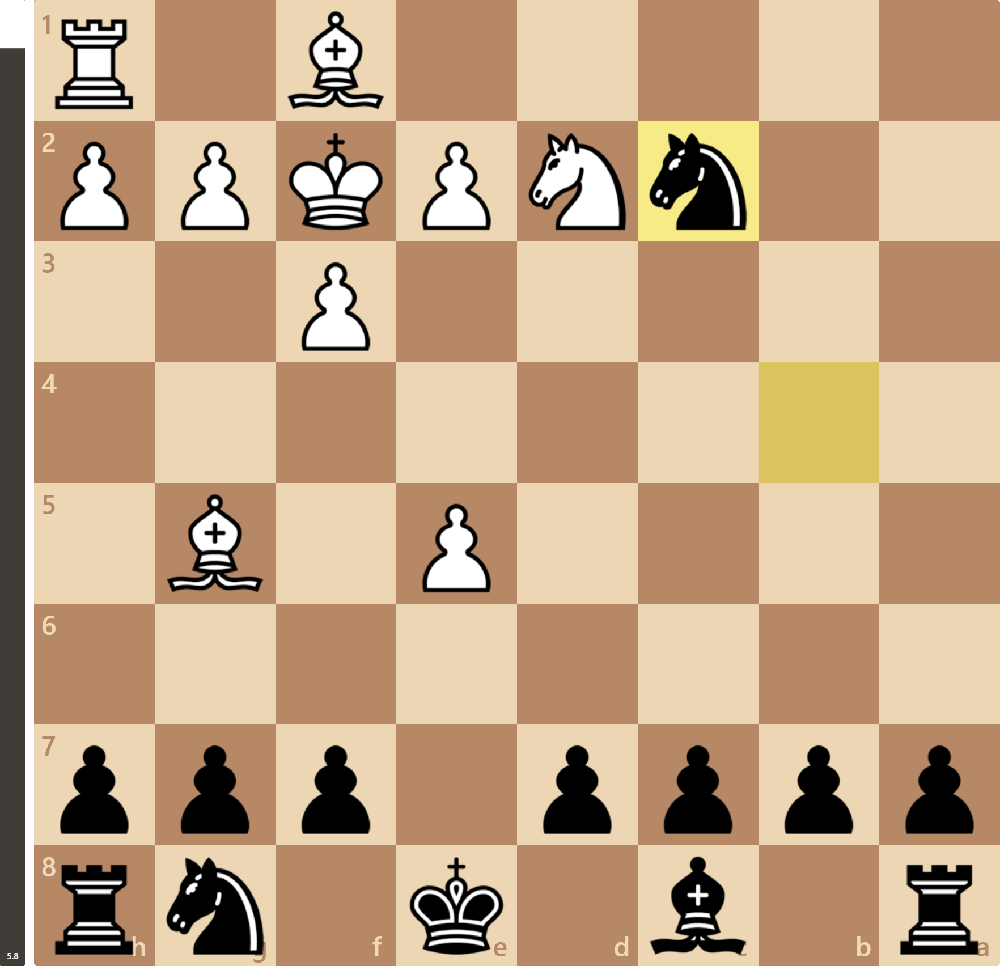
My neighbour adhered to the mantra, “never give up, never surrender!” and fought on valiantly in the middlegame. My goal was to bunker down, consolidate and simplify. White played accurately, but eventually when running low on time, made an aggressive attack on turn 28 in an attempt to win back material. However, this gave me the simplification to an endgame that I wanted. At the end of turn 37 after (37… Kg6), I’d blocked any possible forward advance by White’s remaining (doubled) g-pawns by sacrificing my knight.

The decimation of White’s queenside from the opening attack had automatically rendered my own queenside pawns the status of connected passed pawns. In the final few seconds of the game, I matched those pawns forward and before delivering checkmate, won by time. Good game, GG!
Note: the Englund Gambit is featured in one of the chapters in my new book, “Become a Chess Assassin! Learn to play the best chess opening attacks“.

Game: https://www.chess.com/analysis/library/4c4BJMaYjG
[Event "Clock Match"]
[Site "Newtown"]
[Date "2024.12.30"]
[Round "3"]
[White "My Neighbour"]
[Black "vitualis"]
[Result "0-1"]
[PlyCount "0"]
[TimeControl "600+5"]
[WhiteElo ""]
[BlackElo ""]
[WhiteTime "0"]
[BlackTime "254400"]
[BlackUrl ""]
[BlackCountry "17"]
[BlackTitle ""]
[WhiteUrl ""]
[WhiteCountry "17"]
[WhiteTitle ""]
[Link "https://www.chess.com/analysis/library/2fAgSLoPf4?tab=analysis"]
[Termination "Black Won by Time"]

1. d4 e5 {Englund Gambit} 2. dxe5 {Accepted  $1} 2... Nc6 3. Nf3 Qe7 4. Bg5 Qb4+ $5
{[%c_effect b4;square;b4;type;Interesting;persistent;true] Playing down the
Englund Complex position  $1} 5. Nbd2 $4 {[%c_effect
d2;square;d2;type;Blunder;persistent;true][%c_highlight
d2;keyPressed;none;opacity;0.8;square;d2;persistent;false,c3;keyPressed;none;opacity;0.8;square;c3;persistent;false][%c_arrow
b1c3;keyPressed;none;from;b1;opacity;0.8;to;c3;persistent;false] The engine
rates this a blunder, but I'd never seen this variation before.} 5... Qxb2 $5
{[%c_arrow
h7h6;keyPressed;none;from;h7;opacity;0.8;to;h6;persistent;false][%c_highlight
h6;keyPressed;none;opacity;0.8;square;h6;persistent;false][%c_effect
b2;square;b2;type;Interesting;persistent;true]} 6. Nc4 $2 {[%c_effect
c4;square;c4;type;Mistake;persistent;true][%c_arrow
a1b1;keyPressed;none;from;a1;opacity;0.8;to;b1;persistent;false][%c_highlight
b1;keyPressed;none;opacity;0.8;square;b1;persistent;false]} 6... Bb4+ $5
{[%c_arrow
b2c3;keyPressed;none;from;b2;opacity;0.8;to;c3;persistent;false][%c_highlight
c3;keyPressed;none;opacity;0.8;square;c3;persistent;false][%c_effect
b4;square;b4;type;Interesting;persistent;true] The engine finds that Qc3+ was
better [-1.1 to 0.00] but the idea of the Englund Complex is to pile on the
pressure on White's queenside until something breaks  $1} 7. Nfd2 $2 {[%c_effect
d2;square;d2;type;Mistake;persistent;true][%c_arrow
g5d2;keyPressed;none;from;g5;opacity;0.8;to;d2;persistent;false][%c_highlight
d2;keyPressed;none;opacity;0.8;square;d2;persistent;false] Pulling back the
bishop to d2 was the best move in the position} 7... Qc3 8. a3 Nd4 $5 {[%c_arrow
h7h6;keyPressed;none;from;h7;opacity;0.8;to;h6;persistent;false,d4c2;keyPressed;none;from;d4;opacity;0.8;to;c2;persistent;false,c2e1;keyPressed;none;from;c2;opacity;0.8;to;e1;persistent;false][%c_highlight
h6;keyPressed;none;opacity;0.8;square;h6;persistent;false,c2;keyPressed;none;opacity;0.8;square;c2;persistent;false,e1;keyPressed;none;opacity;0.8;square;e1;persistent;false][%c_effect
d4;square;d4;type;Interesting;persistent;true] Threatening Nxc2+ smothered
check, forcing White to trade their queen for the knight with Qxc2, Qxc2  $1} 9.
Ra2 $4 {[%c_effect a2;square;a2;type;Blunder;persistent;true][%c_highlight
a2;keyPressed;none;opacity;0.8;square;a2;persistent;false,c1;keyPressed;none;opacity;0.8;square;c1;persistent;false][%c_arrow
a1c1;keyPressed;none;from;a1;opacity;0.8;to;c1;persistent;false] The only
correct move is Rc1 and this blunders catastrophic material loss on the
queenside  $1} 9... Qxc4 $1 {[%c_effect
c4;square;c4;type;GreatFind;persistent;true][%c_highlight
c4;keyPressed;alt;opacity;0.8;square;c4;persistent;false,d2;keyPressed;none;opacity;0.8;square;d2;persistent;false,a2;keyPressed;none;opacity;0.8;square;a2;persistent;false][%c_arrow
b4d2;keyPressed;none;from;b4;opacity;0.8;to;d2;persistent;false,d2e1;keyPressed;none;from;d2;opacity;0.8;to;e1;persistent;false,c4a2;keyPressed;none;from;c4;opacity;0.8;to;a2;persistent;false]}
10. axb4 Qxa2 11. f3 Nxc2+ 12. Kf2 Nxb4 13. Qc1 Qc2 14. Qxc2 Nxc2 15. e3 h6 16.
Bf4 Ne7 17. Bd3 Nb4 18. Be4 Nbd5 19. Bg3 O-O 20. Rd1 f5 21. Bd3 f4 22. exf4 Nxf4
23. Bc4+ Ne6 24. Ne4 Nf5 25. Bxe6+ dxe6 26. Bf4 b6 27. g4 Nh4 28. Nf6+ gxf6 29.
Bxh6 Bb7 30. Bxf8 Rxf8 31. exf6 Nxf3 32. f7+ Rxf7 33. Rd8+ Rf8 34. Rxf8+ $6
{[%c_effect f8;square;f8;type;Inaccuracy;persistent;true]} 34... Kxf8 35. Kg3
Kg7 36. h4 Ng5 {The idea is to block all forward advance by White's h- and
g-pawns, and then to advance the connected passed queenside pawns..} 37. hxg5
Kg6 38. Kf4 a5 39. Ke3 b5 40. Kd2 c5 41. Kc2 a4 42. Kb2 b4 43. Ka1 c4 44. Kb2
c3+ 45. Ka1 b3 46. Kb1 {[%c_effect g6;square;g6;type;Winner] Black wins on
time.} 0-1
 Adventures of a Chess Noob