
🔥 Coupon code: CHESSNOOB64 for 10% off ChessUp products
I’m continuing to test the ChessUp 2 Smart Chess Board and am finding myself increasingly impressed! The comprehensive review article and video where I put everything together is still to come, so keep an eye out for it!
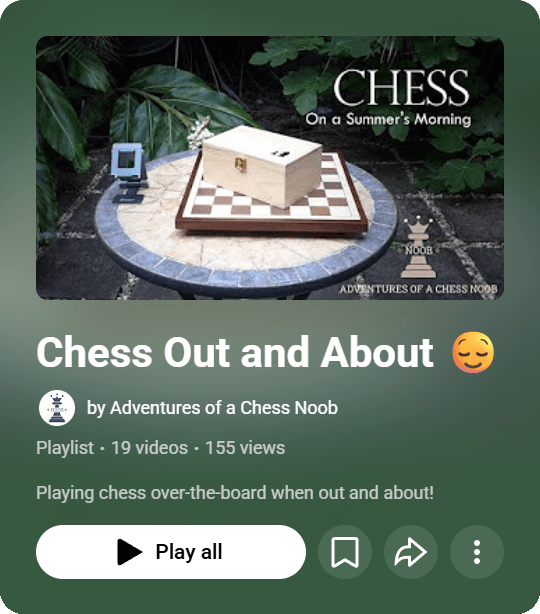
Earlier in the week, I decided to test the ChessUp 2 for two-person over-the-board chess. One of the best functions of an electronic chess board is that it can be used to record the moves of a game for later analysis. And for myself, it is also an opportunity to take a board out and about, and to play a game with friends and family at a restaurant or café! In fact, one of the playlists on my channel with 20 videos at the time of writing is exactly of this genre and titled, “Chess Out and About”!
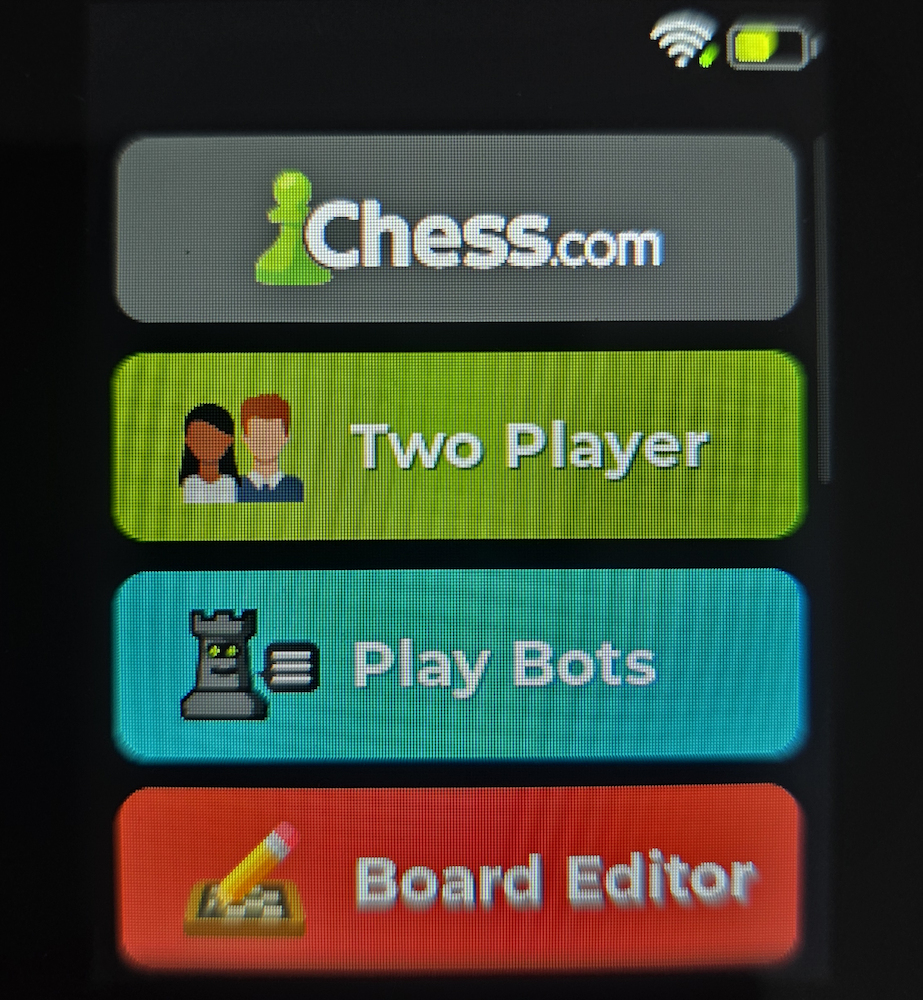
The ChessUp 2 has a built-in mode for OTB chess labelled “Two Player”, which has quite a few features including different time controls, as well as an adjustable level of computer assistance/hints for each player.
Hints will be presented through the different coloured lights on the board squares. I can see how this can be useful with teaching children the game, as well as a means of giving one player a handicap if they are at vastly different play strengths. I had these features turned off (which is the default) in this game with Mrs Chess Noob. Bryght Labs also sells a rather well designed Carry Bag (USD $79.99), which is included as part of the ChessUp 2 Bundle (USD $489.99), clearly indicating that they expect at least some of their customers to take the ChessUp 2 on travel.
So, what is it like to take the ChessUp 2 out and about?
It’s pretty good! In terms of physicality, the board and pieces, which are largely made of plastic, are quite light. Mrs Chess Noob and I walked from where we live (in Newtown), down to and around the Glebe Foreshore, and then to lunch at the Sydney Fish Markets. The bag is well made and well designed, and it was reasonably comfortable to carry via the shoulder strap for the roughly 90 min walk. The bag had enough room and give so that I could carry a couple of small cameras (DJI Osmo Action 3, and DJI Osmo Pocket 3) and micro-tripods without issue.
The main compartment of the carry bag for the board is lined with a very soft synthetic fleece, and similarly with the inside surface of the sacks for the pieces. I had no concerns that the items would be damaged in everyday handling.
At the restaurant (we ate at one of my regular haunts, The Boatshed Pyrmont at the Sydney Fish Markets) the board worked very well. OTB two player mode didn’t require wifi or an internet connection, or the need to connect the board to a companion device. The game could be set up on the small built-in touchscreen, which then showed the player clocks while the game was in progress. Very swish!
When I was home, I turned the ChessUp 2 back on and could see on the ChessUp app on my Samsung Galaxy S24 Ultra (which seamlessly connected to the ChessUp 2 when the app was opened), all the board games previously played. These games could be exported to PGN, or copied directly into the clipboard to paste into another app or for import on an online platform (e.g., the Chess.com analysis function).
My thoughts? There is no getting around that the size of the board is what it is, and if you’re willing to accept the impact of that on portability (e.g., it’s not going to fit into a backpack, briefcase, or messenger bag), it is quite excellent for out and about, OTB chess. For the inconvenience, there is pretty much flawless recording of OTB games with the device in isolation (no internet connection, no connected apps, no companion device). The carry bag is excellent. Also, for those who fly regularly, the board and pieces in the carry bag should fit into standard sized carry-on luggage without issue. ☺️👍
* * *
The game? I had the white pieces, played a Vienna Gambit (1. e4 e5 2. Nc3 Nf6 3. f4) and unfortunately, Mrs Chess Noob declined the gambit with (3… Nc6?), a mistake! This results in a famous sequence where Black will be forced to un-develop the king’s knight to its starting square.
Many of you may be familiar with the concept of the “sunk cost fallacy”, which is a cognitive bias where we often find ourselves unable to “let go” of the prior expenditure, the “sunk cost”, and change track to choose what is objectively the better choice. Beginner players can exhibit this in this line of the Vienna: the “sunk cost” is that they cannot countenance the idea of putting a developed piece back onto its starting square! And in refusing to do so, as Mrs Chess Noob did in this game, they unavoidably lose the knight!
In the early middlegame, Mrs Chess Noob blundered their queen after a series of aggressive attacks. She recognised the blunder almost immediately after they made and committed a rook move. The ChessUp 2 board defaults, appropriately, doesn’t permit take backs, so Mrs Chess Noob opted to resign. Good game, GG!
* * *
Learn how to play the best chess opening attacks in the Romantic style with my new book, “Become a Chess Assassin!” available now on your local Amazon store!

[Event "ChessUp PLAY_OTB"]
[Site "ChessUp Mobile App"]
[Date "2025.10.28"]
[Round "?"]
[White "vitualis"]
[Black "Mrs Chess Noob"]
[Result "1-0"]
[Time "15:49:54"]
[Annotator "ChessUp"]
[WhiteUrl ""]
[WhiteCountry "17"]
[WhiteTitle ""]
[BlackUrl ""]
[BlackCountry "17"]
[BlackTitle ""]
[TimeControl "10 min + 5 sec"]
[Link "https://www.chess.com/analysis/game/pgn/3AFBcM1B5Y/analysis"]

1. e4 e5 2. Nc3 Nf6 3. f4 {Vienna Gambit $1} 3... Nc6 $2 {[%c_effect
c6;square;c6;type;Mistake;persistent;true] Declined with Nc6, a mistake} 4. fxe5
Nxe5 5. d4 $1 {[%c_effect
d4;square;d4;type;GreatFind;persistent;true][%c_highlight
d4;keyPressed;alt;opacity;0.8;square;d4;persistent;false,e5;keyPressed;none;opacity;0.8;square;e5;persistent;false][%c_arrow
d4e5;keyPressed;none;opacity;0.8;from;d4;to;e5;persistent;false]} 5... Nc6 6.
e5 $1 {[%c_effect e5;square;e5;type;GreatFind;persistent;true][%c_highlight
e5;keyPressed;alt;opacity;0.8;square;e5;persistent;false][%c_arrow
c3d5;keyPressed;none;opacity;0.8;from;c3;to;d5;persistent;false,c3e4;keyPressed;none;opacity;0.8;from;c3;to;e4;persistent;false,d1g4;keyPressed;none;opacity;0.8;from;d1;to;g4;persistent;false,g4h5;keyPressed;none;opacity;0.8;from;g4;to;h5;persistent;false]}
6... d5 $2 {[%c_effect d5;square;d5;type;Mistake;persistent;true][%c_arrow
f6g8;keyPressed;none;opacity;0.8;from;f6;to;g8;persistent;false][%c_highlight
g8;keyPressed;none;opacity;0.8;square;g8;persistent;false] The \"sunk cost
fallacy\" is the refusal to undo what has already been spent. In the position,
un-developing the king's knight to its starting square is the best move, but
sometimes, beginner players cannot countenance such a move $1} 7. exf6 Qxf6 8. Nf3
Bg4 9. Be2 Nxd4 10. Nxd4 Bxe2 11. Ndxe2 Bb4 12. Bd2 {[%c_arrow
d1d5;keyPressed;none;opacity;0.8;from;d1;to;d5;persistent;false][%c_highlight
d5;keyPressed;none;opacity;0.8;square;d5;persistent;false] I could have simply
captured the d-pawn first} 12... O-O-O 13. a3 d4 {[%c_arrow
b4c5;keyPressed;none;opacity;0.8;from;b4;to;c5;persistent;false][%c_highlight
c5;keyPressed;none;opacity;0.8;square;c5;persistent;false] The counterattack is
unwise as...} 14. Ne4 {[%c_arrow
d2b4;keyPressed;none;opacity;0.8;from;d2;to;b4;persistent;false,e4f6;keyPressed;none;opacity;0.8;from;e4;to;f6;persistent;false][%c_highlight
b4;keyPressed;none;opacity;0.8;square;b4;persistent;false,f6;keyPressed;none;opacity;0.8;square;f6;persistent;false]
... I have this double attack} 14... Qe6 15. Ng5 Rhe8 $4 {[%c_effect
e8;square;e8;type;Blunder;persistent;true][%c_highlight
e8;keyPressed;none;opacity;0.8;square;e8;persistent;false] And, unfortunately
Mrs Chess Noob hung their queen... the ChessUp 2 doesn't allow takebacks $1} 16.
Nxe6 {[%c_effect e1;square;e1;type;Winner;animated;true][%c_highlight
e6;keyPressed;alt;opacity;0.8;square;e6;persistent;false] Mrs Chess Noob
resigns, good game, GG $1} 1-0
 Adventures of a Chess Noob