One of the trickiest and most effective lines against beginner players is the Blackburne Shilling Gambit. Tonight, I played a few games with Mrs Chess Noob at Huelo Bar in Newtown. Mrs Chess Noob is very much a beginner player, and her narration of her thinking process while playing against the gambit demonstrates exactly why it’s so effective!
The Blackburne Shilling Gambit leaverages a couple of factors with how beginners approach chess:
- Prior to developing a wider tactical sense, beginner players will often have a strong material focus – that is, their decisions will be heavily weighted towards winning material, and avoiding the loss of material.
- Prior to recognising patterns on the board, beginner players will often have limited depth in the calculations – sometimes, not much beyond the next move.
Historical note:
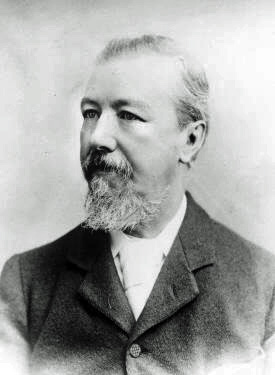
Joseph Henry Blackburne (1841-1890) was a British chess master, an icon of the Romantic era, and one of the strongest chess players of his generation. In the 1873 Vienna tournament, Blackburne not only achieved equal first place with Wilhelm Steinitz (who would later become the inaugural world chess champion), he was also given the legendary nickname der Schwarze Tod, or in English, “The Black Death” for his aggressive playing style and magnificent beard! 😲
The origin story for the Blackburne Shilling Gambit might be apocryphal, but it is alleged that Blackburne used it to hustle and win against amateur chess challengers, winning the shilling wagered on the game! Given Blackburne’s strength, it is likely that he would have beaten almost any random challenger using conventional openings, and it says something about Blackburne’s darstardly character that he would use such a tricky line to win as quickly as possible!
Game: https://www.chess.com/analysis/library/4EZ5y7mcpe
[White "Beginner Player 🐣"]
[Black "Blackburne Shilling Gambit 😏"]
[Result "0-1"]

1. e4 e5 2. Nf3 Nc6 3. Bc4 {White starts with an Italian Game} 3... Nd4
{[%c_arrow
d4f3;keyPressed;none;from;d4;opacity;0.8;to;f3;persistent;false,f3e5;keyPressed;shift;from;f3;opacity;0.8;to;e5;persistent;false][%c_highlight
f3;keyPressed;none;opacity;0.8;square;f3;persistent;false] Black plays an
aggressive and unexpected move, seemingly hanging their e-pawn...} 4. Nxe5
{Beginner players will often be motivated largely be material concerns, and will
often calculate only the next step. This makes Nxe5 almost irresistable  $1} 4...
Qg5 {[%c_arrow
g5e5;keyPressed;none;from;g5;opacity;0.8;to;e5;persistent;false,e5f7;keyPressed;shift;from;e5;opacity;0.8;to;f7;persistent;false,c4f7;keyPressed;shift;from;c4;opacity;0.8;to;f7;persistent;false][%c_highlight
e5;keyPressed;none;opacity;0.8;square;e5;persistent;false,f7;keyPressed;shift;opacity;0.8;square;f7;persistent;false]
Black brings out their knight. White will see that their knight is under attack,
and will thus be primed to move it again. Of the candidate moves, they'll see
Nxf7 and the fork of the rook and queen, making it the most favourable option  $1
As beginners will have a material focus, the attention on the knight means that
they'll not consider that the queen also forks and attacks the g2-pawn...} 5.
Nxf7 $4 {[%c_effect f7;square;f7;type;Blunder;persistent;true][%c_highlight
f7;keyPressed;none;opacity;0.8;square;f7;persistent;false] A blunder  $1} 5...
Qxg2 {[%c_arrow
g2h1;keyPressed;none;from;g2;opacity;0.8;to;h1;persistent;false,h1f1;keyPressed;shift;from;h1;opacity;0.8;to;f1;persistent;false][%c_highlight
h1;keyPressed;none;opacity;0.8;square;h1;persistent;false] White will see that
the rook is under attack and will be compelled to save it. Indeed, they might
even think that Qxh1 is checkmate (it isn't as White can block the check with
the backwards bishop move, Bf1).} 6. Rf1 Qxe4+ {[%c_arrow
e4e1;keyPressed;none;from;e4;opacity;0.8;to;e1;persistent;false][%c_highlight
e1;keyPressed;none;opacity;0.8;square;e1;persistent;false] Check  $1 White will
see only two options - block with bishop or block with queen. Again, given the
focus on material, blocking with the bishop is the most likely move...} 7. Be2 $4
{[%c_effect e2;square;e2;type;Blunder;persistent;true][%c_highlight
e2;keyPressed;none;opacity;0.8;square;e2;persistent;false] ... but this blunders
an unexpected checkmate pattern for beginners  $1} 7... Nf3# {[%c_effect
e8;square;e8;type;Winner,e1;square;e1;type;CheckmateWhite]} 0-1


[…] Lasker, and especially Joseph Blackburne – the same “The Black Death” Blackburne of the Blackburne Shilling Gambit – who seemed to have some success with this line! For instance, in the 6th master’s tournament […]
LikeLike