
When playing with the black pieces, one of the feared openings to play against at the beginner-intermediate level is the Fried Liver Attack in the Italian Game. The flip side is that it is one of the favourite lines for White! The Lichess community database demonstrates the seeming unreasonable effectiveness of the Fried Liver – at the critical move (5… Nxd5), White has a massive win ratio advantage of 62% vs Black (35%)!
Indeed, many a player will eschew the Two Knights Defense against the Italian Game to avoid facing the Fried Liver, despite the Two Knights Defense being one of the best and most solid approaches to the Italian! Earlier in my chess journey, I was one of these beginner players. Against the Italian, I voluntarily entered the Giuoco Piano lines rather than play the Two Knights, despite disliking the slow positional lines of the Quiet Game. Since then, I’ve learnt a variety of ways of dealing with the Fried Liver and now, actively enjoy playing against an opponent who attempts it! 🤩
In this game, I accidentally played into and allowed the Fried Liver Attack line, and so, it’s a good game to think about a potential tactical approach! The start of the Fried Liver is with White’s assertive Knight Attack on move 4 when faced with the Two Knights Defense (1. e4 e5 2. Nf3 Nc6 3. Bc4 Nf6 4. Ng5).
Historical note:
The Fried Liver Attack with the brilliant knight sacrifice on f7 (1. e4 e5 2. Nf3 Nc6 3. Bc4 Nf6 4. Ng5 d5 5. exd5 Nxd5 6. Nxf7!!) is one of the oldest opening attacks/traps documented in chess history. The first recorded game in the massive LumbrasGigabase is from the early 15th century, over four hundred years ago! It was played by Italian chess master Giulio Cesare Polerio (c.1550-c.1610) from the then Kingdom of Naples (Polerio — Domenico, 1610, Rome).
Polerio was a contemporary of Ruy López and may have defeated him in chess during his travels with fellow Italian, Giovanni Leonardo di Bona to Spain. During that trip, di Bona won what is considered to have been the first known international master tournament in chess in Madrid in 1575!
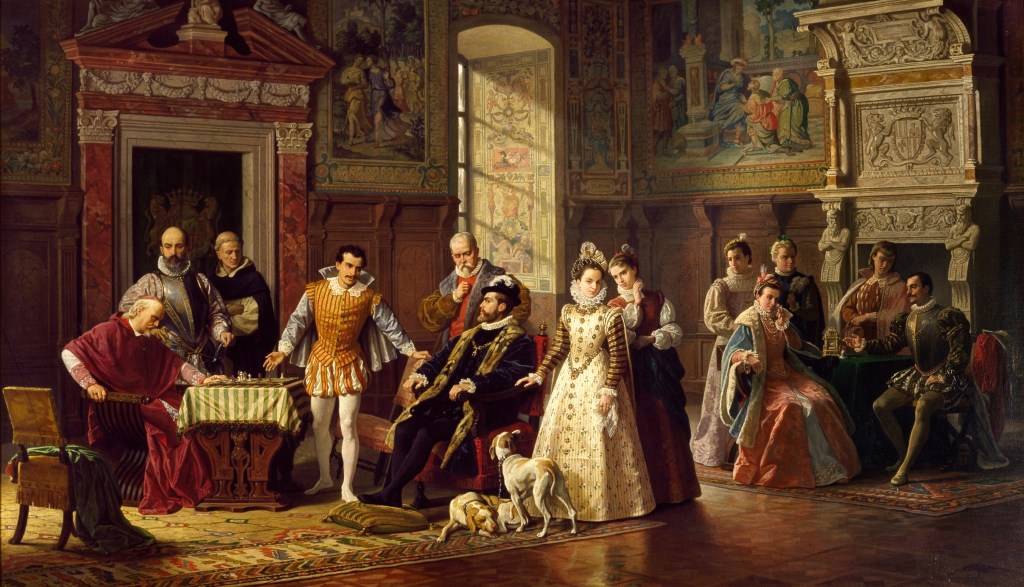
Polerio’s manuscripts record many opening variations of his era, including the Two Knights Defense, Scotch Gambit, Center Game, and variations of the King’s Gambit.
One of the potential issues with the Fried Liver Attack, beginning with its attempt starting with the Knight Attack on move 4, is that White’s position is conceptually unbalanced. The focus on the early attack means that White is little organised defence. Tactically, this means that White is susceptible to an immediate counterattack by Black. A romantic, swashbuckling approach against the Fried Liver Attack can be very effective. Indeed, the named counterattacks by Black all represent win ratio reversals – giving large advantages for Black!
- Ponziani-Steinitz Gambit (4… Nxe4!?): White (46%) vs Black (52%)
- Traxler Counterattack (4… Bc5!?): White (41%) vs Black (57%)
- Fritz Variation (4… d5 5. exd5 Nd4): White (40%) vs Black (58%)
Historically, I’ve tended to play the Ponziani-Steinitz Gambit against the Knight Attack, but more recently, I’ve gravitated towards the Two Knights Defense, Fritz Variation.
So, I played (4… d5) and as expected of a Fried Liver Attack player, they responded (5. exd5). Interestingly, the most accurate response in this position, now proven with modern computer analysis, is (5… Na5), the Polerio Defense – yes, the same Giulio Cesare Polerio who described and recommended this response! The Fritz Variation, what I was intending, is to then play the surprising (5… Nd4). However, in a moment of distraction (I was talking to someone) and with a knight move in mind, I unthinkingly played the wrong knight (5… Nxd5?), and thus allowed (6. Nxf7!!) the formal move that technically defines the Fried Liver Attack! 😱
From the perspective of accuracy, the “best” move is to accept the sacrificed knight with (6… Kxf7) and deal with the fact that White now has a massive initiative with (7. Qf3+), winning tempo and bringing their queen into the attack! This is often overwhelming at the beginner-intermediate level. However, that’s no fun! 😏
Instead, I decided to use some of the attacking tactics, especially from the Ponziani-Steinitz Gambit to gambit material loss to counterattack, and thus, capture the initiative away from White! So, I play the tricky move (6… Qh4!?), technically a mistake at [+4]! With this move, I hang 8 points of material, both my d5-knight and h8-rook, while forgoing winning back 3 points of material in the form of White’s f7-knight!
Undoubtedly, White must have thought that I’d gone mad and happily captured the knight (7. Bxd5), but this was the step of tempo I needed to bring another attacking piece (7… Bc5), and now threatened a scholar’s mate with queen and bishop!
White’s best move is to soberly short castle, but this isn’t the easiest move to make as it looks like castling into a kingside attack. In the position, White will likely have Qf3 in mind already, as it would have been the “standard” move after the normal progression after the Fried Liver Attack, and this was what I was banking on! They played the move, but just like in the Ponziani-Steinitz Gambit, we now have the powerful (8… Nd4!), a fork of White’s queen on f3, but also their c2-pawn which would come with an absolute check of White’s king and rook! In three moves, I’ve brought three attackers against White’s king and winning tempo!
White’s best move is to invite/force a trade of queens (9. Qg3), but loss aversion is a powerful bias. Having tasted material advantage, it can be difficult to give it up by allowing Nxc2+ absolute check! White plays a very reasonable looking move (8. Qe4) – the move invites a queen trade, defends c2, and threatens Qxe5+! It looks like a great move!
But here’s the thing… The queen’s defence of c2 was illusory! If the queen moves to c2, White’s king is underdefended and overly exposed. In the game, my intuition was that this was very winning and forcing for Black. Stockfish on analysis in fact finds that there is a forced line of checkmate! 🤩
I play the critical move for a win, (9… Nxc2+!?), a check, and White must respond! White has four legal moves and only a single move maintains White’s advantage, Kd1! This move is counterintuitive, especially for the player who moved the queen to defend c2 in the first place! The only other move that doesn’t lose is equally inhuman – to bongcloud the king (Ke2). This move returns the evaluation to equality but looks very weird, seemingly stepping the king into danger. The only other king move (Kf1) results in immediate scholar’s mate (Qf2#). As expected, White “sensibly” captured my checking knight (10. Qxc2??) and incredibly, there is [-M7]!
The first series of moves are all obvious – all checks – and White’s responses are forced (10… Qxf2+ 11. Kd1 Bg4+! 12. Bf3 Bxf3+ 13. gxf3 Qxf3+). The last move has destroyed White’s kingside defences. White has been stripped naked of all pieces and pawns defending the king from the f- to g-files, and the king must respond to an absolute fork by the queen of the king and h1-rook!
In the game, I captured the rook without thinking deeply, but this was a mistake. The continuation of the [-M3] mating line was (14… Bf2+ 15. Kf1 Bh4+ 16. Bg1 Qf2#), the combination of the dark square bishop and queen creating a lovely mating pattern – something to remember! 🥳 Interestingly, (14… Qxh1+) is still completely winning with Stockfish finding a forced checkmate in no more than 21-moves at high depth!
Although I didn’t see or know this and didn’t play the most accurately in a critical position where White could escape forced checkmate (but still at [-5.5]), White couldn’t navigate the overwhelming pressure. On move 17, I let the pressure off for one step (without check) to position my queen for a winning attack. White uses this opportunity to capture my rook (18… Nxh8??), and hangs [-M2]! My queen swoops in supported by my c5-bishop on the dark squares (18… Qd4+ 19. Kb3 Qb4#), good game, GG!
The big takeaway from this game is that White playing the Fried Liver Attack is often weak against a swashbuckling counterattack that targets White’s king. The established lines include the Ponziani-Steinitz Gambit, the Traxler Counterattack, and the Two Knights Defense, Fritz Variation. However, as could be seen in this game, these tactics can work even when playing inaccurately!
Game: https://www.chess.com/game/live/115105691177
[Event "Live Chess"]
[Site "Chess.com"]
[Date "2024.07.18"]
[Round "?"]
[White "Hollow_max"]
[Black "vitualis"]
[Result "0-1"]
[ECO "C57"]
[WhiteElo "1275"]
[BlackElo "1267"]
[TimeControl "900+10"]
[EndTime "22:31:27 PDT"]
[Termination "vitualis won by checkmate"]
[BlackUrl "https://images.chesscomfiles.com/uploads/v1/user/3711094.f52a0759.50x50o.ab18600a8723@2x.png"]
[BlackCountry "17"]
[BlackTitle ""]
[WhiteUrl "https://www.chess.com/bundles/web/images/noavatar_l.84a92436@2x.gif"]
[WhiteCountry "141"]
[WhiteTitle ""]

1. e4 {[%clk 0:15:10][%timestamp 1]} 1... e5 {[%clk 0:15:09.3][%timestamp 7]} 2.
Nf3 {[%clk 0:15:18.9][%timestamp 11]} 2... Nc6 {[%clk 0:15:18][%timestamp 13]}
3. Bc4 {[%clk 0:15:27.4][%timestamp 15]} 3... Nf6 {[%clk 0:15:26.6][%timestamp
14] Italian Game: Two Knights Defense} 4. Ng5 {[%clk 0:15:33.5][%timestamp 39]
White launches the Knight Attack line, which is the beginning of the Fried Liver
Attack $1 This line is feared by beginner players with the black pieces, so much
so, that many beginner players avoid the Two Knights Defense completely $1
Importantly, this attack by White IS good [+0.1], but it can be a two-edged
sword $1} 4... d5 {[%clk 0:15:35.7][%timestamp 9]} 5. exd5 {[%clk
0:15:42][%timestamp 15]} 5... Nxd5 $2 {[%clk 0:15:42.7][%timestamp 30][%c_effect
d5;square;d5;type;Mistake;persistent;true][%c_arrow
c6a5;keyPressed;none;from;c6;opacity;0.8;to;a5;persistent;false,c6d4;keyPressed;none;from;c6;opacity;0.8;to;d4;persistent;false][%c_highlight
a5;keyPressed;none;opacity;0.8;square;a5;persistent;false,d4;keyPressed;shift;opacity;0.8;square;d4;persistent;false]
A mistake $1 I was actually planning on playing the Fritz Variation with (Nd4),
but in a moment of distraction, I accidentally played into the Fried Liver
Attack, which is a mistake $1 [+0.7]. However, this gives me an opportunity to
play some exciting chess $1} 6. Nxf7 $3 {[%clk 0:15:50.7][%timestamp 13][%c_effect
f7;square;f7;type;Brilliant;persistent;true][%c_highlight
f7;keyPressed;alt;opacity;0.8;square;f7;persistent;false] This is the brilliant
idea behind the the Fried Liver Attack, one of the oldest trappy lines in chess
history $1 The first recorded game in the LumbrasGigabase was played by Polerio
himself in 1610 $1} 6... Qh4 $5 {[%clk 0:15:32.3][%timestamp 204][%c_arrow
e8f7;keyPressed;none;from;e8;opacity;0.8;to;f7;persistent;false][%c_highlight
f7;keyPressed;none;opacity;0.8;square;f7;persistent;false][%c_effect
h4;square;h4;type;Interesting;persistent;true] One of the potential issues with
the Fried Liver Attack is that White's position is unbalanced. The focus on the
early attack means that White has little organised defence. Tactically, this
means that White is susceptible to an immediate counterattack by Black and a
review of the Lichess community database demonstrates that the Ponziani-Steinitz
Gambit, the Traxler Counterattack, and the Fritz Variation of the Two Knights
Defense are all very effective in practice. Technically, White is completely
fine, but it requires high accuracy play by White, which is difficult to achieve
at the beginner-intermediate levels. In this position, Kxf7 is the best move,
but it plays into White's attack as they follow up with Qf3+, winning tempo and
bringing their queen into the attack $1 Instead, I play the inaccurate [+4], but
very tricky Qh4, sacrificing material but starting a counterattack using some of
the ideas of the Ponziani-Steinitz Gambit $1} 7. Bxd5 {[%clk 0:15:39.4][%timestamp
213]} 7... Bc5 {[%clk 0:15:04.7][%timestamp 376][%c_arrow
h4f2;keyPressed;none;from;h4;opacity;0.8;to;f2;persistent;false,c5f2;keyPressed;none;from;c5;opacity;0.8;to;f2;persistent;false][%c_highlight
f2;keyPressed;none;opacity;0.8;square;f2;persistent;false] Scholar's mate
checkmate threat $1} 8. Qf3 $2 {[%clk 0:15:25.6][%timestamp 238][%c_arrow
e1g1;keyPressed;none;from;e1;opacity;0.8;to;g1;persistent;false][%c_highlight
g1;keyPressed;none;opacity;0.8;square;g1;persistent;false][%c_effect
f3;square;f3;type;Mistake;persistent;true] Taking advantage of the fact that
White was already primed to play Qf3 as part of the Fried Liver Attack line $1
This move seemingly defends the f-pawn... but it's a mistake [+4 $37 +2.7] $1
Castling short is best, but it can seem a bit daunting castling into a kingside
attack.} 8... Nd4 $1 {[%clk 0:15:01.5][%timestamp 132][%c_effect
d4;square;d4;type;GreatFind;persistent;true][%c_highlight
d4;keyPressed;alt;opacity;0.8;square;d4;persistent;false,f3;keyPressed;none;opacity;0.8;square;f3;persistent;false,c2;keyPressed;none;opacity;0.8;square;c2;persistent;false][%c_arrow
d4f3;keyPressed;none;from;d4;opacity;0.8;to;f3;persistent;false,d4c2;keyPressed;none;from;d4;opacity;0.8;to;c2;persistent;false]
This is another Ponziani-Steinitz Gambit tactical idea - queen's knight to d4 $1
White now needs to calculate carefully... They must respond given the attack on
the queen, but they also see that the knight has an attack on on c2, which comes
with an absolute fork of the king and rook. However, the queen cannot return to
d1 as the Scholar's Mate threat is still present $1} 9. Qe4 {[%clk
0:14:28.5][%timestamp 671][%c_arrow
f3g3;keyPressed;none;from;f3;opacity;0.8;to;g3;persistent;false][%c_highlight
g3;keyPressed;shift;opacity;0.8;square;g3;persistent;false] This isn't exactly a
mistake, but Qg3 for a queen trade is best. The problem with this move is that
the queen doesn't actually defend the c2-square $1 I noticed this in the game and
clearly White is thinking that they've defended the position...} 9... Nxc2+ $5
{[%clk 0:15:04.2][%timestamp 73][%c_effect
c2;square;c2;type;Interesting;persistent;true][%c_highlight
c2;keyPressed;alt;opacity;0.8;square;c2;persistent;false][%c_arrow
c2e1;keyPressed;none;from;c2;opacity;0.8;to;e1;persistent;false,c2a1;keyPressed;none;from;c2;opacity;0.8;to;a1;persistent;false]
Stockfish calls this a straight up mistake, but I think within the psychological
flow of the game, this was the winning move $1 White has four legal moves - three
king moves and Qxc2 to remove the checking piece.  There is only a single move
where White retains the advantage $1} 10. Qxc2 $4 {[%clk 0:14:37.2][%timestamp
13][%c_effect c2;square;c2;type;Blunder;persistent;true][%c_highlight
c2;keyPressed;none;opacity;0.8;square;c2;persistent;false,d1;keyPressed;none;opacity;0.8;square;d1;persistent;false][%c_arrow
e1d1;keyPressed;none;from;e1;opacity;0.8;to;d1;persistent;false] This is clearly
the most intuitive move, but Black now has a forced checkmate in 7 moves $1 In the
previous position, White's only good move was the unintuitive Kd1. The second
best move is even less intuitive, Ke2, and the game returns to equality. Kf1
results in immediate checkmate with Qxf2# $1} 10... Qxf2+ {[%clk
0:15:11.2][%timestamp 30]} 11. Kd1 {[%clk 0:14:43.3][%timestamp 39]} 11... Bg4+ $1
{[%clk 0:15:16.2][%timestamp 50][%c_effect
g4;square;g4;type;GreatFind;persistent;true][%c_highlight
g4;keyPressed;alt;opacity;0.8;square;g4;persistent;false] Another
Ponziani-Steinitz Gambit idea $1} 12. Bf3 {[%clk 0:14:41.8][%timestamp 115] Forced
move} 12... Bxf3+ {[%clk 0:15:20.8][%timestamp 54]} 13. gxf3 {[%clk
0:14:50.7][%timestamp 11]} 13... Qxf3+ {[%clk 0:15:29.5][%timestamp 13]} 14. Ke1
{[%clk 0:14:59.1][%timestamp 16]} 14... Qxh1+ $6 {[%clk 0:15:36.2][%timestamp
33][%c_arrow
c5f2;keyPressed;none;from;c5;opacity;0.8;to;f2;persistent;false][%c_highlight
f2;keyPressed;alt;opacity;0.8;square;f2;persistent;false][%c_effect
h1;square;h1;type;Inaccuracy;persistent;true] I'm still completely winning, high
depth Stockfish sees forced checkmate in no more than 21-moves ( $1), but missed
the [-M3] continuation.} (14... Bf2+ {[%c_arrow
f3f2;keyPressed;none;from;f3;opacity;0.8;to;f2;persistent;false,f2e1;keyPressed;none;from;f2;opacity;0.8;to;e1;persistent;false,f3d1;keyPressed;none;from;f3;opacity;0.8;to;d1;persistent;false][%c_highlight
f2;keyPressed;none;opacity;0.8;square;f2;persistent;false,e1;keyPressed;none;opacity;0.8;square;e1;persistent;false,d1;keyPressed;none;opacity;0.8;square;d1;persistent;false,e2;keyPressed;none;opacity;0.8;square;e2;persistent;false]
This is the continuation to checkmate...} 15. Kf1 {[%c_arrow
f2g1;keyPressed;none;from;f2;opacity;0.8;to;g1;persistent;false,f2e1;keyPressed;none;from;f2;opacity;0.8;to;e1;persistent;false,f3e2;keyPressed;none;from;f3;opacity;0.8;to;e2;persistent;false,f3g2;keyPressed;none;from;f3;opacity;0.8;to;g2;persistent;false,f3f2;keyPressed;none;from;f3;opacity;0.8;to;f2;persistent;false][%c_highlight
g1;keyPressed;none;opacity;0.8;square;g1;persistent;false,e1;keyPressed;none;opacity;0.8;square;e1;persistent;false,e2;keyPressed;none;opacity;0.8;square;e2;persistent;false,g2;keyPressed;none;opacity;0.8;square;g2;persistent;false,f2;keyPressed;none;opacity;0.8;square;f2;persistent;false]}
15... Bh4+ {[%c_arrow
h4e1;keyPressed;none;from;h4;opacity;0.8;to;e1;persistent;false,f3g2;keyPressed;none;from;f3;opacity;0.8;to;g2;persistent;false,f3f1;keyPressed;none;from;f3;opacity;0.8;to;f1;persistent;false,f3e2;keyPressed;none;from;f3;opacity;0.8;to;e2;persistent;false][%c_highlight
e1;keyPressed;none;opacity;0.8;square;e1;persistent;false,e2;keyPressed;none;opacity;0.8;square;e2;persistent;false,f2;keyPressed;none;opacity;0.8;square;f2;persistent;false,g2;keyPressed;none;opacity;0.8;square;g2;persistent;false,f1;keyPressed;none;opacity;0.8;square;f1;persistent;false]}
16. Kg1 {[%c_arrow
h4e1;keyPressed;none;from;h4;opacity;0.8;to;e1;persistent;false,f3f1;keyPressed;none;from;f3;opacity;0.8;to;f1;persistent;false,f3e2;keyPressed;none;from;f3;opacity;0.8;to;e2;persistent;false,f3g2;keyPressed;none;from;f3;opacity;0.8;to;g2;persistent;false][%c_highlight
e1;keyPressed;none;opacity;0.8;square;e1;persistent;false,e2;keyPressed;none;opacity;0.8;square;e2;persistent;false,g2;keyPressed;none;opacity;0.8;square;g2;persistent;false,f2;keyPressed;none;opacity;0.8;square;f2;persistent;false,f1;keyPressed;none;opacity;0.8;square;f1;persistent;false]}
16... Qf2# {[%c_arrow
h4f2;keyPressed;none;from;h4;opacity;0.8;to;f2;persistent;false,f2f1;keyPressed;none;from;f2;opacity;0.8;to;f1;persistent;false,f2g1;keyPressed;none;from;f2;opacity;0.8;to;g1;persistent;false,f2g2;keyPressed;none;from;f2;opacity;0.8;to;g2;persistent;false][%c_highlight
f2;keyPressed;none;opacity;0.8;square;f2;persistent;false,f1;keyPressed;none;opacity;0.8;square;f1;persistent;false,g1;keyPressed;none;opacity;0.8;square;g1;persistent;false,g2;keyPressed;none;opacity;0.8;square;g2;persistent;false]})
15. Ke2 {[%clk 0:15:06.9][%timestamp 22]} 15... Qxh2+ {[%clk
0:15:29.7][%timestamp 165]} 16. Kd3 {[%clk 0:15:12.2][%timestamp 47]} 16... Qg3+
{[%clk 0:14:25.8][%timestamp 739]} 17. Kc4 {[%clk 0:15:20.7][%timestamp 15]}
17... Qf2 $2 {[%clk 0:13:44.6][%timestamp 512][%c_arrow
g3f4;keyPressed;none;from;g3;opacity;0.8;to;f4;persistent;false][%c_highlight
f4;keyPressed;none;opacity;0.8;square;f4;persistent;false][%c_effect
f2;square;f2;type;Mistake;persistent;true] Apparently, Qf4+ was the correct move
to continue the very long line to checkmate and Qf2 gives White a chance again
[-5.5]. However, I thought this move was fine as it defends my c5-bishop,
attacks White's f7-knight, and sets up for a mating attack $1} 18. Nxh8 $4 {[%clk
0:15:23.8][%timestamp 69][%c_effect
h8;square;h8;type;Blunder;persistent;true][%c_highlight
h8;keyPressed;none;opacity;0.8;square;h8;persistent;false,b3;keyPressed;none;opacity;0.8;square;b3;persistent;false,a4;keyPressed;none;opacity;0.8;square;a4;persistent;false][%c_arrow
c4b3;keyPressed;none;from;c4;opacity;0.8;to;b3;persistent;false,c2a4;keyPressed;none;from;c2;opacity;0.8;to;a4;persistent;false]
Admittedly, this is a pretty difficult position for White to navigate, and so I
win anyway $1 [-M2]} 18... Qd4+ {[%clk 0:13:51.6][%timestamp 30][%c_arrow
d4c5;keyPressed;none;from;d4;opacity;0.8;to;c5;persistent;false,d4d5;keyPressed;none;from;d4;opacity;0.8;to;d5;persistent;false,d4d3;keyPressed;none;from;d4;opacity;0.8;to;d3;persistent;false,d4b4;keyPressed;none;from;d4;opacity;0.8;to;b4;persistent;false,d4c3;keyPressed;none;from;d4;opacity;0.8;to;c3;persistent;false,c5d4;keyPressed;none;from;c5;opacity;0.8;to;d4;persistent;false][%c_highlight
c5;keyPressed;none;opacity;0.8;square;c5;persistent;false,c4;keyPressed;none;opacity;0.8;square;c4;persistent;false,b4;keyPressed;none;opacity;0.8;square;b4;persistent;false,d3;keyPressed;none;opacity;0.8;square;d3;persistent;false,d5;keyPressed;none;opacity;0.8;square;d5;persistent;false,c3;keyPressed;none;opacity;0.8;square;c3;persistent;false,d4;keyPressed;none;opacity;0.8;square;d4;persistent;false]}
19. Kb3 {[%clk 0:15:32.1][%timestamp 17][%c_arrow
d4c3;keyPressed;none;from;d4;opacity;0.8;to;c3;persistent;false,d4a4;keyPressed;none;from;d4;opacity;0.8;to;a4;persistent;false,c5a3;keyPressed;none;from;c5;opacity;0.8;to;a3;persistent;false][%c_highlight
c3;keyPressed;none;opacity;0.8;square;c3;persistent;false,c4;keyPressed;none;opacity;0.8;square;c4;persistent;false,b4;keyPressed;none;opacity;0.8;square;b4;persistent;false,a4;keyPressed;none;opacity;0.8;square;a4;persistent;false,a3;keyPressed;none;opacity;0.8;square;a3;persistent;false]}
19... Qb4# {[%clk 0:13:57.7][%timestamp 39][%c_effect
e8;square;e8;type;Winner,b3;square;b3;type;CheckmateWhite][%c_arrow
c5a3;keyPressed;none;from;c5;opacity;0.8;to;a3;persistent;false,b4c3;keyPressed;none;from;b4;opacity;0.8;to;c3;persistent;false,b4c4;keyPressed;none;from;b4;opacity;0.8;to;c4;persistent;false,b4a4;keyPressed;none;from;b4;opacity;0.8;to;a4;persistent;false,b4b3;keyPressed;none;from;b4;opacity;0.8;to;b3;persistent;false][%c_highlight
a4;keyPressed;none;opacity;0.8;square;a4;persistent;false,b4;keyPressed;none;opacity;0.8;square;b4;persistent;false,a3;keyPressed;none;opacity;0.8;square;a3;persistent;false,b3;keyPressed;none;opacity;0.8;square;b3;persistent;false,c3;keyPressed;none;opacity;0.8;square;c3;persistent;false,c4;keyPressed;none;opacity;0.8;square;c4;persistent;false]
Good game, GG $1} 0-1
 Adventures of a Chess Noob